Showing posts with label Canada. Show all posts

Thursday, May 22, 2025

Where Anne Wins Over Another Generation

Anne of Avonlea (Anne of Green Gables, #2)Anne of Avonlea by L.M. Montgomery
My rating: 4 of 5 stars

Almost as affecting and entertaining as the first book, Anne of Avonlea is a solid sequel to a genuine classic. It isn't possible to be quite the same thing; in the first book, Anne was an orphan, and misunderstood, and an outsider, and she does most of her growing up in that book. The original story carries her through some awkward times, from struggling to succeeding, from unreliable to reliable, from putting people off to winning them over, and from beaten down to joyful. In this second book, she's older and more established, and though she's still growing up a bit here and is facing real challenges, her triumphs have to come in a slightly different form.

I thought this book would be a lot about her success teaching, and there's some of that in there, but I'm relieved the book didn't spend too much time on that. Instead, it focuses more on new neighbors and friends, including a crotchety guy next door, a couple orphans who need a home, some tough students, and an old unmarried woman that Anne meets when she takes a wrong turn. It's their stories, and Anne's impact on them, naturally, that give this book its charm. The old guy next door makes up with his wife; the orphans find a home with Anne and Marilla, including a rowdy boy who needs a lot of training; difficult students warm up to her; and disappointed lovers, long separated by foolishness, make up and start over.

There is a fair amount of loss and heartbreak and disappointment in the book, and it seems that the author's personal experience of losing parents and being moved around emerges in many different forms in the story. Both the first book and this one are filled with found families, people making unique households by choice, taking in those who need a home. The whole ethos of these novels is to lament loss and then make the best choices left, finding as much joy in the new arrangement as possible. Death can't be defeated, but sometimes separation can, and loneliness. There's always hope.

I guess that's what these books are selling, the hope for happiness, and it makes sense that so many of us are buying. Anne is kind of the guide who shows us how to navigate disappointments, by being open to change, seeing beauty in nature and friendship and art, seeking forgiveness and reconciliation and connection, and doing it all while being a bit silly and kind of fearless.

I think it's a beautiful vision. Recommended.

View all my reviews

Wednesday, April 16, 2025

Where Annja Almost Gets Frozen

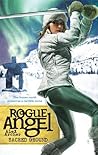
Sacred Ground (Rogue Angel, #23)Sacred Ground by Alex Archer
My rating: 4 of 5 stars

Title #23 in a long-running pulp fiction series, this is an entertaining novel that works great if you just want to read for fun. Especially if you want a character you already know, so you can skip the long exposition that is necessary in stand-alone novels. Annja is an attractive character--intelligent, capable, broad-minded, principled, brave, and empathetic--which makes it a pleasure to jump into another adventure with her.

This one takes place in Canada among the Inuit, with Annja being asked to help facilitate the removal of relics from a burial ground. The tribe has sold some of their land--they needed the cash--and the sacred site is in the way. Legends and myths get involved, the bad guys are hiding their true intentions, and Annja gets caught in the middle.

There are a few plot holes and trouble spots. The biggest is about 2/3 through, when it feels like we're at the end of the story, and the action kinda stops. We pause until the characters decide to go off in another direction and it feels like a separate story. The two parts end up being connected, but it could have used a bit of editing so that the transition made more sense. And the bit about Annja interacting with a polar bear, a scene that was very meaningful but unexplained, felt like it would have a call-back, something putting it into context, but we never saw the bear again. I think the author forgot.

But you turn the page and go on, because these books are about the action. The ending here could have been written by Edgar Rice Burroughs or H. Rider Haggard or Robert E. Howard--pure pulp. And I'm here for it.

View all my reviews

Tuesday, February 18, 2025

Where Anne Won Me Over, Too

Anne of Green Gables (Anne of Green Gables, #1)Anne of Green Gables by L.M. Montgomery
My rating: 5 of 5 stars

Anne Shirley is one of the great characters of literature, anywhere, anytime.

You can quote me. Just for the main character, this book is worth reading. But there's more.

I really enjoyed the novel, unironically, and I wouldn't have bet on that. It's cute, but it's not cloying. It's sentimental in parts, but it's not melodramatic or emotionally manipulative. I was afraid it would be corny and eyerolling, but it wasn't like that. This is closer to Jane Eyre than it is Annie. It was funny and touching and clever and enlightening, well grounded in its setting, realistic and believable, and it made me respect the author as a woman with genuine insight into the world and human lives, with something useful to say.

When I was younger, I took this as just a girls' book (whatever that means). I hoped it would prove to be an entertaining YA book. I found it a fine novel, period.

So Anne is different than everyone in the story. She is not Willy Wonka quirky or Daffy Duck bumbling, and she's not precisely a fish out of water, but she is out of step with her new neighbors when she is (accidentally) adopted into an elderly brother-sister family on a small farm in a rural community on the sparsely-populated maritime province of Prince Edward Island. She's an eleven-year-old orphan who's been shuttled around to a few families and has had it tough, so the hardship of farm life isn't new to her. But since she's lived so much in her own imagination, she hasn't learned what everyone else there has--how to fit in, how to behave the way they do, how to cook and walk and talk and otherwise conform to local expectations. She talks too much and has too many opinions and strange ideas, but that's where the story lives. The contrast between their world views--the conventional one and Anne's off-kilter one--is what makes the story really take off.

Above all, Anne is imaginative and enthusiastic. She renames every feature around her--woods and ponds and paths and groves--and makes up stories about them. She uses unusual vocabulary and makes everything dramatic and romantic. Her new family and their neighbors are all Tory-voting, church-going, finger-wagging, social conservatives, and they think, at first, anyway, that she is odd and annoying. But they also find her interesting, and that's the key. Anne keeps winning people over in spite of themselves by being original and authentic and optimistic. She's not always friendly or even entirely nice, but that's what keeps her real. She has boundaries, and she fights for them. She does try to fit in, and she does change her behavior in some ways to accommodate herself to local norms, but that's no more than knocking off a few rough edges. She stays weird and unique and independent-minded in all the good ways.

Still, the author also has compassion for the grumpy old conservative farmers in the story. Marilla, who reads like a Puritan, is almost pathologically unable to give compliments or make any accommodations for vanity, but she bends a little, and over time helps Anne decorate her room and get somewhat nicer dresses, and though she barely expresses emotions at all it's clear how she feels. She is, in fact, very good to Anne, in her way, and defends and protects her, and they form a strong, loving bond that lets the reader care about Marilla, too. The sour old ladies in the neighborhood get a similar treatment from the author--they are exposed for being judgy and intrusive and kinda rude, but they are also shown to be, ultimately, good-hearted people who care about each other, and they almost all come around on Anne and are proud of her and her accomplishments as if she belongs to them.

Without making this into a thesis, I'd have to say that it feels like the novel as a whole explores the question of the worth of people. It points to the fact that people who seem to be plain, or poor, or quiet, or uneducated, or who have never traveled, or who don't have any mark of specialness about them, or are flawed, can still be found to have depths and facets, or maybe a unique light (if you'll forgive the hippy language) that gives them value. They matter, and they are worthy of being loved and known and cared for. The residents of Avonlea may have forgotten that, or are only demonstrating it by rote behavior, but the introduction of a silly, happy girl into their mix helped them remember, and maybe knocked some of the dust off a few of them.

Anyway, it's a good book, and I have a lot more to say about it, but that's plenty. I'm pretty far from the target audience, but I'm glad I tried it. Lots to be learned by looking at books for other people.

Recommended only for non-cynics. :)

View all my reviews