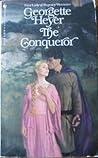
 The Conqueror by Georgette Heyer
My rating: 4 of 5 stars
This is a good book, one well worth reading, even though it took me quite a while to work through it. Rating it for fun, I'd lean more 3, due to some pacing issues (IMO). But there's more to this novel than entertainment. For historical scholarship, its finely crafted setting, its welcome complexity, and a very educational narrative, I'd give it a 4 at least.
I know Heyer mostly from her Regency romances, the books I was sent to when I asked other lovers of Jane Austen what author they thought wrote most like Austen. Since then, I've read maybe 9 or 10 of them, and I've enjoyed them collectively more than I originally expected. I've also read a mystery or two of hers, and I'd say those were okay; I'm not a huge fan of country estate murder mysteries, though I'll read one here and there. What I didn't know until now was that Heyer wrote straight-up historical novels. That's what this is. There's no more than a touch of romance here, and there's no mystery at all. There are women, and lovers, and love stories found in these pages, but this is book is closer to a biography of William the Conqueror. Told mostly from the perspective of Raoul, one of his closest supporters, the book covers about 20 years of William's life, ending shortly after the invasion of 1066.
(Hope that's not a spoiler.)
The beginning wasn't what I expected. Grimmer, maybe. The focus seemed odd. (This was all my fault, btw.) Even 50 or 100 pages in, I started to think the book would turn out to be a romance (of the bodice-ripping, chest-heaving, raven-haired tresses sort that I don't have much interest in), with a melodramatic tone and low stakes. But no. This is a no-nonsense historical novel with a very serious tone and heavy themes. It's about war and battles and strategy and putting down rebellions. It's about friendship and trust and honor and keeping one's word. It's about a man driven to make his mark on history and the people who gradually learned to believe in him, trust him, and follow him, helping him go from a beleaguered warlord to the leader of a stable regional power to the sovereign of a whole nation.
It was pretty fun to read, but not super fun. I didn't relish every page. However, there is nothing I could point to and say should have been edited out or abridged, and overall I'm glad I read it. Yes, I wish it moved a little quicker or varied in tone a bit more, but maybe it's better this way--leaning more toward an educational work of scholarship. This is no textbook, though; it's a novel, and I think a good one. Perhaps the greatest pleasure I've gotten from it is having a fuller picture of the historical setting and the Norman Invasion, filling in a picture that has been very sketchy most of my life.
So, yes, recommended.
View all my reviews