Showing posts with label drama. Show all posts

Saturday, May 30, 2026

Where Edward III Has Some Folks to Fight

King Edward IIIKing Edward III by William Shakespeare
My rating: 5 of 5 stars

Hey, this was a good read. (No pun intended.) Elizabethan plays can be tough, but this was not that bad, and very entertaining. I liked it. 5 stars.

It's one of those "Did Shakespeare write this?" plays that has more recently been a "How much of this did Shakespeare write?" play. Something like half, maybe. Hard to tell at this point. But in my head, and according to educated critics who have used a lot of methods to analyze the language and style, this is essentially a Shakespeare play. With assistants.

Being a history, the play is pretty episodic. It starts with Edward putting down a rebellion on the Scottish border, where he pressures a beautiful countess to sleep with him until she shames him enough he apologizes. Then, we pass to France, where he is pushing his claim to the throne. There are a couple battles--Crécy and Poitiers--where his son the prince survives and succeeds against great odds a couple times. He takes Calais [historical spoilers!], where he really wants to commit some atrocities but gets talked out of it. The captured French king is brought to him as they enter the city.

I found it fun to read and imagine it would be pretty great to watch. It's too bad it mocks Scottish people in the beginning, because that made it unpopular when James I became king a few years after it was written and first performed.

As history, this has flaws. Events are moved around and historical figures invented. Some of it's true, but it isn't very accurate. And some critics say it isn't up to Shakespeare's standards (for reasons that don't trouble me). But it is a play meant for spectacle, for patriotic fervor, for emotional reveals (like when the prince survives one more tough spot, even though the people already know he survives) and that would make it a high-energy play to see. It's very dramatic.

Seriously--go to school or read a history book for history. Go to the theater for drama. And this is good drama--IMO, always.

Recommended.

Oh--the notes and helps in the front and back of the Melchiori edition from Cambridge are very good. That's a bonus.

View all my reviews

Saturday, April 11, 2026

Where Rodrigue and Chimène are Caught Between Honor and Love

Le Cid (06) by Corneille [Mass Market Paperback (2006)]Le Cid (06) by Corneille [Mass Market Paperback (2006)] by Corneile
My rating: 4 of 5 stars

First thing I've read by this 17th century french playwright. I liked it more than I thought I would.

For good or bad, Corneille follows the old rule about the three unities--time, place, and action--and it helps to know he's doing that on purpose. There is pretty much just the main plot here; the subplots (if you can even call them that) are just branchings. Rodrigue (later El Cid) loves Chimène, and she loves him back, but her father insulted his elderly father. He has to challenge the man on his father's behalf, and kills Chimène's father. Now she still wants Rodrigue, still loves him, but she must demand justice for her father.

At the same time, Don Sancho loves her as well, and the Infanta loves Rodrigue. Those little complications are barely a blip in the plot. Almost everything is just the two lovers. (Unity of action.)

The story plays out quickly, with the insult, the duel, and a Moorish invasion driven back all in a day or so. (Unity of time.)

And almost the whole story occurs in Chimène's house or the palace. (Unity of place.)

These restrictions make the story a bit simple, in some ways, so that I was wishing for a real subplot, like you see so often in Shakespeare. But it also makes it more straightforward for a reader like me, reading it in translation in a whole 'nother country 400 years later. The conversations are sorta redundant, going over the same arguments about what justice and honor and love demand, but that is required by the conventions of the time, and I think it works fine even now. Of course, what I'm missing is the poetry that it was all clothed in, even though I think the translator did very well. Perhaps for Corneille's original audiences, the music of the language was a big draw. In English translation, I liked it well enough, and I'm just as glad the translator didn't put too much in rhyming couplets, though he couldn't entirely resist.

All in all--it's entertaining enough to read for no particular reason, but it's also interesting for its themes. In a society that regards honor highly, in the type of society where a son will kill the man who insulted his father and everyone nods like that makes sense, is there room for love? Can love be more important or even as important as honor? Poor Chimène loves Rodrigue and surely understands why he had to fight (and kill) her father, and she still wants to marry him--a feeling she is trying to suppress and keep secret--but honor demands she call for his death. Something has got to give.

Pretty interesting. Recommended for readers of drama.

View all my reviews

Tuesday, February 17, 2026

Where Admetus Lucks Out

AlcestisAlcestis by Euripides
My rating: 4 of 5 stars

I have spent very little time studying Greek tragedy. It's been probably 45 years since I had a class that required it--and that was the last time I read any. I know about as much about Greek tragedy as your average--well, maybe a step up from that--nerdy college freshman. But my self-assigned reading includes plays, and I'm running out of Shakespeare/Marlowe/Jonson/Dryden/Moliere plays that I can find (cheaply). So I decided to take a shot at Euripides on my own.

Also, Guy Gavriel Kay, one of my two or three favorite writers, has sometimes made a case for still reading Greek literature. So I'm partly motivated by shame.

Anyway, this was good.

The end

Well, to expand, I found it pretty enjoyable to read, even the weird strophe/antistrophe stuff that used to give me fits. I just pretend it's a musical and imagine somebody singing those lines, and it all makes sense. The play is not too long; there aren't so many characters that it's hard to keep track of them; the plot is pretty tight (they really believed in that); and [spoilers!] there's a fricking happy ending. What? That's perfect for me. I hate "So everybody died sad" stories with a white-hot heat--and this ain't that.

I kinda hated the MMC Admetus. Apollo liked him and worked him a deal with the Fates where he could get someone else to die in his place. Everyone said no except his sweet wife--and he said cool, you die for me. So when she dies at the start of the play, he's not mad at himself. He's mad at his parents, who he thinks should have sacrificed their lives for him. Nobody else seems to be blaming him, though Admetus finally realizes how he looks.

"Look at the cheap coward," he says, "alive and well,/ who ran away from death--/so small he got his wife to die instead./ Do you call that a man?/ He execrates his parents but could not die himself."

Yeah, dude, it's horrible. It's really, really bad. And the idea of dying for someone, or letting someone die for you, is explored in the play in a way I found pretty useful. There are so many takes on it by the end that I'm not sure what a member of the audience back in those times would have thought. Yes, Admetus is a great man, but his wife was the best of women. Maybe she was awesome for doing what she did; maybe he was awful for letting her. (My opinion.) It's not like he's developing the cure for cancer and just needed a little more time. He just wanted to keep living.

He lucks out when Hercules comes to visit then saves the day by mugging Death and rescuing Alcestis. Sure, it's an unlikely, Deus ex machina-adjacent device--but the whole story is based on impossible mythological nonsense, so... I'm good with it. I like a happy ending.

I find myself encouraged to go on reading old Greek plays that are still new to me. There's a bunch, so no problem there.

4 stars.

View all my reviews

Wednesday, February 4, 2026

Where Nero Takes a Turn for the Worse

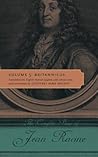
Britannicus: The Complete Plays of Jean Racine - Volume VBritannicus: The Complete Plays of Jean Racine - Volume V by Jean Racine
My rating: 5 of 5 stars

The 5 is for the edition--the introductory discussion, the translation, and the extensive notes in the back. The printing, too, come to that, is very nice. This is a beautiful book, one that is ideal for an English speaker wanting to read and understand this text. We get 60+ pages of discussion up front to assist the reader; 75 pages of the actual play, rendered in rhyming iambic pentameter couplets (which I don't prefer, but is as similar as possible to the original French version); and another 70 pages of notes and appendices, which I found very useful.

My take on the play itself? I'm interested in it for historic and literary reasons and am glad to plow through it and get a pretty good idea of the whole thing, but it's not terribly fun to read. Rewarding? Maybe so. Probably more so on repeated readings, which I may never do. But I have never understood the attraction of tragedy or the people who like it. Seeing people praise tragedy is like watching people run barefoot on sharp gravel, smiling.

No exaggeration--I literally (with the literal use of literally) do not understand how people enjoy tragic stories like this. Sure, the set might be cool, and the costumes, etc., and there can be some interesting and arresting language, but for me the story is horrible. That's absolutely not to criticize those who like tragedy (or who enjoy anything else I don't happen to like), but the difference in how our brains work continues to baffle me. I see people enjoying beer, and it looks so pleasant and refreshing that I want to join in, but I hate it.

Don't get me started on Othello. :)

Anyway, all that aside, I'm still interested because I'm curious about what people were watching and hearing at different times and in different places in history, enough to make it worth my while to read a story I don't have an affinity for. Obviously, the author is highly informed and a capable writer, and he makes some assumptions about his audience. I feel like those who watched a performance of Britannicus back in the time Racine was writing would have needed to arrive, and would have been expected to arrive, with a pretty solid understanding of who Britannicus was, who Agrippina and Nero and Junia and Claudius and the others were, as well as what became of them all, if they were to enjoy the play at anything more than a very surface level. Racine trusts that his audience will be familiar with the major figures and the context we find them in.

That's why I think the notes are so helpful. Most of us weren't raised with a strong background in Roman history. Beyond a passing acquaintance with Nero (mostly formed from reading Quo Vadis?), the story was new ground for me, and it would probably be the same for most readers outside of classical studies.

Nero and Agrippina are the main characters. She wants access to Nero so that she can continue to exert control over him. His advisors don't want that, so she is prevented. Nero wants to marry Junia--requiring her cooperation, though she loves Britannicus, and Nero's divorce from a wife we never see. Britannicus is feared as a rival for power and for Junia. Narcissus schemes with Nero while pretending to be friendly with Agrippina and Britannicus. Everybody lies to throw off his enemies, though it also throws of certain readers at times (ahem). Lots of intrigue--but very little action of consequence. So, not terribly exciting, but still good.

How much fun is it to read now, on one's own, for no particular reason? I'd give it maybe a 3 for that. Not super fun. It's a tragedy--people die. No happily ever after. No warm glow at the end. But I found things to like as I read it. If you have some reason to read it, I recommend this edition.

View all my reviews

Saturday, January 10, 2026

Where Lyndaraxa is Very Bad

Almanzor and Almahide, or the Conquest of GranadaAlmanzor and Almahide, or the Conquest of Granada by John Dryden
My rating: 4 of 5 stars

[This is a review of the second play, The Conquest of Granada, Part II. I already rated and reviewed the first part. Goodreads lumps both parts together, unfortunately.]

I'm enjoying Dryden more than I expected, and I liked this play more than the first. More closure, more drama that I care about, more movement. Like so many old plays, I feel like I'd do better to study the background and try it again, but life is short, and there are a lot of things still to read for the first time...

I'm not generally a fan of rhyme in poetry, let alone drama, and Dryden's plays are made up entirely of rhyming couplets, or heroic couplets. I didn't expect to be okay with that choice, though I think it works. He's more recent than Shakespeare of Marlowe or some others who moved away from rhyme, which makes these plays feel older than they are, but perhaps the reason it feels appropriate is that the setting for this pair of plays is 15th century Spain, over 500 before present and about 180 years before they were written (~1670). They should seem old, then, and old-fashioned.

The first play is mostly about the civil war between two Granada families or clans, all of them Muslim Moors. The second continues that to some degree, but under threat from Ferdinand and Isabella trying to oust the last remaining Moorish rulers from the peninsula. In Dryden's version, the civic disunity, personal ambitions of certain individuals, and straight-up treason of one character lead to the downfall of the small state.

The real villain of the story is beautiful Lyndaraxa, the sister of the leader of the Zegry family, who entices one man after another to try for the throne with the promise of marriage, a promise that she withdraws when their plans fall short. She wants to be queen, and will ally herself with whoever can bring it about, regardless of the crimes they need to commit to achieve it. Her lies and tricks are as shocking and effective as Iago's lies in Othello. In the end--spoiler--she joins with the invading Spaniards, opening the way to Granada with the promise of being queen. Further spoiler--she gets her way for about 5 seconds. Her death, after so many lies and tricks leading straight to war and the deaths of many, is one of the most satisfying in drama.

Another entertaining revelation comes right at the end, when we discover that the hero Almanzor is the long-lost son of a Spanish duke who he once did a service for (in part I). Additionally, the beautiful but principled Almahide is widowed when her jealous husband the king dies. She was loyal to him, but really loved Almanzor, and will marry him after her grieving is through. These take some of the sting out of the tragedy.

I thought it was pretty fun. I'm curious how it would sound on the stage, if it would sound natural or sing-songy with so much rhyme. For reading, though, I found meter worked quite well--much to my surprise.

Recommended for curious readers--though it might be nice to do the reading with more resources than I took advantage of. Maybe team-read. Or--just jump on in. See what you think.

View all my reviews

Saturday, December 6, 2025

Where Joliffe Learns Stuff He Wishes He Hadn't

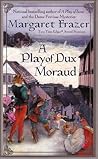
A Play of Dux Moraud (Joliffe the Player, #2)A Play of Dux Moraud by Margaret Frazer
My rating: 4 of 5 stars

Nearly a 5-star read for me. Call it 4.5?

This novel is exactly what it's supposed to be: a clever mystery with interesting characters, set in a well-constructed historical setting. I enjoyed it.

The pace is somewhere between measured and brisk, and that works. There's space for more story than just the mystery, more character development and world-building, because it's not rushing like an action thriller, but it's not slowed down enough to feel plodding. Steady progress, interesting scenes, decent movement all the way through. It feels just about right for pacing.

I like the main character, Joliffe, who is believable in his role as an actor who is pushed to investigate sketchy situations on the sly. He's not an expert in investigation or analysis, but he's sharp and persistent and sneaky enough to get to the heart of mysteries like this one. (Their benefactor, Lord Lovell, needs him to look into the unexplained death of a young man who was going to marry the daughter of a man who owes him homage. The daughter is about to marry a second man, and Lord Lovell thinks something is wrong.)

I don't love the constant sniping between some of the characters, but I sort of get it. Unrelated people in a troupe, forced into company around the clock, probably get a bit annoyed with each other. That's a bit of reality I don't care for. At least it isn't every page.

I've now read three books by this author (collaborators) and they were similar in one thing: when I have several books going, I'm always glad to pick this one up. I have books that languish with a bookmark stuck on page 40, but not this series.

Recommended. This is book 2, but I don't think it matters too much how you read them.

View all my reviews

Friday, October 17, 2025

Seventeenth Century Scammers

The ALCHEMIST by Ben Jonson The ALCHEMIST by Ben Jonson "Classic Edition" by Ben Jonson
My rating: 4 of 5 stars

With nothing but a few footnotes to help with the language, this is pretty tough going, but I still enjoyed it quite a bit. At 4 stars, I'm going a bit on a limb, with so many other people giving it a 3 or less while comparing it unfavorably with Shakespeare. But I found it witty and amusing. I would like to understand it better, for sure, but the scams and tricks are clever and the action tight enough to amuse a reader, considering always this is a 400 year old play, not a modern novel.

A wealthy homeowner is away for weeks, and while he's out, his servant is using the house to run several scams with a pair of partners: a man posing (pretty convincingly) as a competent alchemist, cooking up potions and pretending to know astrology, and a prostitute posing as a respectable woman. They've got a number of people on the hook, telling them they're getting closer all the time to finishing the long process of making a philosopher's stone, confusing them with fancy alchemical language, putting them off, while making them bring in fabrics, costly metal items (to turn to gold), tobacco, and actual money. The marks will want to get rich and do either good works (so they say) or sleep with lots of women. It's a long scam, and though they're pulling it off, the neighbors notice the strange comings and goings and at a couple people suspect they're being tricked. It looks like they might pull it off despite a whistleblower tricking them, but they get interrupted in their multiple scams when the homeowner comes back weeks early and learns what's happening from his neighbors.

There is a happy ending of sorts, on top of a pretty good skewering of scammers, puritans, ambitious men, and fools of all sorts. This is one I would like to reread with a study guide, and make more sense of it. (Also, I'd like a version that avoids my pet peeve--I hate books that only give the first three letters of character's name at every line. It doesn't work for my brain. I have to rehearse who is who over and over. Doll is 4 letters, but we print Dol? How much room does this save? How many pages? Can't we just put everybody's name?) A more thoroughly annotated copy would also help.

Still, as is, I liked it, and think people looking for other plays from Shakespeare's times would probably also enjoy it.

View all my reviews

Tuesday, June 10, 2025

Where Witgood Tricks Everybody

A Trick to Catch the Old OneA Trick to Catch the Old One by Thomas Middleton
My rating: 4 of 5 stars

This is the first Thomas Middleton play I've read, and it's okay. A little up and down. Parts of it are quite entertaining, and it's not too hard to understand (comparatively speaking), but a lot of the action is annoying and hard to get behind, so started off by giving it a 3. However, I'm talking myself into a 4 as I review the story and realize it's pretty good, actually. :)

A young man--Witgood--has been messing around, wasting money gambling and paying for prostitutes, and just generally being irresponsible. His rich uncle (Uncle Lucre) has taken advantage of him when he needed a loan instead of helping him out and has taken control of his property. (Before the play, even.) I'm not sure how he did that, but it's part of the setup. But through the course of the play, Witgood gets his property back, has his debts wiped out, marries a good girl, and foists his prostitute/mistress off on his uncle's worst enemy, another usurer named Hoard. It's all tricks; they make everyone think that the courtesan is actually a rich heiress, and from that point just let all the greedy gold-diggers drive the action.

I was put off by the attitude everyone took toward the poor woman who had been Witgood's mistress. She's clearly a decent person, seems very kind, and yet she's spoken of as if she's monstrous. Witgood, who we are meant to be very sympathetic to, helps her out by setting her up with a husband, but Lucre is a horrible person. It's treated like a great joke on the greedy old man, but I'm imagining the poor girl having to be stuck with him. Witgood, meanwhile, has moved on from her to another girl who he marries, because you don't marry your mistress, right? One of Lucre's friends, invited to his wedding feast, is furious when he recognizes his wife and starts to leave like everyone else. As he's going, he says to Lucre:

"Fie, fie! A man of your repute and name!
You'll feast your friends, but cloy 'em first with shame."

Anyway, I get it. That's the attitude of the time. Can't really blame the author. But their hate toward one of the few sympathetic characters in the play was kinda shocking. (She very carefully never lies to Lucre. She says she has no money or property. He just thinks she's being secretive and doesn't believe her. In the end, it's his greed, not her statements, that makes the scheme work.)

The tricks were good, getting revenge on greedy money guys, getting Witgood out of trouble and setting his mistress up for life (hoping, I suppose, that the rich old guy she tricked into marriage doesn't last long). There are happy endings all around. Pretty solid story, all told.

View all my reviews

Wednesday, April 30, 2025

Where the Doctor Knows He Doesn't Know

The Doctor in Spite of HimselfThe Doctor in Spite of Himself by Molière
My rating: 3 of 5 stars

This is a light bit of drama, a quick read, and I liked it a little bit. I disliked parts, too. I'm sure most of the amusement afforded by this little play is in seeing the burlesque, the overacting, the slapstick, rather than looking at the words on the page, but I'm not sure I'd ever pay money for the privilege.

This three-act plays speeds along almost like a one-act play, so fleeting that I wonder how long it ran when it was originally performed. But I like it better for being quick. What I don't like is the Punch and Judy feel, the making light of assault. I get it that marital strife is a comedy staple, but it's still distasteful. Even when looking at it like a sketch, pure lampoon, it's still emerging from a very dark place.

I don't think anyone feels too bad for Sganarelle when his wife gets him back for beating her. She convinces a couple men that her husband is a great doctor, but he pretends not to be, and she directs them to beat him until he confesses he is a doctor. If you picture him as Elmer Fudd or the coyote, maybe it's a funny bit. The genuine, redeeming, useful (IMO) satire follows. He passes himself off as a doctor, prescribing things to anyone who needs a doctor, demanding payment while caring not at all whether any of his remedies work. (They don't, of course.) Now, that sucks, but he makes the reasonable point that doctors of the time did no better than him. I think that's true. In his own words:

I find it's the best of all trades because whether you do good or harm you still get your money. We never get blamed for doing a bad job. We just hack away at the stuff we are working on, and whereas a cobbler making shoes can't spoil a piece of leather without having to foot the bill himself, in our trade we can make a mess of a man without it costing us a penny. If we make a mistake, it isn't our look out: it's always the fault of the fellow who's dead.

He's not wrong.

Sganarelle is not better a human at the end than at the beginning, and he's horrible at the beginning. There's a happy ending for a couple of lovers, though--at the cost of some Deus Ex Machina, come in the form of a sudden inheritance. But this isn't meant to be serious, I guess. A frothy little nothing that makes a good point earns from me a barely passing, probably-skip-it 3.

View all my reviews

Saturday, April 26, 2025

Where Volpone Doesn't Get Away With It

VolponeVolpone by Ben Jonson
My rating: 5 of 5 stars

I thought this was good. Ben Jonson is growing on me. I didn't really enjoy "Every Man in His Humour," but I liked "Sejanus" quite a bit. Volpone (my autocorrect keeps changing it to Vulpine!) was even more entertaining, IMO, and I wonder if that trend will continue.

Scoring it on the "Reading Renaissance Plays at Home Just for Fun" scale, I give it a 5. (I have a lot of scales. On the "Reading Before Bedtime" scale, for instance, this is maybe a 2.) My interest here isn't just in the entertainment value of the story--I would never pick it up if that were the only point. (I can imagine a modern novel based on this story that would be a lot more fun to read.) But there are other benefits besides. Learning things about society and the times is cool. Getting insight into the sensibilities of people living 400 years ago is worth something to me: discovering what they think is justice, and what they think is funny. Getting a feel for a writer I only vaguely know is worth something too.

And to be fair, the story itself is pretty entertaining, even in this format.

Like anything from this era, though, it's a bit of a struggle. Without notes, I don't know what exactly the characters are really trying to say a lot of the time. Irony is hard to pick out when you're struggling with unusual vocabulary. Anything that is understood but left unsaid, especially stuff that relies on familiarity with social structures that don't even exist anymore, can fly right by me as the reader. Tone can be impossible to pick up when looking at the words on the page (rather than seeing it performed, I mean.) But taking those difficulties into account (and applying the "Reading Renaissance Plays at Home Just for Fun"scale), this is a good read.

Volpone is a rich jerk who cons other rich jerks out of their money. The whole play is about him convincing different men to give him expensive gifts so that he will choose them to inherit his wealth, because he's supposedly on death's door. (He's fine.) I wish Jonson had given them all real names, though; Volpone means fox, and his marks are all named versions of crow, raven, and vulture. I would have preferred regular names, allowing us a little more suspension of disbelief. Anyway, with his servant (named Mosca, which means fly) he fleeces those guys and embarrasses them, though he gets caught in the end. They all pay the price.

The only thing I would have liked to see at the end, when everyone gets their punishment, is a scene with the two good characters, Corvino's sweet wife, Celia, and Corbaccio's noble son, Bonario. Corvino is trying to sacrifice his wife to Volpone to win him over, and Corbaccio disinherits his good son to convince Volpone to choose him. Bonario catches Volpone trying to assault Celia and rescues her. Later, all the old guys, covering their tracks, collude in saying that Celia and Bonario have been sleeping together. There are some court scenes at the end straightening all this out, but we never see Bonario and Celia together, which I would have liked. (If Corvino had died, and maybe Corbaccio, too, we could have had that happier ending.)

Despite that little disappointment, I found the story amusing, the plot well constructed, and the verse top notch (even when thorny). I realize that Ben Jonson isn't exactly forgotten, and his work is still taught some and no doubt performed here and there, but it's a shame he isn't a little more prominent in our collective consciousness.

View all my reviews

Wednesday, December 11, 2024

Where Samson Does One Last Trick

Samson AgonistesSamson Agonistes by John Milton
My rating: 4 of 5 stars

I rather enjoy Milton, and Samson Agonistes is another work of his that I find interesting and engaging to read just for no reason at all. I am largely a genre fiction reader--fantasy, SF, mystery, pulp--and I'm not terribly patient with dry old poetry, but Milton, for some reason, is a pretty good fit. I'm trying to figure out why.

It's not like he's totally straightforward in his writing. There are so many obscure references and allusions that most of us could get pretty lost. But perhaps I'm fortunate in that I have enough of them in common with him (churchy childhood and all) that I get a lot of it, and the stuff I miss doesn't matter too much in terms of comprehension. Or enjoyment.

But these aren't stories that are hard to follow. IMO, the biggest hindrance to enjoyment of older literature is usually comprehension, and these are, of course, retellings of famous stories; that familiarity is a huge aid to comprehension. Paradise Lost and Paradise Regained are largely fictionalized, with a lot of added material, but the main contours of the story in Genesis are largely intact. This story, basically the last day in the life of Samson, the strongman from the Bible, hews a little closer to the original story, being much shorter, with fewer additional scenes or characters. And I think it works.

If you recall, Samson was an Israelite hero, defeating the Philistines in battle with his great strength. That was a gift from god, and it depended on him never cutting his hair. Delilah, his Philistine wife, eventually coaxed the secret out of him. She cut his hair, taking his strength away, and he was captured and blinded and made a slave. This poem (a Greek-style tragic play, actually) tells about his last day, when his father came to try to ransom him (invented detail), but he got dragged to the temple to perform feats of strength, which had largely returned to him. Then, when he gets the chance, he pushes the pillars down in the temple, burying huge numbers of Philistines and dying in the process.

Now, Milton likes to control women waaaay too much for me, spending a lot of time blaming them (and the men who don't control them) for being kicked out of Eden and for Samson being captured. But allowing for his Puritan attitudes a little bit, the story is generally entertaining and thought-provoking. This poem is just under 1800 lines, making it a little long for a single sitting, probably, but not too long to read in bits over several days. It's not meant to be performed like a regular play, but I like imagining how it could be realized as an animation or radio drama or some other thing...

Anyway, yeah, I liked it. Recommended for people who sometimes read epic poetry or adjacent literature.

View all my reviews

Monday, August 19, 2024

Where Helen Gets Her Man

All's Well That Ends WellAll's Well That Ends Well by William Shakespeare
My rating: 4 of 5 stars

I've never seen this performed, but it seems pretty entertaining, pretty fast-moving. Should be fun to see.

I knew the story from the Decameron, and it's a pretty typical plot for that collection of stories--a husband or wife tricking the other one to get their way is a common motif. It's hard to have any feeling for the main characters, though. I kinda like Helen, who proves her worth by her medical knowledge and ability, but making the king force a guy to marry her is pretty wrong. And then for that guy to abandon his wife is also pretty wrong. I'm not on either one's side.

But letting it be a kind of farce, one clearly based more on literary models than on real life, it is clever and amusing. Bertram has promised never to be a real husband to Helen until she has his ring (which he'll never give her) and presents him with his child (though he'll never sleep with her), so it looks like it's impossible. But Helen finds a way. She manages to substitute herself in for a young woman near Florence that her husband wants to sleep with, after the girl first demands the ring that she needs so badly. Apparently, in a dark room, he'd have no idea who he was really with. It works, she gets pregnant, and she gets the ring from the girl to take back to court in France to win her husband back.

There's more to it than that, because she needs additional proofs, but it all comes out in the final scene. I don't know how they can possibly live happily ever after, but we're given the impression that everyone is reconciled, and I'm just going with it.

I appreciate the theme dealing with true merit. Bertram doesn't see any value in low-born Helen, but she proves herself to be someone who deserves respect because of her wit and achievements. Others, like the coward Parolles, deserve scorn despite being born to a higher class. It's disappointing that this argument ever needed to be made, but I'm glad it makes the case here.

Overall, this play is pretty intelligible and easy to follow, IMO, for a modern audience. Whether we could be made to warm up to the main characters in a production of this or not, I'm not sure. I think probably. Anyway, it's worth reading.

Recommended.

View all my reviews

Monday, May 13, 2024

Where Figaro Gets His Start

The Barber of SevilleThe Barber of Seville by Pierre-Augustin Caron de Beaumarchais
My rating: 4 of 5 stars

This is somewhat entertaining; I suspect it would be a little more entertaining in the actual theater, performed instead of read. That's what pushed a 3.5 or so in my head to a 4. I'm sure this is funny in person.

The Benjamin Franklin series, where he meets with Beaumarchais in Paris, got me interested in reading this. I only have a vague idea of Figaro, mostly informed by Bugs Bunny cartoons, and assumed they were only operas. I didn't know that Beaumarchais was such a renaissance man, and I didn't know he wrote these plays (and got himself in trouble for them).

Part of my misapprehension, corrected by reading this first one, was that these were highbrow tales. I mean, opera, right? LOL. Nope.

So, as far as plotting and dialogue, this whole play is just Figaro helping Count Almaviva get access to Rosine, a beautiful young woman who is going to be forced to marry her guardian, Bartholo. (First of all--wtf? Who does this. Second--I recall an older Spanish play that is almost the exact thing, with the same opening sequence in the street outside the window...) Bartholo is a jerk taking advantage of a helpless young woman, so he's the villain, but literally everyone else spends most of the play lying or scheming to lie. Or accepting bribes.

The dishonesty strikes me as odd, and not very honorable in main characters. It's acceptable, maybe, to defeat the villain, but it's weird. I've had the same thought reading Dumas, where characters lie to each other and aren't even embarrassed when caught in the lies since, apparently, everyone else would do the same thing. I'm not sure if this is a coincidence, a cultural thing, or if it's a convention of French literature, but it's surprising to me. I'm trying to think of a non-villain in English literature of a similar era who lies like these guys do. Not Darcy or Edmund, for example. But I guess Tom Jones gets away with lies and bad behavior. Hmm. Maybe it's the era.....

So here, Figaro, kind of a trickster, is working to get all the servants sick or sleeping and get Bartholo out of the house so the count can sneak in and marry the girl. The comedy is in the lying and the goofy songs they are singing extemporaneously and, especially, the moments when the count (in disguise as a music teacher) is trying to whisper with Rosine, while the jealous and suspicious Bartholo keeps intervening.

It's a romp is what I'm saying. It's just young good guys outwitting an old jerk, tricking him and making up quick lies to win the girl away from him. That's fun.

The second play, The Marriage of Figaro, is supposed to be more subversive, more of a commentary on society and nobility, and it's the one that got Beaumarchais in trouble. I'm eager to see if it feels meatier. But sometimes something light and silly is just fine.

View all my reviews

Monday, April 29, 2024

Where They All Are Horrible People

Antony and CleopatraAntony and Cleopatra by William Shakespeare
My rating: 3 of 5 stars

I find this so tedious. Probably my least favorite Shakespeare play.

There's just no one to like in this story. Cleopatra is horrible, the most spoiled, narcissistic, useless character since Iago. Antony is an unsympathetic, selfish fool. Lepidus is useless. Caesar is no better than the rest. I literally don't care who wins and who survives in this story.

My Roman Empire is how stories set in the Roman Empire are dry as dirt.

Everyone here is fighting for a huge empire, for riches, all while holding on to their honor and reputations, and then when they have a bunch of power and money and honors they... just spend their time sitting around, eating, arguing, being obnoxious. If they aren't fighting, they're out of ideas. Some of the richest people in the history of the world and their lives look unbearably crappy.

So I don't care about them and I don't like them and I'm glad when I get to the end.

Wait--I actually like Caesar's sister who marries Antony. Octavia. She's a good character. She didn't deserve the stuff that happened to her, and Antony's death was probably a good thing in her life.

I'd like to see a play about Octavia. Maybe she took up painting miniatures and had a happy life with her second husband, a kind man who managed an import-export business and taught their kids how to fly kites.

Anyway.

View all my reviews

Saturday, March 9, 2024

Where Everyman Makes the Cut

The Summoning of EverymanThe Summoning of Everyman by Anonymous
My rating: 3 of 5 stars

This is a religious play, written and performed more than 500 years ago. Apparently, it was ripped off from a Dutch play, but folks were less fussy about such things back then. (I wonder if the English author went to confession for this?) Though it's meant to instruct a religious audience, and not really meant to entertain much then or now, it is still modestly interesting, and since it's pretty short I think others might like to look at it for a number of reasons.

It's an allegory, told almost like a pageant. A dude who represents all of us--Everyman--is informed by death that it's his time. He argues and bargains, as you do, but makes no headway. Still, he's allowed to recruit some help. None of his friends (here personified as Fellowship) want to go with him; neither do his family members (Kindred and Cousin). Goods (his money and things) is a no-go, too. Good Deeds would go, but she's pretty tired from neglect. It isn't until he gets Knowledge (of his sins, mostly) and Confession to help him that Good Deeds can even get up. Then Discretion, Strength, Five Wits, and Beauty join him, though they desert him right at the edge of the grave. Just Good Deeds is left. But, having observed the sacraments, especially confession followed by penance, Good Deeds is enough to get him into the Good Place.

Not much of a plot, really, but I found parts of it entertaining. It was interesting to look at the world from the perspective of riches, seeing how they endure, belonging to no one. After his death, they go to the next person, but that person will die, too. Wealth and property, looked at that way, are like the elves that go on and on while the humans come and go. Allegorically, we're short-lived pets to immortal wealth.

Also, as a non-Catholic, observing the characters (as written by a devout 15th century writer) take the very specific teachings of the religion so seriously, word for word and point for point, is interesting and informative. While in that world, identifying with Everyman, the sacraments are like magic, saving one from the horrors that come after death. The fear of being consigned to Purgatory and its corrective torments is palpable here, with the horror of hell immeasurably greater. Kinda terrifying. Coming at the story from outside the tradition, it reads like medieval fantasy, or at least a quaint and foreign belief system that is charming in its arcane rules and high-stakes outcomes. But then you recall how many millions of people--billions, I suppose--have lived their entire lives within that system, believing almost exactly what is taught here, and it's hard to not muse on the enduring strength of religion, for good or bad.

Anyway, as far as catechism goes, this version is pretty fun.

And it's surprisingly easy to read. This is from about 100 years before Shakespeare, but overall I found it easier to make sense of. A few notes are helpful, but for the most part a modern reader can just buzz through this.

If you want to read just for fun, this probably isn't it. But if you want to scratch a 15th century itch, satisfying your curiosity about the way people thought at that time, back before Martin Luther, back when England was as Catholic as anywhere in the world, it's worth looking through.

View all my reviews

Monday, February 26, 2024

Where the Rake Is the Hero

An Ideal HusbandAn Ideal Husband by Oscar Wilde
My rating: 5 of 5 stars

This is, IMO, a great play. I've enjoyed the movie many times--Rupert Everett, Minnie Driver, Kate Blanchett, Jeremy Northam--and considered the themes a bit, but the ideas cut deeper when reading it, and I agree with a lot of it. (Not all, certainly.) While enjoying dozens of comic lines, we still get to think about the impossibility of perfection and the ramifications of accepting that, whether we should forgive ourselves and others or if we should withdraw from society and hide our faces.

We learn quite early that Sir Robert Chiltern, a rising star in parliament, owes his wealth to selling a big secret when he was very young, and Lady Chevely has arrived to used that information against him, to make him support a "scheme" (as they called it then) that was really a scam but would make her money. Sir Robert agrees to do what she asks, though he had been about to deliver a strong speech saying the opposite. He is as afraid of losing his wife's love if she found out what he had done as he was of any scandal, but he's stuck, because she knows he considers the scheme a fraud; there's no way he can address parliament supporting it without her learning that something is wrong. He fails either way.

Slacker Lord Goring, brilliantly played by Rupert Everett in the movie and in my head, turns out to be the voice of reason and morality both in the play, the one most responsible for leading the story to a happy conclusion. Everybody thinks he's just a degenerate playboy, including his father, but he's the one who intercepts Lady Chevely, gives both Sir Robert and Lady Gertrude good advice, and models forgiveness, or more accurately a judgment-free friendship, that spreads to the others.

The funniest lines are those delivered between Lord Goring and the woman he (almost secretly) loves, Sir Robert's sister. (Minnie Driver in the movie.) Their amused ironic banter keeps the play light when it could seem dark. Lord Goring's interactions with his father are also very fun.

Lord Cavendish: Why don't you propose to that pretty Miss Chiltern?
Lord Goring: I am of a very nervous disposition, especially in the morning.
Lord Cavendish: I don't suppose there is the smallest chance of her accepting you.
Lord Goring: I don't know how the betting stands today.


There's a lot of amusing fluff in a Wilde play, but lots of musings on the classes in England at that time, on what good government means (if anything), on morality, and a preoccupation with those trying to be perfect. It would be wonderful to talk to him about what he was thinking when he wrote about such topics.

Anyway, it's a good story with lots of humor and the right amount of ironic detachment to make the satire bite. Highly recommended.

View all my reviews

Wednesday, October 18, 2023

Where Nobody's a Good Person

The CloistersThe Cloisters by Katy Hays
My rating: 3 of 5 stars

This was pretty entertaining in parts. A little intrigue, maybe some supernatural hints. A bit of Da Vinci Code.

But it apparently aimed at literary significance, though it landed on melodrama instead. Not just that, but the last page literally made me roll my eyes.

That's not what I was looking for.

It sounds better on paper: an intelligent young woman, chancing into a great summer job after college and before getting her doctorate, working on the history of tarot at a museum in New York. Could have been a cool beach read (I love beach reads) with Ann discovering some exciting things about a tarot deck that maybe reveals some true insights, all while hanging with a fun assortment of people. Besides Ann, the smart girl with a history, there's the brilliant and handsome head of the place, the gorgeous and manipulative rich girl, the cool stoner gardener who knows some stuff, and the various art dealers and college acquaintances, etc.

But it wants to turn literary, so soon everybody is warning Ann about everyone else, and things that just don't seem that important are treated as Deeply Significant. Everyone has a dark side and secrets, and there's the obligatory affair between the young woman and the older academic man, and the MC is entranced by the bad boy on one hand and her Machiavellian rich friend on the other. As far as the prose, I was okay with the somewhat elevated language and attempts at philosophy and psychology. It at least warned me early on that the plot was not the central aspect of the book.

But anyway, I dunno. It didn't work for me. I especially disliked the dark turn at the end, most of all the pair of revelations at the very, very end. This was a gift, and it's a pretty edition, so I was inclined to love it; I almost would have given this a 4 and thumbs-up if it weren't for the last 10 pages or so.

Recommended most for readers who lean toward literary fiction and don't mind if every character is a little shitty.

View all my reviews

Thursday, October 5, 2023

Where Only Brainworm Was Any Fun

Every Man in His HumourEvery Man in His Humour by Ben Jonson
My rating: 2 of 5 stars

This was the hardest slog I've ever had reading old plays. Wow.

I'll admit, I just didn't get it. Broadly, sure--different people represent different "humours," or personality types, like those prone to anger or jealousy, and we see how that works out for them. But scene by scene? I didn't know what anybody was on about. I googled it and could hardly believe everything that had gone whoosh past me... So much cultural subtext that I thought reading Shakespeare had prepared me for. It didn't.

It was like I was watching a Monty Python sketch where everybody is talking gibberish but then start fighting. With swords. Or sticks. What is happening? Is this Punch and Judy? What are they even talking about?

The very last scene with the justice sorting out what was going on with everybody, especially what Brainworm had been up to with a whole bunch of disguises, was sort of okay. A tiny little payoff for a deep slog of a play.

I would have said much worse about the play, a full-on rant, except I looked to find a version of the play on youtube and found a couple very nice old gentlemen discussing the play with such deep interest and pleasure--for like 90 minutes--that I couldn't bring myself to hate it as much as I had to that point. I guess it makes sense to some folks. Bless 'em.

Anyway, unless I find some highly annotated version of this play, I'm never gonna give it another look. I wish there was a "No Fear Ben Jonson" series like there is one for Shakespeare...

View all my reviews

Tuesday, September 12, 2023

Where He Called Dibs On the Princess

The Two Noble Kinsmen: William Shakespeare (Drama, Plays, Comedy) [Annotated]The Two Noble Kinsmen: William Shakespeare (Drama, Plays, Comedy) [Annotated] by William Shakespeare
My rating: 4 of 5 stars

Attributed to--and correctly so, as far as I know--Shakespeare and John Fletcher.

I found this pretty entertaining. It's more straightforward than some Shakespeare plays, having just one main plot and a minor secondary plot. Well, sorta two, I guess. This makes it more comprehensible on the first read than many of his plays. Besides, the original story comes from Chaucer's Canterbury Tales, so there's a good chance you already kind of know the plot.

Set in Thebes and Athens, if Thebes and Athens were in East Anglia or something, it's the story of a pair or noble cousins who fall in love with the same woman who they just happened to see at a distance at almost the same moment, and it comes between them. There are a lot of hurdles between them and Emilia, as they are stuck in jail and she's the daughter of the king. But yadda yadda yadda they both end up free and, at the command of Athens' king, must do battle, with the loser dying and the winner marrying his daughter. The sweet young woman likes them both and wants nothing to do with a duel, but she has no say.

In many ways, this is a sad story, with many tragic elements. It starts with a war against a cruel king who would not allow widowed queens to bury their husbands, and it ends with a life-and-death battle between good friends. Lots of death and grief and separation. But it ends happily enough, which is a saving grace for me.

I think this would be fun to see. I'm curious about the parts with the jailer's daughter who goes crazy for love of Palamon but is cured by sleeping with her lover playing at being him. This could be poignant and touching or it could be played for laughs; I'm not sure how it would come off.

Supposedly, the easier sections were written by Fletcher, and the parts with denser language were Shakespeare's. I dunno. It all seemed like one thing to me. I liked it fine.

View all my reviews

Sunday, August 13, 2023

Where I Offer Molière a Few Notes

TartuffeTartuffe by Molière
My rating: 3 of 5 stars

Though there are a number of things about this play that I don't appreciate and don't much enjoy, there is enough to like that, even from a 21st Century English-speaking American perspective, I can give a modest nod to Tartuffe and say "Pretty entertaining."

In terms of construction, emerging as it does from its own history and tradition, it has a different organization and approach than I am used to. It's got 5 acts broken into scenes, so that's pretty much the norm, but it doesn't feel like 5 acts; it feels like one long scene. The play takes place all in the same place, the home of the family unfortunate enough to open their doors to the scammer, Tartuffe, and over a very short time. On the page, that comes off as bland, lacking in imagination, but I can't answer for the play as staged. Maybe it works.

Another format kind of issue is the annoying back-and-forth of the dialogue. It didn't resonate with me, and I had to work to try to fit it into my understanding of the work as a whole. Much of the dialogue found throughout, in scene after scene, is simple argument, with the same points repeated again and again in almost identical language. It read as if a rough draft had been left unedited, so much so that I wondered if it was truly a stylistic choice intentionally made (which is the default assumption when reading classics of world literature). The maid especially, arguing with Orgon, the head of the house, says nearly the same thing multiple times. (In much the same way that TV characters hang up without saying goodbye, you seldom find them repeating an argument. There isn't enough time for that, and it would sound weird.) However, considering that this is coming out of a tradition rich with homegrown farce and the broad slapstick of Italian Commedia dell'arte, the angry, snappy, in-your-face dialogue makes more sense. If I could see an audience laughing red in the face with the Dorine's effrontery, I expect it would make more sense than it did on the page. (I assume they laugh. I hope.)

The plot is terribly straightforward. It's all about the family hating having Tartuffe live with them while the father loves him. Every scene is about that central idea, and it's that single-mindedness that makes it feel like a long one-act play. Hiding a friend's subversive materials for him emerges very near the end as a bit of secondary plot, but it would have been so much better to introduce that near the beginning and make a little more of it, IMO.

And so on. The play didn't match my expectations. But it did some things I like.

For one, it pokes religious bigots and hyper-devout hypocrites in the eye. That's good. It got Molière in trouble--a lot of trouble--with religious authorities, and anything that upsets them is good in my book. Too bad we didn't continue down that road.

Also, I liked the ending. The scene with Orgon hiding to eavesdrop on the foolish Tartuffe trying to seduce his wife would make good comedy, I'm sure. And though I didn't love that the problems are solved off-stage by the king, I liked that the bad guy got caught and the good guys (the family, the daughter and her betrothed) all reconciled. A better version of this story (again, IMO) has someone, maybe the maid, producing evidence that convinces the king what was happening, or maybe something is done with the hidden materials that Tartuffe stole--frame him for the damning documents?--but I understand Molière was working with his audience's expectations, not mine. So bummer for me.

Kudos for annoying the religious extremists of his day, and fair play to Dorine, who showed no deference to her bosses at all. Class solidarity.

View all my reviews