Showing posts with label exploration. Show all posts

Friday, April 28, 2023

Where I Found It Quite Epic, Actually

The LusiadsThe Lusiads by Luís de Camões
My rating: 4 of 5 stars

I found this to be a very readable and entertaining epic poem, and while it represents a problematic period in history, it is remarkable art as well as a unique look into the 16th century mind.

The edition is excellent, with a great translation. It is still organized by 8-line stanzas, but instead of trying to make all the lines rhyme (which I would hate), the translator opted to only rhyme the final couplet of each stanza. It all reads like decently poetic prose, and with the bit of rhyming it still feels enough like a poem that you don't forget what you're reading. Nothing feels forced in the translation, which means that the reader isn't stumbling over tortured rhymes. Nice.

Also, this edition has a useful introduction and very helpful notes in the back. I tended to read with a finger in both parts, which maybe isn't ideal, but it is much nicer than ugly notes cluttering up every page. IMO. (Of course, if you really want to get the full experience, you could learn Portuguese and read the original. I don't feel like I have that kind of energy.)

Speaking of the work itself, I found it interesting and more dramatic than I expected. I'm not a big fan of introducing Greek gods into a story about overtly Christian men, but it makes sense considering the models the poet was following--especially Homer. The ocean voyage and interaction with various peoples just make a fun story. (My favorite part is where Venus arranges an island full of nymphs to be in the path of the ships on their homeward journey, rewarding the sailors with every comfort imaginable. It's pretty explicit, surprisingly.)

The story comes with its own set of problems, though. It tends to argue in favor of colonization, treating it as an honorable act, one bringing glory to Portugal. I found it fascinating to hear the thoughts of someone unironically supporting that kind of projection of power, but it's clear that even then some amount of rationalization is going on. Comões talks about the abuse of power in a number of places, condemning tyrants ("Passing laws in the interest of the king while the rights of the people are decreasing") and those who "uphold the law only to harass and despoil the poor." He talks about the cruelty of war, including how it affects those subjugated, but the key is that he seems only to really care when it's war between Christian nations:
You lay claim to other Christian lands
As if your own were not enough
So why not to Barbary and Egypt
Historic enemies of the sacred name?

Ultimately, it's spreading the religion which is used to legitimize empire-building, and I might be reading into it, but it seems like even the poet doesn't totally buy it, feeling a bit in the wrong; but colonizing and controlling and exploiting people that European Christians don't care about all that much isn't bad enough to worry about.

In any case, as poetry and story-telling, it's entertaining and impressive, and as a glimpse into the mind of another human in an important historic period, I found it enlightening.

Well worth reading, if you've got that kind of time. :)

View all my reviews

Monday, April 9, 2018

A fresh look at history

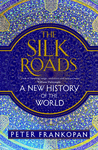
The Silk Roads: A New History of the WorldThe Silk Roads: A New History of the World by Peter Frankopan
My rating: 5 of 5 stars

This is a very useful history, looking at world events through a lens I had never considered: Central Asia's wealth and the West's efforts to possess it. The author traces the development of trade, empire, war, and colonization in the region that stretches from the Mediterranean to Western China, which was, of course, the location of the original "Silk Road." I found it very eye-opening, and most of it entertaining. (Where I wasn't entertained, I was still informed, which is a different reward.) :)

I especially enjoyed the ancient history part, which is why I started the book, but the modern history was equally informative. It showed how many forces have remained constant for millennia. The main idea is that Central Asia has been a source of great wealth throughout history, and the efforts to obtain that wealth (and guarantee its flow) has been a preoccupation of Western powers for thousands of years. Whether it's silk, silver, horses, spices, opium, rare earths, or petroleum that is capturing the attention of traders and speculators and governments, the effect has been to cause competition and war to obtain it.

One of the ways information is framed in this book is to show how much history is driven by trade and profit. Everything is about the money first, and the politics follow. That seems obvious, and has been pointed out endlessly everywhere, but it really informs every moment of history as it is described in this book, and explains better than anything I've read before the movements of people and growth of cities and spread of ideas, including religions. What struck me was the constant revelation of the great wealth of this city or that one, of this empire or that one, in places that are mostly blank in my understanding or only roughly penciled in. In regions that seem, in my mind, to be a deserted wasteland (metaphorically, since I know so little about them), huge numbers of people have lived and civilizations have thrived, with wealthy populations and advanced societies that included many educated, cosmopolitan people enjoying high levels of sophistication. Think Merv, and Balkh, and Samarkand, and Mosul, and Edessa, and dozens more that may seem familiar or may not.

The middlemen all along the route took their cut, and that explains the dramatic push of poor Westerners to find a way around them. The desire for Central Asia's wealth explains the Age of Exploration. It explains the "Great Game" in Afghanistan and India, and it explains British Petroleum, and the toppling of governments. It explains (sort of) how the United States could first arm Saddam and then attack him, or revile Iran and then arm them. Specific examples of European and American colonization or exploitation explain anti-Western sentiment there far better than explanations I've heard since the 80s or 90s in media or elsewhere.

What the author does so well in this book is put this region of the world in the very center of history. Right or wrong, it changes how you look at events, and how you see life on the periphery. It's a "walk a mile in his shoes" exercise that has given me a great deal of insight into how people in the Middle East might see their history, their place in the world, and the relative trustworthiness of our government and institutions, or our corporations. When Westerners--British East India Company, or Exxon, or Soviet Russia, or Hitler's Germany--want to extract a nation's wealth, and then use that wealth to oppress the people in their own land, and treat those people and their needs as less significant, calling them "backward," or "tribal," and brutally suppress their very natural objection to that treatment... well, it's easy to see why they would consider that unjust. You can see why they would expel the colonizers. Why they would nationalize oilfields and railroads. Why they might still be angry.

There are other ways to look at all of these events, of course, but I found this perspective very useful. While it was sometimes uncomfortable, it was enlightening, and well worth spending the time investigating. In addition, the scholarship was excellent (beyond my ability to judge, that is) and painstaking, with extensive notes for the skeptical. So both for its excellent information and its unique perspective, I must highly recommend the book.

View all my reviews