Showing posts with label intrigue. Show all posts

Thursday, September 17, 2026

Where Prince Otto Drops the Ball

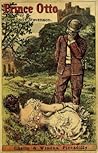
Prince OttoPrince Otto by Robert Louis Stevenson
My rating: 3 of 5 stars

Not a very entertaining book, unfortunately.

I started as a fan of Robert Louis Stevenson. I read Treasure Island and was surprised at how entertaining it was. And I rather liked Kidnapped. But I hated The Master of Ballentrae, and found nothing to admire in Dr. Jeckyll and Mr. Hyde. I thought I would. I kinda thought I was gonna like this, and for a minute I did, but everything I hoped for fell apart.

Prince Otto is the ruler of a small (like Lichtenstein) princedom in what we have to guess is Germany now. I thought it was set earlier, but it is apparently meant to be late 19th century (when it was written). He is a lazy ruler who likes to hunt and avoid work. The story starts with him hunting and then slipping away from his people. He crosses the border to another small country, where he isn't recognized, and he gets the unvarnished version of how he appears to his people and their neighbors. It isn't all surprising, but it does wake him up a bit. It seems like he wants to do better.

When he returns to the capital, he interrupts a cabinet meeting he was never invited to. His prime minister and his wife and others are planning a war against one of their neighbors (which he has just discovered) and without addressing the secret openly he tries to intervene in his own country's affairs. In part, they are doing it to prevent the country from rising up to declare itself a republic; in part, they are staging a coup for the reasons people always do that. So he presses and they push back; he tries harder, they try harder, mocking him. His wife's betrayal wounds him most, and he believes she is also unfaithful to him. Eventually, he realizes he looks a fool and ends the meeting. He looks for an ally in an old teacher, who supports him at first in taking back the reins, but later convinces him he's fooling himself. He has no leadership qualities, no strength of character, no way to come back from the useless prince that he has been.

Here I still hoped he would do something great. That would be a cool novel. But he collapses. All he can do is go along with the coup and make no fuss. He decides opposing it would be beneath his dignity. He has a chance at some intrigue with a countess who is on the edge of the conspiracy and would help him oppose it, but he gives that up.

The end of the novel is nowhere near where I guessed it would go. It is called a romance, which can either mean just a 19th century adventure novel or a kissing book, and I think he was referring to the latter. Apparently he had started this as a play, and in that form it might have made more sense. Here, though, it becomes a strange animal, with an uneven tone and unappealing lovers.

Disappointing. Unsatisfying. Even worse, the way he talks is deeply disturbing to me. (He keeps lamenting his weakness and unfitness in a way that is just icky. Pull it together, man!)

I would have liked the novel it promised--the one where he comes back, figures out what is going on, uses ingenuity and bravery to set things on the right track, maybe even puts his country on course for democracy, and earns the respect of his people. It doesn't do none of that stuff.

There are some good passages, a few things to enjoy, so I give it a hopeful 3 stars. But I recommend you read Treasure Island instead and never mind so much about this one.

View all my reviews

Saturday, January 4, 2025

Where Julian Fights for Alice

Peveril of the Peak (Edinburgh Edition of the Waverley Novels)Peveril of the Peak by Walter Scott
My rating: 5 of 5 stars

I loved it. Easy 5 stars. This is one of my favorite Scott novels, so it is strange to see that the most common score from other readers was a 3. Huh. But that's alright.

[Summary--skip ahead without worry:]

Julian Peveril, the heir of a minor title and his father's diminishing wealth, is in love with Alice Bridgenorth, a beautiful and kind young woman from a family his hasty father cannot approve. She is from a rich Puritan family, folk who just lost the upper hand when Cromwell's reign was ended; he is from a proper Protestant family that has ties to old Catholics. They were born as neighbors, and for awhile they were friendly. Bridgenorth saved the old Peveril during the time of the Puritans, and later, when politics changed and when Bridgenorth's wife and other children died, the Peverils returned the kindness by raising the baby Alice in their household. But the families were separated by events. Over on the Isle of Man, when the Puritans were cast down, Alice's uncle was killed by Julian's relative, Lady Derby, and when Bridgenorth tried to bring that woman to justice for the killing, the Peverils interfered. They were enemies from that point on. Bridgenorth took his child back and disappeared.

Fate is tricky, and those children became acquainted anyway. And then, through the course of a pretty long novel, they fight to either get their parents' permission to marry or (last resort) honor their parents' wishes by forever parting. Most of the middle concerns the so-called Popish Plot (a real event of history, though the plot itself, at the time, probably was invented just to harm certain people). This brought many very cool characters together, all with intrigues and plots, getting Julian and his family thrown in prison, exposing Alice to men who would use her beauty to their advantage with Lord Buckingham or the king himself.

Fenella, the deaf-mute servant of the Countess of Derby over on the Isle of Man, is probably the best character in the novel. Scott often creates amazing, brilliant, resourceful female characters, giving them so many memorable scenes, and this young woman numbers among the greatest of his creations. Her participation in intrigues, and her manipulation of events, all while being sympathetic and likable, even lovable, makes her one of my all-time favorite characters. Her co-conspirator, Christian, who goes by several names in the novel, is also very interesting, very compelling, though definitely not sympathetic. Well, maybe a little, at the end. But pretty evil. Lord Buckingham is rather in the same vein. Also, Julian is a good MC--an honorable young man, deeply in love, and though he is more naive at times than his opponents, raised on an island as he was, he is active and capable. He can't overcome everything thrown at him by his own power, but he keeps fighting through, gathering help where he can. I liked him.

Sir Walter Scott, as always, does a great job at differentiating his characters, giving them their own voice and their own motivations, and as a master of historical settings--especially this one, apparently, set during the Popish Plot--he creates a believable and highly affecting world for their actions.

It isn't for everyone, though. Most readers wouldn't even open this novel. I get that. And among that smallish number who did trouble themselves to read it, most of them liked it less than me. I'm surprised by that, but I might account for it a little. Obviously, it's an old novel, and his language is a bit difficult, even semi-archaic at times. At the best of times, it is quite ornate, written in a high style. That's cool, but not every modern reader will make a seamless entry into his prose. I know I didn't, originally. However, the more familiar I am with his style, the less impenetrable I find it, so I have no doubt I enjoyed this more for having read other novels by him previously. And his pacing may not be to everyone's taste. This is a pretty long book, with lots of intrigues, and though that leads to some exciting action, most of them are planned and then aborted for various reasons. But I found it entertaining throughout. Plenty of fun. IMO, anyone who can read a Dickens novel (for example) with any pleasure at all will find this a fast-paced adventure that reads like an action movie.

You know, by comparison.

And I liked the ending. So--thumbs up.

Recommended for those who enjoy and have patience for older historical novels. This is one of my new favorites.

View all my reviews

Thursday, April 14, 2022

Where Admirable Crichton Is an Understatement

The Novels of Willlam Harrison Ainsworth, Vol. 16: Crichton, Volume 1 (Classic Reprint)The Novels of Willlam Harrison Ainsworth, Vol. 16: Crichton, Volume 1 by William Harrison Ainsworth
My rating: 4 of 5 stars

A year ago, I'd never heard of William Harrison Ainsworth. But that's a shame. He's an excellent 19th Century writer of historical romance, worthy of being mentioned alongside Dumas and Scott, and surely should be read by some of those authors' many fans. He's definitely got his own voice and manner, so it's not a slam dunk, but I find his books very entertaining.

This is the story of a brilliant Scotsman at the French court in 1579. It begins with Crichton facing and defeating the scholars at the University of Paris in debate. The historical Crichton supposedly spoke and wrote fluently in 12 languages, and this as a very young man, even a teen. The University proclaims him thereafter The Admirable Crichton.

But he was more than an impressive scholar; he was also the leading champion at the joust *and* Marguerite of Valois's lover (at some time before her husband, Henry of Navarre, became Henry IV of France). He was a devout Catholic, almost fanatic, putting him at odds with some of the protestant characters in the story, but as a gentleman and man of honor, he treats all with respect and fairness.

The villain of the story is Catherine de Medici, along with her astrologer, while her son the king, Henry III, falls somewhere in the middle. He's pretty villainous, TBH, but sometimes shows an honorable side. His mother has no good side at all.

From the moment Crichton emerges from the debate, he's involved in one intrigue or another, in one battle or another, saving one desperate young woman or another. He protects Marguerite, though he is ready to be done with the affair; he works to rescue Esclairmonde, a beautiful new mystery at court, who is an unwitting part of some scheme by Catherine de Medici and desired by the relentless king; and he fights to save the life of a young Italian singer who is fleeing from a nobleman of Gonzaga. At different times in the novel, he becomes the defender and champion of many other men and women.

The story is ambitious and complex, full of intrigues and plans put together in a moment and falling apart almost as quickly. It's a lot to follow, but not ridiculously so, though I'm sure a misunderstood the significance of many overheard details and bluffs and betrayals. Still, there is a lot of action to make the intrigues plainer, and if I missed something here and there I'm sure it doesn't matter that much.

The author's language is elevated and leans toward the scholarly, though it is still vigorous and active, and close to the language you find in a Scott novel. He likes to throw in songs and poetry as much as Tolkien ever did, generally to good effect (though I'm not a fan of the frequent Latin and French quotes that are not translated) and the author's erudition is most evident in these examples and his classical allusions. He might have been writing for a more educated class than I represent, but I've gotta admit I still really enjoyed it.

There are plenty of courtly scenes filled with dialogue, and people sneaking around to overhear plotting, but there's also lotsa action here--men looking for and finding trouble in pubs, and rowdies talking shit on campus until a riot breaks out, and bravos looking to assassinate the king, and knights jousting for a cheering public, and on and on. I find the combination of scholarly language and violent, mean, insulting behavior an entertaining mix, and I feel like his books should be more widely read. Bearing in mind all the usual caveats that go with literature of that era, this is a fun book and might well require a second reading someday.

Recommended.

View all my reviews

Friday, May 21, 2021

Historical Action Mystery en Español

El asesinato del calígrafo de BagdadEl asesinato del calígrafo de Bagdad by José Vicente Alfaro
My rating: 4 of 5 stars

I thought this was an interesting, entertaining, well researched historical novel with an emphasis on plot and action.

For those like me who are middling Spanish readers, this should be quite comprehensible. I found it so, and that helped me enjoy it.

The story centers on Theobald, an English monk who travels to Baghdad because he wants to be in the center of scientific and literary studies and has skills as a translator. The action takes place on all sides of him--a kidnapped boy, a murdered translator, a framed businessman, an escaped princess, and a powerful caliph facing intrigues of many sorts. It's clever how all these plots (and more) intertwine and are drawn together at the end, and I enjoyed the mystery as much as the action.

It's clear the author did a great deal of research and set the story in the midst of actual events, but I couldn't help thinking that some of the action was out of character for that cultural setting. For example, some of the movement of female characters and interactions with men outside the family probably would not have happened (afaik), and those apparent flaws disturbed my appreciation somewhat. However, the author clearly admired many aspects of that society and generally did it justice, emphasizing the progressive attitudes toward learning and the arts, the period's flourishing trade, and the attitudes of religious tolerance. Overall, the novel gives a fair representation of the empire at that time while telling a compelling and satisfying story.

Recommended.

View all my reviews