Showing posts with label romance. Show all posts

Friday, October 16, 2026

Where Ben And Lady Jennifer Get Their Courage Up

Always Remember: Ben's Story (Ravenswood, #3)Always Remember: Ben's Story by Mary Balogh
My rating: 4 of 5 stars

There aren't very many surprises in the book, but it does everything you want it too, just the same.

You know going in that illegitimate son/brother Ben is going to find some way to end up with the high-born but disabled Lady Jennifer. He doesn't fit in anywhere because of his origins; she doesn't fit well because the marriage market was cruel; but they're both great people who deserve to ignore the rules.

What I love about Mary Balogh books is the way she weaves in subplots and interesting conflicts. For Lady Jenny, there is a subplot regarding everyone who helps take care of her, especially her aunt, who is patient and giving but would kinda like to remarry, but she won't do anything to abandon her niece. And for Ben, there's the issue often brought up but never resolved about who his mother was, who her family was, and when a half-brother finds him and reaches out to him by letter, he's not sure if he wants to try to meet a whole family who may not want to actually know him. There's also his own family's feelings about who he is to them and how he should live his life, and he has a young daughter to think about. She really wants a mother, and he's prepared to choose someone he doesn't love if there is no other option.

So the romance progresses in fits and starts, with both cautious about being anything more than friendly, but his kindness changes her feelings, and her lovableness makes him start to have the courage to break society's rules. Both of their families see what is happening and urge them to be careful, but they win them over as much as they win each other over. As usual, the author has the main characters growing and changing individually as much as she has them growing together, and I find that very satisfying. And entertaining, of course.

The first half moves a little slowly (still pretty good), but it picks up the rest of the way, and the second half especially is great. IMO.

Recommended.

View all my reviews

Thursday, September 17, 2026

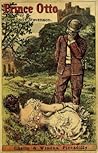
Where Prince Otto Drops the Ball

Prince OttoPrince Otto by Robert Louis Stevenson
My rating: 3 of 5 stars

Not a very entertaining book, unfortunately.

I started as a fan of Robert Louis Stevenson. I read Treasure Island and was surprised at how entertaining it was. And I rather liked Kidnapped. But I hated The Master of Ballentrae, and found nothing to admire in Dr. Jeckyll and Mr. Hyde. I thought I would. I kinda thought I was gonna like this, and for a minute I did, but everything I hoped for fell apart.

Prince Otto is the ruler of a small (like Lichtenstein) princedom in what we have to guess is Germany now. I thought it was set earlier, but it is apparently meant to be late 19th century (when it was written). He is a lazy ruler who likes to hunt and avoid work. The story starts with him hunting and then slipping away from his people. He crosses the border to another small country, where he isn't recognized, and he gets the unvarnished version of how he appears to his people and their neighbors. It isn't all surprising, but it does wake him up a bit. It seems like he wants to do better.

When he returns to the capital, he interrupts a cabinet meeting he was never invited to. His prime minister and his wife and others are planning a war against one of their neighbors (which he has just discovered) and without addressing the secret openly he tries to intervene in his own country's affairs. In part, they are doing it to prevent the country from rising up to declare itself a republic; in part, they are staging a coup for the reasons people always do that. So he presses and they push back; he tries harder, they try harder, mocking him. His wife's betrayal wounds him most, and he believes she is also unfaithful to him. Eventually, he realizes he looks a fool and ends the meeting. He looks for an ally in an old teacher, who supports him at first in taking back the reins, but later convinces him he's fooling himself. He has no leadership qualities, no strength of character, no way to come back from the useless prince that he has been.

Here I still hoped he would do something great. That would be a cool novel. But he collapses. All he can do is go along with the coup and make no fuss. He decides opposing it would be beneath his dignity. He has a chance at some intrigue with a countess who is on the edge of the conspiracy and would help him oppose it, but he gives that up.

The end of the novel is nowhere near where I guessed it would go. It is called a romance, which can either mean just a 19th century adventure novel or a kissing book, and I think he was referring to the latter. Apparently he had started this as a play, and in that form it might have made more sense. Here, though, it becomes a strange animal, with an uneven tone and unappealing lovers.

Disappointing. Unsatisfying. Even worse, the way he talks is deeply disturbing to me. (He keeps lamenting his weakness and unfitness in a way that is just icky. Pull it together, man!)

I would have liked the novel it promised--the one where he comes back, figures out what is going on, uses ingenuity and bravery to set things on the right track, maybe even puts his country on course for democracy, and earns the respect of his people. It doesn't do none of that stuff.

There are some good passages, a few things to enjoy, so I give it a hopeful 3 stars. But I recommend you read Treasure Island instead and never mind so much about this one.

View all my reviews

Sunday, August 16, 2026

Where Quentin Makes the Most of His Opportunity

Quentin DurwardQuentin Durward by Walter Scott
My rating: 5 of 5 stars

I'm a huge Sir Walter Scott fan, and this one is right down the middle for me. Great book. All five stars.

Our main character is a Scot, but he's in France, finding a place (with the help of his uncle) in the Scottish Archers, a troop of Scots nobles who served Louis XI. In this period, the Duke of Burgundy was richer and more powerful than the king himself, and the story deals with their conflict.

Quentin is one of those somewhat naive but very earnest young gentlemen who make good impression on jaded old soldiers (or rulers). He's kidded a little by others, but he's well-liked and even respected, and even though he's brand new in his position, he's called in for doing the king a special service immediately. A pair of high-born women--a youth named Isabelle and her aunt--have run from Burgundy because Isabelle is being forced into a marriage she doesn't want, and take refuge with the king. This is embarrassing to him, because he knows he can't protect her. Louis choses to send Quentin with Isabelle and her aunt to Liege to take refuge with a bishop of that city, one of his relatives. But the king is planning to have them ambushed on the way so that she can be carried away by another nobleman who is helping Louis disrupt the city of Liege, trying to weaken his enemy, Burgundy. Louis gets his help with an uprising; De la Marck gets a pretty young wife.

On the way, Quentin falls in love with Isabelle, of course. He also uses his wits to discover the plan, letting him avoid the ambush. The king is frustrated that the young man he chose performed too well; Quentin is angry that the king he vowed to serve would set him up. There's tons of action and intrigue here, history and politics, and lots of great characters. The villains--a couple of Bohemians who work secretly for the king--are some of the most interesting. Scott always has a soft spot for dangerous people on the edge of society.

Near the end, there is a showdown between Burgundy and France, and then an awkward joint attack on Liege, where Quentin has a chance to win Isabelle's hand.

This is the quintessential medieval romance (or 19th century romance if you prefer, set in medieval times). Knights and castles, ladies and fools, battles and debates. It's all written in an elevated, kinda wordy style, but if you've read Scott before, you already know. I love it.

Recommended. :)

View all my reviews

Saturday, May 23, 2026

Where Devlin Puts His Foot in It

Remember Love (Ravenswood, #1)Remember Love by Mary Balogh
My rating: 4 of 5 stars

Another satisfying and entertaining book by an author I really enjoy. It didn't have quite as much closure as I would have liked, but I think some of that is coming in the sequels.

[Some minor spoilers. Probably none are surprising.]

I enjoyed the whole thing, but I especially liked it from about a third of the way in, part 2 of the book, where the story really begins. The first part is more like an extended prologue, with the characters half-formed and their relationships murky. This leads to the huge scene at the end of part 1, when Devlin blows up his family, his love life, his future, and the whole community by publicly revealing his father's infidelity. Very quickly, he finds himself pushed out, and goes straight into an officer's position in Spain against Napoleon. And we jump ahead six years.

I find all of Balogh's books have a somewhat awkward setup. It's like those chess puzzles in the newspaper where the pieces have been put in odd positions and the reader is supposed to put the black king in check mate in so many moves. It doesn't really matter how we got to that point, or if such a starting position is realistic or not. Just accept it and move on. That's how the author's plots are constructed--usually starting in a rather odd place that doesn't feel exactly organic, but that works its way through in a realistic way after that to a satisfying conclusion. The sudden emergence of love or revelation of love between young Devlin and even younger Gwyneth, occurring on the same day that he sabotages his future by acting in the most astonishing, foolish way, getting himself kicked out of the house and disappearing for six years, is a bit awkward. But the rest of the story, IMO, makes up for it, progressing in a much more believable way.

And all her stories (that I've read) are kinda similar. I think she dreams up the setup and has to work backwards to explain how they got there, then go forwards again. This is my theory. Ahem.

Anyway, the rest of the book works well, leading the protagonists towards each other once again in a slow, choppy, seemingly-hopeless but ultimately inevitable way. What I like is how so much of the story is taken up with all the other relationships that need repair, like that between Devlin and his younger sisters, his brothers, his friends, and between him and the community. Nothing is simple, but there is growth and forgiveness and healing in all of these areas that makes good sense. The fact that some of the repairs are not absolutely completed by the end of the book but are hinted at works well enough, and that includes Devlin's somewhat muted emotions. It's a curious deviation from genre norms, I think, a bending of the rules even, but nothing broken.

I was sad that his sister Pippa still seems broken by the events early in the book and isn't exactly herself by the end, but I think that may be resolved, as I said, in the sequels. And his half-brother is still not quite there. Same answer, I guess.

Anyway, I liked it. It's supposedly the first in the series, though I don't think they have to be read in order.

View all my reviews

Sunday, April 26, 2026

Where They Should Just Wake Up

Slightly Married (Bedwyn Saga, #1)Slightly Married by Mary Balogh
My rating: 3 of 5 stars

Pretty good. I still like the book and the author, but this is my least favorite of her novels so far. 3 stars.

I liked Aidan and Eve--by the very end. But it took me a long time to warm up to them (and them to each other). They were admirable all the way through. Honorable. Good people, trying to do the right thing. But I didn't care much about them. Both of them were so cold to each other, outwardly, anyway, and formal, and uncommunicative. It wore me out. In the other books I've read by Mary Balogh, I liked and enjoyed and rooted for the main characters almost from the beginning, and that didn't happen here. (Could have been me, obviously.)

Aidan promises a dying soldier to protect his sister, Eve. He brings her the news of his death and discovers by a quirk of their family's will that she will lose everything if she isn't married by a certain date--in about a week. Because Eve makes a home for servants who have been cast off by the world and a pair of orphaned children that she is more or less parent to, it is not just for herself but for their sakes she wants to keep her home and property. So... Aidan marries her, promising to leave her alone as soon as the wedding is over. Problem solved!

Complications arise, obviously. Everyone learns about the marriage, and they have to follow through on more than just saying "I do." They hang out, and she meets his family and wins them over. But both of them think, until almost the end, that the other one wants to be left alone to go back to their regular, single life once everything is done. He thinks she does; she thinks he does. Even though they have been growing closer during all this time together, learning to admire and care for one another, they keep that feeling hidden. Really hidden. Smashed down deep. A smidge of communication could have fixed this much sooner.

It ends well, and I almost gave it a 4, but 3 is right--it was good, good enough to read and recommend to people who like this type of story.

View all my reviews

Sunday, April 19, 2026

Another Graustark Adventure

Beverly of GraustarkBeverly of Graustark by George Barr McCutcheon
My rating: 4 of 5 stars

Not really a 4--but more fun than most 3's. 3.5, IMO.

I rather like this book and this series, despite a number of criticisms any reader could easily make. It's not very serious, mostly silly melodrama, and reads a little cartoony. It's coming from outdated turn-of-the-century (120+ years ago, I mean) sensibilities--putting me in mind of early Hollywood. In fact, the whole time I was reading this, I kept imagining it as a very old epic filmed on a soundstage with cheesy costumes, stilted dialogue, and lame sets. That's not a criticism, though, but rather my opinion about the best way to approach this book. You have to let it be a bit over-the-top.

Like the Zenda books, this series is about a fictional small country in Eastern Europe. In the previous book, an American man married the princess of the country, and in this one, a Southern woman, a friend of the princess, visits Graustark and falls in love with a man from neighboring Dawbergen. He isn't what he seems--then he is--then he isn't. You don't know until the last couple pages who he actually is. But Beverly and Baldos fall in love while he is hiding from partisans trying to overthrow the rightful prince of his country. I don't think I could put up with Beverly in real life. Her game playing--pretending not to care about Baldos, then showing him a little attention, followed again by studied neglect--was annoying, but treated like just what women do.

Overall, it's a light adventure, or maybe a cozy romance, with pretty low stakes and a happy ending. It's pretty fun, and though it suffers from many of the outdated attitudes of the time, it's entertaining and silly, and readers might be able to overlook its flaws just enough to be amused by its melodrama.

View all my reviews

Friday, April 3, 2026

Where Lily Stays Lily

One Night for Love (Bedwyn Prequels, #1)One Night for Love by Mary Balogh
My rating: 4 of 5 stars

This is a very entertaining book. I enjoyed reading it, hoping for happy endings for a number of characters, wondering how it would all work out, and I was eagerly looking for the answers to questions through the whole second half like it was half mystery. A couple of those questions are left somewhat unanswered--technically revealed, but in a vague way--which I didn't love, but it didn't detract too much. Still a lot of fun.

(For example--Lily was told to find something in her father's bag, and the reader knows it involves a secret. I want to find the bag, or find what was in it. Lily never finds it, unfortunately, and though Neville locates someone who knows what it involved he never tells us explicitly what that was. We're clued into the secret already by that point, so it's kinda moot, but I really hoped they would somehow find the original document, at least for closure. Same for their original proof of being married--I hoped that would turn up, somehow, like in the TV show Belgravia. We didn't need it, but it felt like a missed opportunity.)

But overall, it's a cool plot with good twists and lots of great scenes.

The FMC, Lily, is a great character, original and likable, and so is Neville, which makes them easy to root for. And the people who are at first kinda anti-Lily come around in a way that does them credit, so that we can like them, too, or almost all of them. I like that Lily herself is unaffected, friendly with people of all stations, and remains that way throughout, chatting with people her peers would never chat with, peeling potatoes that they would never peel, but still able to be herself with the gentry. At first, they are put off by that aspect of her character, but later they appreciate it. That's a lot of her charm, for the reader as well as for the other characters in the novel, and she keeps that innocent quality from beginning to end.

Some of the story, by the last few chapters, is a little melodramatic, and that stretches the conclusion out more than I would like. It also takes the tone in a too-serious direction--too many apologies and reminiscences, too many starts and stops and partings, too many "I'll wait until you're ready" moments--so that I winced a tiny bit in the last 30 or 40 pages. But it still was mostly upbeat and fun, which preserved (for me) an "I liked reading this a lot" 4-star rating. (I've read the books in the wrong order, accidentally, so I knew how the plot came out before I started, and I'm not sure if I would have liked this more or less if I had read it in the right order. Doesn't really matter. I enjoyed it fine.)

In any case, I find myself entertained and charmed by Mary Balogh's books, enough that I've already ordered another one in the related series, and I'm looking forward to it. Maybe I'll buy and read them one at a time, all 40 or 50 of them, like ET following a trail of Reese's Pieces...

Recommended.

View all my reviews

Sunday, February 22, 2026

Where the Haunting Takes a Turn

Good Spirits (Ghosted, #1)Good Spirits by B.K. Borison
My rating: 3 of 5 stars

This was pretty good. 3.5 feels closer to how I experienced it. Mostly fun enough and clever enough to read a little each day, though I didn't connect with it emotionally as much as other readers did.

It's a brisk read with some likable characters, and I was especially curious about the mystery of it--how could this Ghost of Christmas Past character be so drawn to and connected to this modern woman? What was in his past or hers that made this haunting go down a path so different from the ghost in the Dickens version? They have some kind of fate thing going on, and their trips first to her past and then to his seem to be teasing something big, something cool, and I was very curious.

There is an answer of sorts, but it was a little underbaked. How the afterlife/haunting-for-a-purpose thing works is not really sorted out. It's mostly skipped over, taking us to the ending. We got the resolution I wanted--this is a romance, after all, and a happily-ever-after is required--but I would have liked there to be a little better explanation for why it worked. Why did this couple get a chance that (seemingly) no other couple have ever enjoyed?

It's quite a sexy book, and I can see that being a plus for some readers, maybe even the main draw, and probably a deal-breaker for others; for me it was--fine. It was fine. Not remarkably different from the fantasies and science fiction novels and historical mysteries that are my usual fare. A touch more explicit, though, if I'm honest. I'm curious what level of spiciness more experienced readers of romance would consider this...

Overall--a pleasant enough read with agreeable characters and nice resolution.

View all my reviews

Thursday, October 30, 2025

Where the Dowager Countess Takes a Chance

Remember When: Clarissa's Story (Ravenswood, #4)Remember When: Clarissa's Story by Mary Balogh
My rating: 4 of 5 stars

Here's another book I'm not exactly the audience for, but I enjoyed reading it. Quite a bit, actually. It was an entertaining story with some genuinely touching scenes.

Romance is not really my genre, though Jane Austen led me to Georgette Heyer novels (on the recommendation of some other Austen fans), and the fact that I liked those let me take a chance on this. Similar setting; similar social milieu. I bought the book on a whim because I made myself a deal--anytime I had to go in a drug store (not a frequent thing) I would try a book off the shelf. Last book was a Jack Reacher novel. I liked that too. In any case, I probably still won't read any modern-day romances soon, but I dig a good Regency story.

Clarissa, a well behaved rich girl, and Matthew, a bit of a misfit from a good family, were well-born neighbors, close friends as kids and teenagers, and though they might have been more than friends, Clarissa accepted an offer from the young Earl of Stratton that separated them and set the course of both their lives. Matthew wandered Europe and South Asia for a decade before returning to England to take up woodworking out of a rented room; Clarissa and her husband raised a family. Thirty years after they parted, with Matthew making tables and cribs and carving on the side, he's more working class than gentry, quietly content with his life, and she's a well-off widow with grown kids. But they take a chance on reconnecting, seeing if there's still some friendship to be had, and seeing how they both have changed.

With an understated conflict--there is one, but it's not that stressful--and fairly low stakes overall, it's a cozy romance (if I can use that term). However, there's still lots of interest, and a big part of the conflict is between Matthew and his estranged family. It becomes clear he has to sort that out before he can pursue a real romance. The scenes with his older brother and his family are very sweet, very touching, with a surprising emotional payoff. Nicely done.

It's romance. There is a happily ever after. It's not gonna fail you there. But it's a nice story getting to that point. Now I'm curious about this author's giant back catalog. Sheesh! I thought the prose was effective and appealing, usually signs of a thoughtful, careful writer, but she clearly writes at a freakish pace... Anyway, it works, so I'll try another.

This one is recommended.

View all my reviews

Tuesday, September 16, 2025

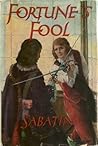
Where Fate Really Hates Randal

Fortune's FoolFortune's Fool by Rafael Sabatini
My rating: 5 of 5 stars

This is a very entertaining and well-written historical adventure novel set in 17th century England. I enjoyed it.

[Spoilers about plot abound here. Skip ahead if you prefer.]

The story of a mercenary soldier with bad luck his whole life, it tells about a particularly tough period in the main character's life. Returning to England to try to find work, Randal Holles struggles to overcome forces arrayed against him. His father was a famous traitor, making his very name an enemy to luck. Old friends try to entice him to join their rebellion, and even though he doesn't take them up on it he becomes a known associate and at risk of arrest. One acquaintance with a title and pull tries to get him a position overseas, but a nobleman of higher rank forwards his own candidate instead, and he has almost no way forward. In addition to all this, the plague returns, gates are closed, and he has no way to get out of the city.

[Most critical spoiler. Jump down if you want to avoid it.] The biggest turn of bad luck is when another noble acquaintance--Lord Buckingham, a man who had been a boy when Holles saved him--offers him work, but it requires him to help kidnap an actress Buckingham has a fancy for. Holles refuses, but worsening circumstances eventually force him to do him this service, the worst thing he's ever done, over the objections of his pride and conscience. And the woman turns out to be his lost love, a girl from his youth, the woman he searched for and couldn't find.

[That's the end of the spoilers.]

The rest of the novel deals with Holles working through the consequences of his actions, and I feel like the author does a good job of showing us how he changes course, leading to a satisfying and reasonable ending.

Sabatini is, to me, like Sir Walter Scott translated to English a century nearer our own time, with a lot of the digressions and authorial intrusions cut out. I love Scott, but Sabatini writes something closer to the "good parts" version of Scott's historical adventure stories. This book is from 1923, but I feel like a new edition with a decent cover would get people in 2025 and beyond reading his books like they were new, because it reads very modern overall. IMO, obviously.

Good book. Lots of fun. I recommend it for people who enjoy historical adventure novels.

View all my reviews

Wednesday, September 3, 2025

Where Constantinople Falls

The Prince of India or Why Constantinople Fell (Volume 1 & 2)The Prince of India or Why Constantinople Fell by Lew Wallace
My rating: 5 of 5 stars

I thought this was an amazing book. Two volumes--over 1000 pages--lots of characters and settings--and it was entertaining throughout. I loved it.

These are my thoughts--bit of a jumble:

There is a sort of quirk about the book. The main character, the so-called "Prince of India" is a figure from legend known usually as the Wandering Jew, a man condemned to long life for taunting Jesus on the way to the crucifixion. He's an interesting character, a brilliant man who wants to end religious strife, who travels the world, learns languages, makes himself wealthy so that he can have access to important people, and espouses a sort of unification of religion. Though he does some awful things before the end of the novel--causing a deadly fire before helping the Turks defeat the Greeks--most of the time I found myself very sympathetic to him, particularly as he tried to get the leaders of Islam and Christianity to recognize their connection, their mutual belief in a loving god. He reads like a sort of Gandalf figure, or some other wise man who is endowed with a little supernatural ability. (He's immortal, rich, intelligent, and a capable astrologer. He's not magic, exactly, but he can do some stuff.)

From time to time, the author's overt support for Christianity comes through, rather like you find in Quo Vadis or similar novels (which I also liked, actually), but it's generally no more overt than most Regency or Victorian literature, for example. (We don't get any readings from Fordyce's sermons, thankfully. And we don't get a Jane Eyre preparing to go preach Christianity in India.) It's mostly a romance like Sir Walter Scott or maybe Dumas, with action across Arabia and Syria and, especially, Constantinople, with hidden treasures, sailing ships, war, and abducted maidens who need to be rescued.

The sultan's best friend, Mirza, the best warrior in the story, is the heart of the second half of the novel. He is a loyal fighter who was stolen from his home in Italy as a baby. He is sent to the city as a spy where he is intended in part to gather information for the invasion, but he's tasked even more with the job of watching over and protecting Irene, the beautiful cousin of the emperor. (The sultan previously traveled to her home, disguised as a storyteller, and fell in love with her, intending to marry her.) Mirza falls in love with her too and starts to rethink his identity, taking back his name and title as Count Corti. When the friends meet again, both men pledge to protect Irene, no matter the outcome of the coming war. (They honor this pledge, and in the very end the sultan marries Irene while the count returns home to the mother who never stopped searching for him, where he discovers the sultan has long since paid to rebuild their home and restore their fortunes. But that's a spoiler, so shhh.)

There are about 10 really great characters in this novel, any one of whom should have their own book. Sergius, the idealistic Russian monk, might be my favorite. Irene, the iconoclastic and stoic noblewoman, unbowed after long imprisonment, and who refuses to wear a veil as honest women were expected to do, is admirable and captivating. Lael, the young Jewish woman adopted and educated by the Prince of India, is sweet, and the wealthy Demedes, the epicurean son of a courtier who abducts her and hides her in a cell floating built in the giant underground cistern of Constantinople, is a great villain. The African servant of the Prince of India who helps Sergius find her and free her is a a cool character, too.

The novel concludes with the siege and capture of the city. It's a great retelling, stretching over many packed chapters, all given from the POVs of characters we care about. Very affecting. Very informative.

I enjoyed this from beginning to end, and even though I don't align with the author's central religious belief, I applaud his ecumenical philosophy, the one he gives mostly to the Prince of India and, in some measure, to Queen Irene and the monk Sergius. It's surprising in a novel like this, published in 1893, and I give him some credit. Lew Wallace is better known for Ben Hur, and now that I've read this one I realize I need to read that one, too.

Very good writer. Highly recommended.

View all my reviews

Friday, August 29, 2025

Where Kriemhild Gets Her Revenge

The NibelungenliedThe Nibelungenlied by Unknown
My rating: 4 of 5 stars

In part, I'm rating the translation and additional material, not just the original text. I didn't love the book itself--maybe 3 stars--but the appendices and other essays at the back are really good, and I thought the translation worked fine.

Curiosity drew me to the story and carried me through to the end more than the story. Some of the action and the overall plot is interesting enough on its own, but learning something about beliefs and norms and attitudes in Europe 700 or 1000 years ago is entertaining in a different way. Also, this story (or the Norse version) inspired the Ring Cycle of Wagner, and I always kinda wondered about the original. (It must be mentioned: Wagner was a racist dickhead and inspired a whole generation of racist nazi dickheads who looked to these stories as a source of ethnic and racial pride which they turned into war crimes, and they can all burn wherever dead racists burn--but I don't think we can blame the anonymous poet who wrote this 800 years ago for their antisemitism and bigotry.)

I wondered these things: what kind of story was it really? Was it mostly a kind of fantasy with River Maidens and magic weapons? Or was it mostly military, with lots of Arthurian jousts? Or was it romance? (The answer is yes to all of those, it seems to me.) Also, what were the characters like? What was the society like? What did they value?

Supposedly based on oral traditions going back to the 5th or 6th century, written about the 12th century, it does feel a lot like King Arthur stories. Knights have a strangely aggressive code where some killing, even murder, is just shrugged at, and other killing, when it seems very reasonable under the circumstances, is treated as heinous. It creates strange conflicts, like when Rudiger, a vassal of King Etzel, is sent to fight the Burgundians near the end of the book, and he can't figure out what to do. His daughter is pledged to marry one of the party he is sent to destroy, and he himself entertained them at his castle, so he can't honorably fight them. But he is pledged to his lord and can't honorably refuse. It's a strange scene when they're all crying about having to fight each other. In general, I found the points of honor confusing, since the knights were so dishonest and unscrupulous so much of the time that it was weird to think they still considered themselves honorable men.

I'd say the fighting dominates the story, but it started as a love story about two couples (Siegfried and Kriemhild, Gunther and Brunhild) each falling in love and getting married before they come into conflict. And there is a decent amount of fantasy stuff mixed in, including Brunhild's superhuman strength, though it's not treated as remarkable. As far as genre, it's an epic, but calling it a courtly romance (like the Arthurian stories) seems pretty apt, too.

Like in the Iliad, the named characters are all fantastic warriors who can kill dozens without getting a scratch. It's only when great knights face one other that someone has to die. The battles are very unrealistic as a result, and I find it super annoying that a hundred regular guys can die without upsetting anyone, but when one famous fighter dies, everyone cries. I guess that's the class system showing itself even in such old literature--only the noblemen matter. And the higher the rank, the more we're supposed to care about them.

There's a lot to notice here and a lot to take an interest in. I found this old work compelling enough that I want to find copies of the sagas related to it, and see if other cycles (like the story of Dietrich, also known as Theodoric) are available in English outside of crazy expensive textbooks. We'll see.

View all my reviews

Tuesday, July 22, 2025

Where Ruggiero Loves Beatrice

The Children of the King A Tale of Southern ItalyThe Children of the King A Tale of Southern Italy by F. Marion Crawford
My rating: 3 of 5 stars

I wish we had half stars. This is better than some books I've called 3-star reads, but I couldn't quite give it a 4. Alas.

But I still liked it, finding it interesting and entertaining for a number of reasons. First of all, it's written in a very smooth, glib way, with unornamented prose that feels more modern than it really is. It was published in 1885, but sounds (to my ear) at least 50 years more recent. Also, it makes Italy of 150 years ago or so very real, and very much a character in the novel. I found that enlightening, and learning often feels fun to me.

The main characters, at least the rich ones, seem like characters in a early 20th century British mystery novel, enjoying a long summer of ease on the Italian coast. The Marchesa, especially, is always lounging, always doing things in a languid manner, never showing too much emotion, and her dutiful daughter is a lot like her, but seems to be half waking up as she is being courted and pressured into an arrangement with a titled but poorer man who she realizes is a bad man too late. If someone had died on page 20, I might have thought I'd wandered into an Agatha Christie novel.

The two young Italian sailors, here called the Children of the King, are interesting in a different way. They are trustworthy but rough; principled; hard-working; and noble in spirit, though thoroughly working class. They man the ships that the wealthy elites lounge on all summer, and they have to watch without comment as their social betters play out their moneyed dramas. The commentary works both ways in the novel, with the rich Beatrice noting with interest the deep convictions and strong spirit of the sailors, though she has no emotional interest in them, while the poor servants (sailors, maids, and so on) watch and inwardly judge but outwardly obey the privileged and pampered elites who, to them, live in a different world. It's easy to see which side the author favored, though he's not too unfair to Beatrice, IMO. And I come down on the side of the servants, who are the more admirable characters here.

Another thing that interested me is how I never could quite decide what genre this book belonged to. Before I opened it, I expected it to be romance in the style of Dumas or Scott, and later I thought it might turn into a romance in the style of Nora Roberts, but in the end it's more like a Henry James novel, or E.M. Forster, or even Hemingway. That is to say, the genre is just... novel, I guess. With a tiny bit of adventure in a warm climate. A tad of romance. A bit of "novel of manners," too. Which all adds up to just novel.

I don't read that very often. It's alright.

Anyway, I like the author's style, and I'll happily pick up another book (off the shelf right beside it where I have 3 more) and the next one might be closer to my type. But this was still pretty good, and since it reads briskly, I think a lot of people who've never tried the author might enjoy it.

View all my reviews

Sunday, July 13, 2025

Where the Governess Finds Love and Mysteries

The Secrets of Hartwood HallThe Secrets of Hartwood Hall by Katie Lumsden
My rating: 3 of 5 stars

I enjoyed this novel, especially the last 80 pages or so, and though I wasn't loving it much in the first half, I'm rooting for the author, so I'm glad it took off. (IMO.)

The writing is very good, all through. And the characters are well-realized for the most part. I like the slow release of characters' histories, and I'll admit that I was surprised at one reveal, and thought it was better than what I was expecting. I wish the main character had been a little more active and empathetic earlier; she definitely improved. But I struggled through the pages with Margaret being blackmailed and just living with it. Of course, it is a theme throughout the novel that women are often trapped and made powerless, so it was probably intentional, and it matches the dynamic so often found in Austen novels or Jane Eyre or Agnes Grey. But Margaret is portrayed as especially timid or retiring, and I found it hard to admire her for much of it, as well as less fun to read.

When the mysteries start to be revealed, the MC starts being more active, showing more backbone, and for me it becomes a lot more fun to read. And though the ending isn't everything I hope for in such a novel, it makes perfect sense, and I have no real complaint.

(Okay, I do have a complaint. The Victorian sense of place, of class or station, of one's social position, is so noxious to me that, even though it's historically accurate, I cringe every time characters remind themselves and each other of what isn't possible--who is or isn't allowed to cook, and who can show emotions, and who can comfort whom or sit down to a meal together or sit together at church or consider marrying. It feels so toxic and contrary to human happiness that I get irrationally angry.)

Overall, this is a well-written, cleverly-plotted novel, promising other interesting books to come. And the author (based on her youtube channel) seems like such a pleasant person, I hope she has great success. A second novel is out, so I'll be looking for that one.

View all my reviews

Friday, June 27, 2025

Where Emily Saw Something Nasty in the West Chamber

The Mysteries of UdolphoThe Mysteries of Udolpho by Ann Radcliffe
My rating: 4 of 5 stars

I found this entertaining and interesting, even surprising, and the language is often striking and sometimes beautiful. As a big fan of old timey Romantic poetry, I can get behind the descriptions of waterfalls and mountains and raging rivers hidden away on trails frequented by bandits. (I couldn't make myself read the poems scattered here, though, where she rhapsodizes on wind and nightfall or whatever.) And the gothic stuff, with many towers and dangerous castles and the like, has got a great vibe. I'd say the vibe was the heart of the book and probably the best reason to read it still.

I won't say that it's generally fun like a modern mystery or bestseller type novel. It is sometimes, but most of the time it is slower than that, and needs to be approached differently (if you want to enjoy it, I mean). This is like if Jane Austen had a baby book with Bram Stoker, or George Eliot with Sir Walter Scott, where we have both action of a sort and a novel of manners. It's like a roller coaster that goes really slow, or a slow-burn romance that spends most of the middle on a different story, one that's all gothic and no romance. : ) It's not a rollicking read, but it does supply some decent action, some maybe-ghosts, a couple dollops of romance, and a bunch of intrigue. I'm okay with the mix.

It could, however, be about half as long without missing anything. We get virtually the same scene over and over--the same reflections, the same conversations, the same fainting spells. This is why I think it's rather like a really, really, really long song. It has a bunch of verses that are pretty similar, with about a dozen choruses that repeat every few pages. (Valancourt asks if he has any hope with her; she tells him he must go. Over and over.)

To sum up the plot--Emily is sent to live with an uncaring aunt when her parents die, where she falls in love with Valancourt, and soon the aunt marries a very scary Italian guy, Mantano. Then Emily is dragged away with them, first to Venice and then to the famous Castle of Udolpho, where much of the spooky, frightening stuff happens. All along, her aunt's new husband is terrifying, and we eventually realize he's hooked up with bandits and criminals and is probably a murderer. Emily's aunt dies, leaving her totally alone in a castle in the wilderness, and Mantano presses her to sign over all of her inherited lands and holdings, threatening her. Emily fears he will kill her either way, but she does eventually sign the papers. All of these actions happen over hundreds of pages of repeated conversations, repeated threats, and nearly identical inner monologues. If the author could have cut out the repeated stuff, we could have had a much trimmer book. Alas.

There's a lot of Scooby Doo type mysteries with non-supernatural explanations, but there are also many genuine life-threatening dangers, so the stakes are real here even if the ghosts aren't. There are also wild, long-held family secrets that get squeezed out over the course of the novel. And the love story is a good model for a lot of later novels, with misunderstandings and rash judgments, and--spoiler... skip ahead a few lines if you don't want to see... still a spoiler coming... here it is--the happy ending that we got was almost a surprise to me. I liked it.

I found this well worth reading. I was disappointed I couldn't find a hardcover copy for a reasonable price (like on eBay) and finally had to read it from a paperback. I wonder if there's a movie.

If you read Jane Austen and are curious about the various horrid books and overwrought gothic novels they talk about in Northanger Abbey, take a look at this one. You might enjoy it. I liked it enough to go track down some of the others.

View all my reviews

Sunday, May 4, 2025

Where We Dig the Secrets out of the Snow

The snow manThe snow man by George Sand
My rating: 5 of 5 stars

I really enjoyed this novel, and I may have some criticisms, but I thought it did all that it should do. 5 stars.

I have only read one other book by George Sand, and I liked it some. I expected about the same, but this was a lot more to my liking. Set in 18th century Sweden, in a remote manor, it's not the Paris I was expecting. The main character is a likable twenty-something man raised in Italy by his adopted parents, and he has a lot of questions about his past. He's made his own way in the world in a variety of ways, but when the story opens is providing for himself with a puppet theater, and he's scheduled to perform at the manor. Like many such novels, he starts to discover clues to secrets and mysteries in the snowed-in nobleman's retreat, and some of the clues seem to point to his own past.

This could have been a Sir Walter Scott novel, which is my usual yardstick. If you had switched covers, you could easily have fooled me. The historical setting; the very powerful sense of place; the family secrets coming to light; the importance of lawyers and documents and courts; the men and women of honor facing powerful enemies; the positive contributions of minor characters, especially servants and the lowest class of workers; and the feeling of destiny hanging over the whole thing. That's Scott all over. Oh, and like many Scott novels, it's got a real Gothic vibe, with a partly ruined manor across the frozen lake from the new manor with secret rooms and maybe ghosts, and I love it.

(BTW: there are many differences between this and Scott's novels, and I could probably summon a paragraph describing them, but let's just pretend I went to all that trouble. Clearly Sand is her own writer, not a mere imitator, with her own style, and I'm enjoying it.)

Though there's plenty of action here, both of the novel-of-manners type (rich people in drawing rooms type of stuff) as well as the physical kind, including bear hunts, sleigh crashes, and fighting, it isn't packed. Like so many 19th century novels, are long stretches of exposition that modern novels tend not to include, and if you're used to that and expect it, it's all good. (I am. I do. It was.) For example, Christian recounting his life's story to the lawyer, M Goefle, takes a lot of pages. (I counted. About 80. Is that a lot?) It's fine in context, but would be weird in a modern bestseller.

There's a lot of great characters. The rotten earl hosting the Christmas party is a very bad guy and his henchmen are quite dangerous. The good guy has a bunch of people on his side from all walks of life, people ready to lend a hand, and he has a great love interest. The kindly lawyer who becomes Christian's biggest support is really cool, kinda old but up for a lark. And the seeress who hints at solutions to all the secrets is fun (and another nod to Scott). Nice cast.

And I liked the ending.

As always, if this is your thing, you'll like it, and if it isn't, you won't. I liked it. I'm eager for more George Sand, and hope she has more like this.

View all my reviews

Friday, November 22, 2024

Where an Old Book Is Lots of Fun

The Prisoner of Zenda (The Ruritania Trilogy, #2)The Prisoner of Zenda by Anthony Hope
My rating: 5 of 5 stars

Of course I've heard of this novel. Well, the movie, really. And it always sounded like an old movie that old people liked in old times, not something I would ever like. But I got the book on a whim and tried it out.

I loved it. This is a fun novel. I'm not saying it's good for its time or any other "grading on a curve" reason. No--it's just straight up a good book. This is like the "fun parts" version of a Scott or Dumas novel (both of which I love). Some action, some romance, some friendship and buddy stuff, some danger, some mystery... All good. It was super popular when it was published, and most of the other books he wrote didn't take off, but this stayed popular and got made into plays and lots of movies and so so many adaptations--radio shows, musicals, Bollywood versions, etc. And it's overdue for a Hollywood remake. Because it's good.

The novel is pretty slim at about 60,000 words. But that's cool. The writing is punchy, the pace is relentless, the characters are sympathetic on one side and villainous on the other, the story is engaging, and the ending is satisfying. It's a good romance in the older sense of the word. And the central conceit, that the MC resembles the King of Ruritania (who is technically his cousin) enough to impersonate him and handle his business after the king's been captured and imprisoned by his awful brother, could be awkward and distracting, but is well handled and is in no way ridiculous. In fact, throughout the story, the MC narrator addresses a number of sticky plot points in a natural way and makes it all seem reasonable, and I felt like my credulity wasn't unnecessarily strained. In many ways, despite it all, the novel feels pretty realistic.

I really think it holds up. Reading it reminds me of my experience with Stevenson's Treasure Island, which I always supposed was too old to be enjoyable. That was wrong. When I finally picked it up in my 50s, I found it to be really engaging and fun, and not in an ironic or nostalgic way. Just a good book. Stevenson's language can be somewhat demanding (especially for some young readers) but it is still modern enough to be quite readable for a lot of audiences. And The Prisoner of Zenda, being a little closer to us in time than Stevenson (and even closer than Dickens or Scott), and composed in language that is only slightly elevated compared to modern writing, feels like it could work for a lot of folks in 2024, including even younger and less sophisticated readers.

I liked it. No notes. I think I'm gonna go find one of those old movie versions that I never sat down to watch when I was a kid because now I think it might be really fun, and I'm gonna find other books by the author.

View all my reviews

Saturday, October 26, 2024

Where Tennyson Improves on the Original

Idylls of the KingIdylls of the King by Alfred Tennyson
My rating: 3 of 5 stars

Answering the question, "How good is this?" I might give a 4 or 5. Tennyson wrote some amazing poetry. More on that later.

But answering the question, "How much did you enjoy this?" a 3 is about right, if maybe a slight exaggeration. Not Tennyson's fault. I just don't like most of the stories here.

After reading Mallory's Morte d' Arthur, which I actually didn't like, I decided to read Tennyson's reboot, see if the stories read any better this way. And they definitely do. This is the way to deliver the King Arthur stories to your veins, if you need that fix. But only if you already like them.

Turns out, I don't like the Camelot/round table/Arthur stories very much. They don't go anywhere, IMO. They don't achieve anything. You can impose something on it, some meaning, some deeper significance, (which Tennyson does, IMO), giving meaning where meaning seems elusive, but I don't think you find it in the originals. I don't want to become the main character on the internet today, so I have to temper that a little. Sure, there are themes in the stories that seem significant: we learn, to our sorrow, that imperfect humans can't make anything perfect; we see that righteous authority, even when it is temporarily established, is undermined by unjust power; humans, we are reminded, are fallible, and heroes are human; the powerful should defend the weak, but may fail even when they try to do it; and so on. That and more is in the text, if you're looking.

But those judgments all seem to come from outside the system, looking at it from a modern perspective, asking what we learn by reading the stories. The action all takes within a terrible social milieu, where the poor, the aged, the common, and the powerless are ruthlessly mocked and ridiculed by those entrusted with their protection, the privileged nobles. The most treasured values are noble ancestry, skill with weapons, great strength, attractive physical appearance, and the kind of bravery indistinguishable from foolhardiness, to the point that participating in senseless violence is much less damning than avoiding it, even if you end up killing your brother or friend. Oops. Everyone lacking these attributes is like dirt beneath their feet, barely tolerated, and only defended (when they aren't being taken advantage of) in an accidental and condescending way. We see this, and judge it, and we tell ourselves that the stories demonstrate this deep truth--but I don't think it's in the text.

The original stories seem much more interested in telling about great people and their drama, their ups and downs, and just marveling at it or enjoying their tragedy than in making meaning from it all. These are action-filled romances, not fables, and definitely not parables. At least, that's how I think Mallory saw it.

Tennyson, to his credit, does take a wider (meaning modern, with the benefit of hindsight) view, imposing some meaning on the text, recognizing the imperfect message of the original. He asks the queen, to whom he is dedicating his work, to
...accept this old imperfect tale,
New-old, and shadowing Sense at war with Soul,
Ideal manhood closed in real man,
Rather than that gray king, whose name, a ghost,
Streams like a cloud, man-shaped, from mountain peak,
And cleaves to cairn and cromlech still; or him
Of Geoffrey’s book, or him of Malleor’s, one
Touched by the adulterous finger of a time
That hovered between war and wantonness,
And crownings and dethronements...


It's the mixed messages in it that make me feel that the messages I do find are all mine, invented by the pattern-finding part of my brain.

TL; DR: Most of the stories in the King Arthur cycle are about short-tempered bullies and tyrants who I just can't care about very much.

However, I can somewhat appreciate the language. That isn't my norm; I seldom to never read something for the words, for the language. That's not my thing. If it's yours, good news: Tennyson has some beautiful passages. Here's the description of the beach where Arthur fought and killed Modred (that's how he spelled it), receiving his own death wound at the same time:
Last, as by some one deathbed after wail
Of suffering, silence follows, or through death
Or deathlike swoon, thus over all that shore,
Save for some whisper of the seething seas,
A dead hush fell; but when the dolorous day
Grew drearier toward twilight falling, came
A bitter wind, clear from the North, and blew
The mist aside, and with that wind the tide
Rose, and the pale King glanced across the field
Of battle: but no man was moving there;
Nor any cry of Christian heard thereon,
Nor yet of heathen; only the wan wave
Brake in among dead faces, to and fro
Swaying the helpless hands, and up and down
Tumbling the hollow helmets of the fallen,
And shivered brands that once had fought with Rome,
And rolling far along the gloomy shores
The voice of days of old and days to be.


That's some pretty awesome imagery, some impressive poetic language. I like it. And there's lots throughout.

You know, probably the best way for me to enjoy this book is not to read it through, but to open it at a random page and just admire 20-30 lines. Then close it back up.

I may give that a shot.

View all my reviews

Tuesday, August 27, 2024

Where Elizabeth and Darcy Have Kids and Grow Old

Gente de PemberleyGente de Pemberley by Marie-Laure Sébire
My rating: 5 of 5 stars

[I read the Spanish version, but I'll do a lot better talking about it in English. As far as the type of language in the novel, I enjoyed it very much, and found it leaned more toward the descriptive than the lyrical, which was perfect for an imperfect speaker of Spanish.] :)

This is a very well-written, enjoyable novel, with a great deal to recommend it, but it is most outstanding as a fine example of a small class of books: Jane Austen sequels and variations. Out of all those books (and there are a surprising number, actually), the ones I most enjoy are the sequels which don't change the original story and keep the characters true to themselves. I don't really care for the variations--what if Jane married Darcy instead?--and I don't like the sequels where the characters change a lot. (Looking at you, Joan Aiken!) Here, we have a true sequel, following the lives of everyone connected with Pemberley in Pride and Prejudice, meaning mostly Elizabeth and Darcy, along with Georgiana and other minor characters from the original novel, along with their children and their families. And with only one exception, I feel like the characters really continued here in a way true to their personality, growing naturally over time, yes, but without doing any violence to the way we remember them, and that made this feel like the story really happened.

It felt like biography, in the best way.

(The only character--spoiler if you want to skip--who changed in an unexpected way, in my opinion, was Jane's husband, Bingley. He seemed to fall out of love with her and became inconsiderate and thoughtless, then was pretty much written out of the story. I wondered if the author had a plot reason for doing this--maybe to keep Darcy at home with his wife more instead of hanging out with the guys. I don't know. But this is the only noticeable deviation from the personalities as established in the original, which seems like a pretty fair percentage. I'll allow it.)

In many ways, this is the story of Pemberley, almost as if the property is a character, but at the same time it feels like Elizabeth is the heart of Pemberley, the physical manifestation of a happy home. Elizabeth includes her husband in that same thought near the end, when they've grown old, basically saying their happiness was going to haunt that house forever:

Lo sabes, no creo en fantasmas, pero pienso que cada uno deja una huella imborrable. La felicidad que ha sido nuestra aquí, el amor tan grande que nos unió, no desaparecerán con nosotros, persistirá en nuestros hijos y flotará para siempre entre estos muros. Me han dicho que, cuando se visita lugares donde los hombres sufrieron, están impregnados de ello y crean un malestar indefinible. Pues los que vengan a Pemberley se sentirán bien, sentirán esta felicidad que fue la nuestra.


English approximation (with apologies to the author):

You know I don't believe in ghosts, but I think that we each leave an indelible trace. The happiness that has been ours here, the great love that united us, will not disappear with us, it will continue in our children and will float forever within these walls. I have heard that when you visit places where men suffered, they are infused with it and create an indefinable unease. Well, those who come to Pemberley will feel good, they will feel this happiness that was ours.


That's a nice way to look at the story, I think. The story is about the love they share filling the place for a generation so that it lives on in each of the following generations.

The novel has a different scale and pace than the original, with chapters representing months and years rather than days and weeks, covering many decades in total, but it doesn't pass over their lives at too great an altitude. We still have many fine moments at celebrations and visits, and many well-conceived, satisfying romances, and lots of dramatic moments and conversations and events. Darcy and Elizabeth have children; the children go to school and grow up; they fall in love and marry; they have children. It's not all as simple and straightforward as that recitation, as there are disappointments and tragedies, the same as in every life. But we follow the characters mostly from one summer to another, from one wedding to another, from one trip to another, with each child and cousin finding their way in love and life. [Skip these spoilers if you prefer.] Their shy oldest son falls in love with a French girl--that's a fun story that could be its own novel. The second (outgoing) son and (kind and honorable) adopted son [who do we know from the original story that could have children but be incapable of taking care of them?--that's where the adopted son comes from] move to Boston and make their way there, trying to find success in a new country. Their brilliant daughter wants to make a difference in the world and struggles with the restrictions of the time. Each of these characters is very different, with very different arcs, but somehow they seem exactly like Elizabeth and Darcy's children.

Like I said, I believed this story. It's canon now. :)

It's a lovely way to see the continued lives of the characters from Pride and Prejudice, and I enjoyed it very much. It will almost certainly cause you some tears, so be prepared, but mostly it's joyous and sweet, and it's a lot of fun getting to know the children and their families. Highly recommended.

In French or Spanish, that is. :)

View all my reviews

Saturday, August 10, 2024

Where Scott Meets Dickens and Austen

St. Ronan's Well: The Works of Sir Walter ScottSt. Ronan's Well: The Works of Sir Walter Scott by Walter Scott
My rating: 4 of 5 stars

This is a deep cut.

Nobody reads this as their first Sir Walter Scott novel. But if you like his books, as I do, I expect you'll like this one. It stands out, though. It's odd in a way.

The most curious thing about St. Ronan's Well is that Scott set out to write a "watering hole" novel. Think Bath, as it appears in other authors' novels of manners. Or think Sanditon: a little resort, frequented by an odd assortment of well-off (fairly well-off, most of them) idlers enjoying the spa while it is still rather new. It feels like it's going to become popular, but right now it's still mostly the early adopters hanging out, annoying each other.

He mentions in his introduction the authors Burney, Austen (misspelled, though!), Edgeworth, and Charlotte Smith, who have had success in this area, and refers to his own temerity at attempting to enter their field. I think he's done something interesting here, but it isn't quite the same thing as those authors. He still writes something closer to a romance than a novel of manners. The characters have Dickensian names like Bingo Banks, Lady Penelope, Dr. Quackleben, Captain MacTurk, Mr. Winterblossom, and the like, and their personalities are exaggerated in a typical 19th Century novel way. The plot through the middle of the novel feels like it's going to be mostly about the clash of personalities and small grievances, maybe even played for laughs, but it gets more serious.

In fact, it gets a little gothic, kinda, with the FMC being a bit off, maybe crazy, but super sweet, trying to quietly survive in a world that did her wrong, hiding away in a crumbling old house. Over time, we learn her secrets, along with those of her brother, her one-time lover, his rival, an eccentric clergyman, and a world-traveling visitor who gets in everyone's business. There are lies and tricks and wills with strange stipulations and fake marriages and every kind of intrigue you could imagine.

Forgive the spoiler--or skip ahead--but it doesn't end happily, and I was disappointed in that. I would have called this a 5-star read that I'd want to come back to if all the secrets had emerged one day sooner, and all the good guys ended up with HEA's. Okay, yeah, I still enjoyed it, but I didn't like the sour note at the end, and I doubt I'll ever read it again. Life's too short to get bummed out by a sad story.

(In fact, I *literally* don't understand why so many people sign up to read things they know are devastatingly sad. Share them with friends. Read them in groups. Read them twice. I don't get that. To me, it's like enjoying a meal--maybe it's pretty good, maybe it's up and down, but you're still enjoying it--and you're especially looking forward to the desert, but when you get to it, it's sawdust and broken glass. Sadness. Disappointed hopes. Lives ended too soon. Ack!)

(I might be overstating it some, but do you get me?)

Anyway.

That all said, I still enjoyed reading the book. It got heavier and darker toward the end, diverging from its novel of manners beginning, but it was still entertaining and weird and pretty fun.

View all my reviews