Showing posts with label tragedy. Show all posts

Thursday, June 11, 2026

Two Curses and a Lie

Euripides: Hippolytus (Companions to Greek and Roman Tragedy)Euripides: Hippolytus by Sophie Mills
My rating: 3 of 5 stars

If you maybe want to read this, don't be discouraged from that. It's a pretty fast, fairly entertaining read. But it's not super fun is all.

The gods are such jerks. Hippolytus loves hunting, so he loves Artemis way more than Aphrodite. He's a bit negative towards women, so that's on him, but his attitude annoys Aphrodite, making her ruin his life. She makes his stepmother, Phaedra, fall in love with him. She lets a servant in on her shameful secret, and the servant tries to get Hippolytus to oblige her. He says no way. Phaedra is so ashamed she hangs herself, but writes a note blaming her stepson, alleging an assault that never happened.

His dad, Theseus, believes her lie and banishes his son, cursing him at the same time. (He had a curse ready because his dad was Poseidon, who granted him three such curses.) Theseus crashes his chariot, is brought home dying, and now, finally, Artemis comes to tell Theseus that he shouldn't have believed his wife's note. He apologizes to his son before he dies, and vows to get revenge on anyone Aphrodite loves.

A cheery crowd-pleaser. :)

So the gods stir up trouble and the people suffer. I don't enjoy that kind of story a bunch, tbh. But I still kind of liked it, because it's at least interesting in a "Wow! This is what they believed" kinda way.

3 stars.

View all my reviews

Monday, May 4, 2026

Where Evadne Has a Point. And Stabs the King With It.

The Maid's TragedyThe Maid's Tragedy by Francis Beaumont
My rating: 4 of 5 stars

Set in a Medieval version of Rhodes that seems more like England or Western Europe, this is the story of disappointed lovers and a king taking advantage of his power. I liked it and I didn't, but I'm going with 4 stars after a lot of internal debate. :)

To cover for secretly taking beautiful young Evadne as his mistress, the king makes her marry a young man, Amintor, who the king supposes (somewhat accurately) he can push around. The couple are married just ahead of the action of the play. Amintor was in love with Aspatia and she was in love with him, but he went along with the marriage to Evadne because the king wanted it. He didn't hate Evadne, though, so he was sorta okay with it. This act of unfaithfulness creates tension between the families of the two women, breaking Aspatia's heart and nearly leading to fighting, but the real tension is between the newlyweds when Evadne makes it clear on their wedding night that theirs is a sham marriage and she will never sleep with her new husband.

Ouch.

Amintor is furious and embarrassed and ashamed, but vows to tell no one and do nothing, because again, it's what the king wants, besides the fact that he doesn't want his shame to be broadcast to the world. Eventually, though, his brother-in-law (and old friend) sees he's not as happy as he's pretending and forces the truth out of him. This leads to a series of actions that are pretty predictable if you know this is a tragedy and not a comedy. Lots of stabbing.

That's the part I don't care for. I really enjoyed reading the play, and found it much more readable than most drama out of that era--just overlapping with Shakespeare--but I pretty much hate tragedy. I hate a sad ending. I understand bad things happen in real life, but I don't understand wanting to see a play that shows it to you. I don't want to dwell on misery and sadness and misfortune. It just doesn't work for my brain. (So why do I read such things? Kind of a curiosity or literary FOMO, I guess.) Anyway, I wish it had ended with bad guys down and good guys up, but that's not the story. I still liked it, mostly. A surprising amount.

Just not the end.

I'm still giving it a 4. Well written, interesting, entertaining, and fun--right until it wasn't. And since I'm reading it out of this a very cool little edition from (probably) 1887, a beautiful book with cool old-fashioned wingdings between scenes and acts, I enjoyed the reading experience way more than if I'd read it online.

View all my reviews

Thursday, March 26, 2026

Where Timon Loses It

Timon of AthensTimon of Athens by William Shakespeare
My rating: 3 of 5 stars

Not all that fun to read.

As a curiosity, it's all right. That's how I read it. But it's a pretty horrible story.

Timon was a hero of Athens and made himself rich. The early part of the story--first couple acts--he is popular, holding dinners and events, giving his guests not only fine food and drink but gifts, like jewels and other nice things. He also pays high prices for paintings and artwork to support the artists. His man of business keeps trying to warn him that he's overextended, that he has debts himself, but he doesn't listen. Then, flat broke, with creditors demanding payment, he asks his friends for help, and they all tell hm no. He is ruined and flees Athens, cursing it, after one final banquet where he serves his false friends stones and water--then throws the stones at them.

His cursing is so severe it's almost funny:
...Slaves and fools,
Pluck the grave wrinkled Senate from the bench
And minister in their steads!
...Bankrupts, hold fast:
Rather than render back, out with your knives
And cut your trusters' throats! Bound servants, steal!
...Son of sixteen,
Pluck the lined crutch from thy old limping sire,
With it beat out his brains!


That's only part of it. He's pretty upset.

In the last acts, he lives in a cave, digging for roots, and finds gold. Instead of rejoicing and making himself rich again, he gives the gold to thieves and prostitutes and asks them to do even more than they've been doing, to undermine Athens with their immorality. One of the bandits he talks to this way is a little disturbed and says that Timon "has almost charmed me from my profession by persuading me to do it." You're freaking me out, man, and I don't think I want to be a bandit anymore.

This isn't, in my opinion (and who cares what I think?) a very good tragedy. He's supposed to have a tragic flaw--like anger, or pride, or something equally reprehensible--but it seems like his flaw was to be too generous and believe his fellow man was better than he turned out to be. I suppose you could argue that he was always an angry misanthrope, but that part of his personality wasn't revealed as long as he had spectacular good luck. Once tested like Job, he becomes a hater, instead of revealing patience or humility or something.

I dunno. Maybe that's convincing. I think he was just embittered by having literally everyone desert him after he had done so much for them, and it's pretty extreme, but you can sort of see how he got there. His end was tragic, but not really in the classic sense.

IMO.

Anyway, it's somewhat entertaining. It's clearly not as well-rounded a play as many others, as smarter people than me say about it. For completion's sake if nothing else, it's worth looking at.

View all my reviews

Monday, November 24, 2025

Where Titus Loses Everything

Titus AndronicusTitus Andronicus by William Shakespeare
My rating: 5 of 5 stars

For me, the play is a 4, but the edition is a 5. That's what I'm scoring here.

I expected to kinda hate this. I put off reading this particular play for years because of the reputation it has. Specifically, one of my early teachers maybe 50 years ago described it in a very unflattering (but humorously horrible) way. I remember being told about a character (Lavinia, as it turns out) having to take a severed hand in her teeth to get it offstage when there is a scene change. There's no curtain, so you've gotta get the characters to remove all the props, so I get the need, but it does sound ridiculous. And I'm not sure that scene really works, but having read it now I don't think it sinks the play, either. It isn't that different from the rest of the play.

Is the play itself bloody? Yeah. Was Rome bloody? Well, yeah. Did Roman Empire nobility have terrible values? IMO, yeah. Slave-holding, empire-building, people-oppressing, misogynistic... Pretty bad. And that's how they are in the play. Shakespeare just presents their bloody heads in all their gore and horror.

The story is horrible, but I found it entertaining as long as I embraced it as representing people living in a terrible, brutal system. Imagine a father who has lost almost all of his sons in war and is just fine with it. And is willing to kill one of his sons and deny him proper burial for opposing him. Titus is horrible because he's almost the perfect Roman general.

The vengeance story, Titus and his family against those who framed his sons and killed them and raped his daughter, is mostly satisfying. I was pretty okay with almost everything--except Titus killing his mutilated daughter. After all his errors and seeming redemption, why did he do that? Grrrrr. Just more misogyny on display, I guess. It's better for a raped daughter to die than live to remind him of her shame, they believed. Horrible.

But accepting the ugliness as part of the story, part of the social critique, part of the satire--which maybe requires taking a step back from pure suspension of disbelief--the play is biting and the language often brilliant, and the revenge is absolute. A lot of bad stuff happens, to good guys and bad guys (they're all bad guys, but go with it) but the final son of Titus Andronicus outlasts the villains. It's like a football game where both teams are wiped out except for a single running back on one side, and he limps off the field alone at the end of the game. Where he becomes the new emperor. (Something seriously wrong with that simile...)

I liked it and enjoyed reading it. I hate the horrors, naturally, but I think the play hates the horrors, too, so we're not really on opposite sides there. I'm definitely glad I finally read it.

View all my reviews

Friday, January 24, 2025

Where Coriolanus Sabotages Himself

Coriolanus (The Pelican Shakespeare)Coriolanus by William Shakespeare
My rating: 4 of 5 stars

This is a tragedy (spoiler right out of the gate!) and I really don't like tragedies. Whatever sympathetic magic it is that works on some people, giving them a dose of catharsis or some pleasing schadenfreude, it just doesn't work for me. Teaching Othello to my students year after year, period after period, was a kind of torture--he made the same stupid mistake every time we read it, and the sweet Desdemona died every. single. time. Brutal. Depressing. Discouraging. I hate that story.

(That experience will probably be my villain origin story. I'm gonna go around rewriting the ends of all the Shakespearian tragedies, giving each one an implausible happy ending, thereby incurring the wrath of literature lovers everywhere and making my name a hiss and a byword.)

Anyway, the point is that I actually liked this play. Or I should say, probably, that I liked this story. I didn't expect to. I expected to hate it and curse it like I do the other tragedies. (Still hated the end, of course. But if I squint I can pretend the last page is missing and everything turned out great.) I'm still sorting out why.

The intro discusses the fact that this is seldom performed, being staged far less often than many of his other plays, and one reason is that there is almost no one to root for. The characters aren't very sympathetic, especially the MC. Coriolanus is selfish and proud and eventually turns traitor; his mother is a hardcore stage mom (I picture a tough-talking Diana Rigg in this role); the common folk are ungrateful; the patrician leaders are all self-serving; and the enemies are... well, not Roman. And while that's all kinda true, I still feel like they're all interesting and well-drawn.

One of the most interesting themes in this play addresses the question asking what political leaders and the people owe one another. I kinda side with the people here, not trusting Coriolanus to protect their rights, but I get it that they aren't crediting his heroism that saved them from death and slavery. At the same time, Coriolanus and the other leaders are proud of what they do for the city, but then treat the people--the overwhelming majority of Rome--like they're nobody and unimportant. Coriolanus is the worst about this. My dude, they support you. They do all the work. They are Rome. What a jerk.

But my favorite part is where he's questioning the utility or necessity of the tradition where a hero standing for public office must go out to the people, acting humble, showing off his scars earned in their defense, begging for their support, and he just doesn't want to do it. He wonders to himself if respecting old norms and customs without thinking about whether they should still have a place in modern life risks filling their culture up with meaningless or even harmful traditions:

Why in this wolfish toga should I stand here,
To beg of Hob and Dick that does appear
Their needless vouches? Custom calls me to't.
What custom wills, in all things should we do't
The dust on antique time would lie unswept
And mountainous error be too highly heaped
For truth to overpeer.


In a culture (I mean English culture, but it could just as fittingly apply to Roman culture) that has such reverence for custom, it's refreshing to see someone questioning the continuation of some random old tradition. It's unfortunate it's in Coriolanus's mouth, though; he's not a good spokesman for mixing things up.

Coriolanus is a hero; nevertheless, he's exiled because he refuses to satisfy the people that, once in office, he won't take away their rights; he defects to Rome's main enemy, who happily put him in front of troops to go fight Rome; he defeats his own homeland for them; but then he concludes a peace treaty (at the request of his family); this infuriates the Volsces people, who kill him.

Tragedy.

Aufidius, who plays Hector to Coriolanus's Achilles, Salieri to Coriolanus's Mozart, is an interesting character, and I wish he got a little more attention, a little more time on stage. Ultimately, after the events here, his people get swallowed up by Rome, but in the course of this story, he's probably the most honorable character. He never stopped fighting for his people, and he sure was able to think outside the box. I'd like to see his story.

In any case, it's an entertaining play, despite my misgivings about sad endings. Or maybe I just liked it because the introduction said I wouldn't. Maybe.

View all my reviews

Saturday, October 19, 2024

Where Sejanus Went Too Far

SejanusSejanus by Ben Jonson
My rating: 4 of 5 stars

This was better than I expected. I kinda liked it, even when I was struggling to keep up with characters and dated language.

I previously read Jonson's Every Man in His Humor, a play I found almost unreadable, one I'd be surprised could be staged in an entertaining way. I hated so much about it. (This is one of those "Everyone is unlikable" situations, and I'm one of those people who can't stand books and plays and movies where I don't like anybody.) Anyway, I put off reading anything else by him for fear of hating it. But I finally decided to try Sejanus, and it was a complete 180 from the other play.

This reads a lot like a Shakespeare tragedy or history play, definitely in the vein of a Julius Caesar or Richard III. I didn't identify any part as humorous, which you can find even in the most serious Shakespeare plays, so that's a contrast, but that's okay with me, as the elevated tone of the play matches its seriousness. Shakespeare does more with subplots, too, IMO--though I'm willing to be talked around on this if someone wants to argue.

The main type of action in this play is plotting, spying, and gossiping. Most of the real action--like poisoning, arresting, putting to death--happens offstage, reported by others. But we're privy to the pro-Sejanus plotters, which included Caesar at the start of the play, putting together trumped-up charges to remove rivals from government, and the anti-Sejanus plotters, which includes all the people who lost loved ones to his machinations, trying to counter his plans. A lot of scenes have overlapping dialogue, where the main conversation continues upstage between those supporting Sejanus, while downstage (in my imagination) a couple old guys, members of the party supporting Agrippina and her sons, comment on the underhanded stuff they're hearing. They read sorta like the old guys in the Muppets, mocking what they see, casting everything the audience is hearing in a different light. (It may be that some of these exchanges do come off as humorous for those who understand sufficiently. I'm not in that group, alas.) I found this approach very effective.

The conclusion comes quick. After sending many people off to their deaths through lies and straight-up murder, Sejanus thinks he's walking into a meeting of the senate where he will be elevated to Tribune, but instead it's a plot to arrest him and convict him. I'm not clear where Caesar changed his opinion, tbh, but he turned, and that was the end of ambitious Sejanus.

The language throughout, mostly delivered in blank verse, is emotionally charged and elevated but not unnatural or stiff. A nice example of this is the scene where Sejanus first worries that he's walking into a trap but then is satisfied that all is well:
How vain and vile a passion is this fear?
What base, uncomely things it makes men do?
Suspect their noblest friends, as I did this,
Flatter poor enemies, entreat their servants,
Stoop, court, and catch at the benevolence
Of creatures, unto whom, within this hour,
I wouldn't have vouchsafed a quarter-look,
Or piece of face? By you, that fools call gods,
Hang all the sky with your prodigious signs,
Fill earth with monsters, drop the scorpion down
Out of the zodiac, or the fiercer lion,
Shake off the loosened globe from her long hinge,
Roll all the world in darkness, and let loose
The enraged winds to turn up groves and towns;
When I do fear again, let me be struck
With forked fire, and unpitied die;
Who fears is worth of calamity.

This passage shows his pride, which would normally prevent him giving any respect to anyone else, and basically daring the gods to try to hurt him, presaging his downfall in the final act. But it also shows the kind of language Jonson was capable of, and I think it's pretty fine.

I like this play, and I really didn't expect to. I would have liked a little more real action on stage, and would have given it 5 out of 5 if it had included more of that, but even without I would recommend this play for those who enjoy older drama. Plenty of drama and lots of tragedy.

View all my reviews

Monday, April 29, 2024

Where They All Are Horrible People

Antony and CleopatraAntony and Cleopatra by William Shakespeare
My rating: 3 of 5 stars

I find this so tedious. Probably my least favorite Shakespeare play.

There's just no one to like in this story. Cleopatra is horrible, the most spoiled, narcissistic, useless character since Iago. Antony is an unsympathetic, selfish fool. Lepidus is useless. Caesar is no better than the rest. I literally don't care who wins and who survives in this story.

My Roman Empire is how stories set in the Roman Empire are dry as dirt.

Everyone here is fighting for a huge empire, for riches, all while holding on to their honor and reputations, and then when they have a bunch of power and money and honors they... just spend their time sitting around, eating, arguing, being obnoxious. If they aren't fighting, they're out of ideas. Some of the richest people in the history of the world and their lives look unbearably crappy.

So I don't care about them and I don't like them and I'm glad when I get to the end.

Wait--I actually like Caesar's sister who marries Antony. Octavia. She's a good character. She didn't deserve the stuff that happened to her, and Antony's death was probably a good thing in her life.

I'd like to see a play about Octavia. Maybe she took up painting miniatures and had a happy life with her second husband, a kind man who managed an import-export business and taught their kids how to fly kites.

Anyway.

View all my reviews

Wednesday, March 27, 2024

Where Caesar Had It Coming

Julius Caesar (Folger Shakespeare Library)Julius Caesar by William Shakespeare
My rating: 4 of 5 stars

Catching up on all the Shakespeare I never read, I was a little surprised to realize I never read or studied Julius Caesar in any college class or on my own to teach in high school. I kinda thought I had, but nope--this was definitely the first time through the whole thing, despite so many lines being familiar.

And just because I want to, I'm reviewing this as if it's a random play come to hand by an unknown author. Seen that way--I give this 4/5 stars.

A modern reader can dip into this play pretty well, IMO, understanding it well enough to follow the story without maybe keeping all the characters straight. And it's reasonably entertaining that way. Seeing men of renown trying to decide if it's better to commit murder than let a populist undermine their republican institutions and destroy generations of custom and tradition to become a tyrant is brilliant. You think, if you don't know the actual history, that maybe it will work out. The people will see that they are defenders of the Law even if they break the small "l" law to uphold it, since no one else was going to save them. Not the courts, amirite?

The murder comes surprisingly early in the narrative. We get the public reaction in the middle, and then we turn to the resulting war in the end. I miss seeing the part where Brutus and Cassius end up in Greece with their own armies--how'd they do that? Suddenly, without benefit of that explanation, we're somewhere near Philippi, and four armies are ready to face off. Cassius and Brutus are angry and then they're not, which I didn't understand and I haven't researched to have it explained, and they're facing Antony and Octavius, who aren't exactly seeing eye to eye either.

I'd like to see the fighting scenes on the stage, see how it works, because it doesn't sound very satisfying. A natural effect of producing such stories on a literal stage is that you can't get an actual army together (like you can in a movie) so most of the important stuff must happen offstage, with somebody narrating what they're seeing or what has just passed. It feels less immediate, but you can see why it must be that way.

Shakespeare has Cassius commit suicide when he mistakenly believes his friend has been captured, and then his friend follows him. I kinda hate that. Cassius really did commit suicide, though, however it happened, which makes it pretty anticlimactic when Brutus does the same thing. In real life, apparently, Cassius and Brutus each killed themselves after different battles near Philippi, and all Shakespeare did was bring them closer in time. Either way, it's not great drama to have the main characters just tap out at the end. Real life sucks.

I kinda wonder if Elizabethan audiences thought their own government was closer to the Roman Republic of old or the Roman Empire that came after. Did they see the parliament of that day as a sort of modern senate with republican pretensions? Or did they view their sovereign as a tyrant who ruled without much public pressure to counterbalance their power?

Which team were they rooting for? That's what I wonder.

Mostly fun to read. Not too long. Some memorable lines, even if you're not reading for that purpose. Antony's speech is very clever; it took a good writer to make that work the way it did. The ending disappoints a bit, kinda petering out, but overall it's still entertaining after all these years.

View all my reviews

Tuesday, February 15, 2022

Where the Bad Guy Wins. I Hate It

The BorderersThe Borderers by William Wordsworth
My rating: 3 of 5 stars

I read this out of a very old Collected Works of Wordsworth volume, one sufficiently large that many of the pages are still connected at the edge and have to be cut apart. It's most fun to read old stuff that way, I think, and I kinda enjoyed reading this, Wordsworth's only play. But I didn't love it. Especially the end.

The language, unsurprisingly, is wonderful and very readable. Both poetic and comprehensible even on first read, it's a pleasure to peruse leisurely. There's some nice stuff there, if one has a mind to delve into it.

Unfortunately, I don't like the story. Forgive the spoilers (or don't), but this is a depressing tragedy that leaves us with nothing beautiful or hopeful to hold on to, like taking a beating for no good reason. Oswaldo, a cruel Iago-type trickster, a man whose conscience was blasted by things he did in war, wants to ruin the heroic Marmaduke in the same way; he wants him to commit a crime he can never recover from, and lies and tricks him, coercing false witnesses to complete the deception. With a whole collection of proofs, Oswaldo makes the hero believe that a certain kind old man he knew--Herbert, a blind, dispossessed old noble with a sweet daughter that Marmaduke is in love with--is actually a kidnapper, stealing the girl from her mother in her infancy. All invented. The hero believes it in the end, and when the old man is in his hands he allows him to be lost in the wasteland near the Scottish border. (He meant to kill him with his own hands, but couldn't go that far.) The hero learns the truth too late, repents in anguish, and attempts to rescue the weak old man from the brutal wilderness where he left him. It is too late, though, and Herbert has died. All this happens just as his lands were about to be restored to him and sweet, doting Idonea at last made happy.

The conclusion? Marmaduke renounces all happiness, resolving to wander the land with only the ghost of the murdered man as company:


No human ear shall ever hear me speak;
No human dwelling ever give me food,
Or sleep, or rest: but, over waste and wild,
In search of nothing, that this earth can give,
But expiation, will I wander on—
A Man by pain and thought compelled to live,
Yet loathing life—till anger is appeased
In Heaven, and Mercy gives me leave to die.


I hate sad, tragic, dismal endings like this and will not make room for them in my heart. (Othello kills the faithful and sweet Desdemona? Iago wins? Jesus, Grandpa! What did you read me this thing for?) Honestly, though, with a happy ending, I woulda given this 4 or 5 stars. And I might have read it again.

Not much recommended. A little.

View all my reviews

Wednesday, January 19, 2022

This "Anonymous" Guy Wrote a Lot of Stuff

Arden of Feversham, 1592Arden of Feversham, 1592 by Anonymous
My rating: 4 of 5 stars

This is an entertaining and readable Elizabethan play. Though it's anonymous, a number of scenes are generally attributed to Shakespeare, and the change in diction in those sections is pretty striking. Seems legit.

This is based on a true story, and though it doesn't really have anyone to root for, it's still interesting and fun, in its way. The murderous Alice, trying to get rid of her controlling (and rich) husband so that she can be with her lover, is brilliant at manipulation but total shit at getting away with crimes. In fact, they're all so bad at it you wonder how they dared to enter into such ill-considered schemes, but--true story, so I guess it's what happened. One cool thing is that it's about regular people rather than kings and historical figures. It's an everyday, middle-class tragedy, unlike most tragic drama of the time.

As usual, I read from an annotated PDF made freely available at Elizabethan Drama. The notes and glosses definitely help, and I recommend it for most readers, but this is one play that can probably be read successfully without assistance.

Recommended for those who think they've read everything Shakespeare wrote. : )

View all my reviews

Monday, August 3, 2020

Where I Really Hated It and Sorta Liked It--An Explanation

The Jew of Malta The Jew of Malta by Christopher Marlowe
My rating: 4 of 5 stars

Yes. It is super antisemitic.

The title warns you, if you hadn't already looked it up or didn't already know.

(I read it anyway. Hear me out...)

How do you rate such a play? (Same problem with reading HP Lovecraft, etc. Can you separate the hate from the story?) For example, I gave it 4 stars, but I don't mean by that, "Pretty good racism! Needed just a touch more to push it over the edge!"

Based on the attitude toward Jews, this is a horrible piece of literature. Unquestionably. It was clearly written as hate-porn. Barabas is a terrible person specifically because he's a Jew. Marlowe isn't hiding it or slipping it in with dog whistles. He makes Barabas as evil as he can, making him do everything possible to hurt the Christian characters, embodying every sin and every antisemitic trope in existence, making the character into the most hateful person imaginable.

Cartoonishly bad, TBH.

And then, the payoff for the theatre-goers: Barabas gets his well-deserved punishment at the end. I can picture a rabid audience cheering his demise, thrilled to see the object of their scorn receive payback for his crimes, suffering true Christian retribution. Come for the racism--and that's pretty much it.

That earns 0 stars. That's as bad as it gets, and even allowing for the mores and norms of the time--still horrible.

I approached it a little differently, to try to evaluate it as neutrally as possible. ("Why?" you might ask. Fair enough.) As I read, I imagined Barabas as simply a villain, motivated in the usual ways. What if he was only an Iago-type villain, like Lady Macbeth, or Edmund from King Lear? You know--just your everyday horrible, murderous person? What would the play be like then?

Read in this light, divorced from its disqualifying hate, it is an entertaining play, melodramatic in a clever way, with double-crosses and villainous plots that would doubtless please most audiences.

You know, if only...

That play, the one that doesn't really exist, gets 4 stars from me. Marlowe can definitely write. The real play, however, gets a negative score.

I still think it's worth reading for a number of reasons; for me, if nothing else, it lays bare the ugliness of historical antisemitism. It helps one understand what beliefs drove the hate. But those who would like all such works thrown into the dustbin of history, I get ya. You're probably not wrong.

View all my reviews

Monday, January 20, 2020

That Time I Read King Lear

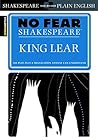
King Lear (No Fear Shakespeare)King Lear by SparkNotes
My rating: 5 of 5 stars

Christopher Moore made me read this. Or reread this. And I'm glad he did.

I ran on to the second book in his Fool series, The Serpent of Venice, and loved it, even though I read it out of order. (It also made me re-read The Merchant of Venice, to remind myself of characters and such. Othello I was pretty good with.) I wanted to read the first book, Fool, which is based on Lear, and since I read that only once--as a 15-year-old--I needed some updating. Using the No Fear version, I read about 60/40 modern to original, and found it pretty readable and pretty fun that way.

I don't actually like tragedies--not in reality, not in literature--so I almost gave it a 4 instead of 5. But there's still a lot to like in Lear, speaking simply as a reader, not a Critic of Great Literature. I liked the loyal characters, Edgar and Kent and Cordelia, and their unswerving devotion to the king; in a way, I enjoyed how horrible Goneril and Regan and Edmund were; and the plotting among them all is charming in its own way. Horrible, but fun.

Now, I wish I could make the story end happily. That would increase my enjoyment. It might annoy the rest of the world to make that change, but I'd suffer their disapproval if I could "fix" Shakespeare... ;)

Another interesting aspect of this experience was what I learned about myself. As I read, I reflected on being a 10th grader long ago and just how much I *didn't* understand the first time. That was instructive. Even though I was a good reader at 15 with a lot of tolerance for tacking difficult books and plays, I could see that the intervening 40 years or so made a lot of the text more comprehensible to me. I understood things I didn't realize I misunderstood before. I tracked character motivations much better, as well as actions occurring offstage, and kept characters straight that I really didn't way back then. And I made many, many useful inferences (the type you're supposed to make) that I'm certain I didn't the first time. My comprehension was probably at least double compared to the young me.

That inevitably made me think about teaching Shakespeare to 10th graders, which I did for many years. Every time I taught Othello or some other play, especially to groups of students that don't consider themselves college-bound, I questioned the wisdom of it. There are, of course, many arguments both ways. ("It's well beyond their reading ability" is countered by "This might be the only time they read Shakespeare." There is also "You're gonna teach this, school district employee," which I found very persuasive.) But reading King Lear now was like opening a time capsule, and seeing how little I understood--even as a good student on the way to being an English teacher--made it seem that dragging struggling readers through Shakespeare is probably not justified. What do they learn that couldn't be accomplished more efficiently and pleasantly with literature that is both more comprehensible and relevant? Is the level of comprehension we help them achieve (we worked hard at it, bro, ISYN) worth the amount of time dedicated to it? Is the frustration worth it?

I kinda doubt it. The benefits are pretty dubious. But now that I'm retired, it's really not up to me anyway.

However, for me, Private Individual, rereading it this year was worth it. At least I can say that. And now I can go on to reading Christopher Moore's Fool, which I've been looking forward to.

View all my reviews