Showing posts with label SF. Show all posts

Sunday, May 31, 2026

Where Bruno Can't Be Left in Peace on his Private Planet

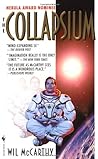
The Collapsium (The Queendom of Sol #1)The Collapsium by Wil McCarthy
My rating: 4 of 5 stars

This is a clever and entertaining SF novel. 4 stars.

The science is hard, or where it isn't really, it looks like it is, because it's realistic-sounding for a non-scientist. (Me thinking: is that how that would work? That would erase inertia? Why wouldn't everything crash together? I don't get it. I guess that's possible...) :) Lots of really big ideas here about how to use mini-black holes in a matrix to achieve pretty much anything you can imagine.

The characters are interesting and, in places, surprisingly well-developed, though the book has a very narrow cast of characters. That made it feel a little underbaked, but also makes it read in a very breezy way, so I guess I prefer it to novels that are overwritten and too long. It's episodic, and really is constructed like three short stories (or two short stories and a novella) stitched together. In each episode, our heroic and brilliant main character is called in when a partially-built invention is being sabotaged in a way that would imperil the sun itself, meaning that he has to solve the problem quickly or humanity is doomed. That's fun. And thematically, that is a very traditional SF kind of story, where we look at the tension between the wonder of new technologies and the damage they might or do cause. He makes it work.

The pacing is great, and the story is cool, but I found the tone a little odd. Some readers talk about how witty and funny it is, but it just seemed a bit off-kilter to me. I love humorous SF, like John Scalzi, but this hit more like a work of pulp fiction or a comic book in tone. That's okay; I like those things. I found it strangely whimsical, I guess, except where it took on a serious tone.

YMMV.

So--pretty fun to read, and successful enough overall to encourage me seek out other books by the author. Nice.

Sure, recommended.

View all my reviews

Wednesday, June 19, 2024

Where I Shoulda Stopped Reading

The Goliath StoneThe Goliath Stone by Larry Niven
My rating: 3 of 5 stars

I'm giving this three stars because it was, I have to say, kind of fun to read, (though it is hard to believe), with fun science and a breezy style. I did finish reading it, and giving a 3 to such books is my general rule. But in most ways this was bad. The people giving it 1 or 2--they're not wrong.

It has a great premise: Some men researching nanobots (nanites?) have sent a bunch of them up to intercept an asteroid that has some chance of hitting earth in the future, and now decades after they lost contact, an even bigger asteroid is headed to earth, apparently driven by those lost creatures. That's fun. And it starts okay. One of the guys responsible for that mission gets tracked down where he's hiding in Europe and gets whisked to safety just ahead of law enforcement. Now it's time to figure out what's going on and solve the problem.

After that, it's all about some weird wish-fulfillment from the authors, remaking the world using nanites and hubris in a way that would shock Thanos.

You expect some cat-and-mouse between the researchers and government agents, and there's a little of that about 90% through the book, but really not much, and there's almost zero tension. In fact, almost nothing actually happens. Most of the middle is made up of the main characters sitting around, piecing together all the crazy stuff that nanites have done behind the scenes for them and the world over the last 25 years or so, things they're just figuring out. They're basically googling for half the book, saying, "Oh, here's another thing." It's a lot of silly conversations with pointless inside jokes, references, and allusions, especially to Heinlein and other SF writers, interspersed with endless double-entendres that they all laugh at way too hard. The characters constantly fawn over each other in ways that make no sense to the reader.

Also, the love for all things libertarian is jarring and annoying.

And there are frequent references to the global warming scam (as this is set somewhat in our future) in such a way that it's clear that the authors, despite using pretty impressive hard science, here in the real world really don't believe in *that* bit of science, and in the process they destroyed what suspension of disbelief I had left. (I should have DNFed. Truly.)

But the worst are the hideous and weird revelations that come out about what has already done, secretly, unilaterally. Using nanites spread by viruses, Connors, the scientist behind most of the things happening in the book, has made decisions for the whole world in such a glib, light way that any sensible person should be horrified. Apparently, millions of bad guys died (fevers and stuff) when the nanites secretly infecting everyone judged them as too violent to allow to continue. Decent people were healed or rejuvenated, and it was engineered so that babies could be conceived only in cases when the woman climaxed during procreation, cutting the birth rate way way down. Stuff like that--just imagine the weirdo political extremist that you knew in high school making life-and-death decisions for the rest of the world, changing humanity and society in ways that could never be undone.

Remaking the world like a grandiose Dr. Jekyll with a god complex and a juvenile sense of humor.

It gave me the creeps in the same way as a borrowed book I once read about preppers, a novel where they make America safe for guns and god and Christian Nationalism. This one tied that one for most horrible, skewed world view I've ever read.

Oh, yeah, wait--in the midst of this, the scientist behind it all is using his nanite-perfected physique to win all the events at the olympics. Why? Why?

Man, I swear, this book really seemed like it was gonna be cool.

Not recommended.

View all my reviews
Tuesday, June 11, 2024

Space Opera With a Sense of Humor

The Cruel Stars (The Cruel Stars, #1)The Cruel Stars by John Birmingham
My rating: 5 of 5 stars

This is the most fun I've had reading in a while.

This is the first thing I've read by this author, and I'm psyched, because I enjoyed every page of this and there are more books out there for me to grab.

Set in a future where humanity has spread out among the stars, split into a handful of polities, the story follows several interesting POV characters. These include a royal young woman, a starship commander, an old hero, a group of pirates, and others. They introduce us to the setting at different levels of society and, fortunately, start to connect pretty early in the book, pretty much right when the enemy is set among them.

Most of the humans are genetically enhanced or aided by brain implants or both. People download and install software on a moment's notice to give them skills and knowledge in a much easier way than most of us acquire it. The enemy is made up of purists who despise these changes, and they exploit the vulnerabilities of the system to start a war with a devastating first blow.

I found the characters well-drawn and sympathetic, with no POV I didn't enjoy, and they're written in a hugely entertaining way, with big personalities and excellent dialogue. Not to compare, but it made me think of John Scalzi all the way through, like his Old Man's War series or maybe Redshirts, because this has a fantastic, exciting plot with fun characters and hilarious dialogue, set in a star-traveling future with a galaxy-spanning war. There are no jokes here--just really snappy dialogue and excellent SF action.

I've read some really good books this year in several different genres, but this really hit the sweet spot in the genre that first made me a reader. I haven't read near as much SF in the last couple decades as I used to, but this kind of book will definitely bring me back.

Highly recommended.

View all my reviews

Friday, March 17, 2023

I Wanna Go to Teixcalaan, Now

A Memory Called Empire (Teixcalaan, #1)A Memory Called Empire by Arkady Martine
My rating: 5 of 5 stars

This is an awesome science fiction novel--a serious work as well as a great read.

It's easy to see why this won the Hugo in 2020. It deals so well with big questions about politics and science and psychology at the same time that it tells a fantastic character-driven story. I was fully entertained by both aspects.

Mahit is the new ambassador from a small polity, Lsel, on the edge of a giant, powerful empire. Her home is a mining community in space, numbering only in the thousands and not connected to any planet, while the empire spans many worlds and exerts a huge cultural influence over all humans within and near their domain. It feels rather like maybe a thousand years ago with a giant China exerting political and economic hegemony over a much smaller Japan--if you imagine Japan to be just, say, Okinawa. It's an enormous imbalance. When Mahit arrives at the court of the empire, she finds her predecessor had been making deals of some sort to keep Lsel independent, but was murdered. It's Mahit's job to solve multiple mysteries while learning how to navigate the complex society.

Normally, she could count on the help of her predecessor's "imago," an implanted version of his memory and knowledge, but there is a problem, and she's left alone. This imago becomes central to the story as well as the theme, asking us (and the characters) to define identity and selfhood. The different cultures have different takes on this question, and that negotiation is an important part of the novel.

One of the book's great pleasures is seeing Mahit engaging with a culture and society that she loves as an outsider, getting to know and trust some of the people, while wishing that she could truly be one of them--inventing complex poetry, engaging in the intricacies of cultural practices, living the adventure and romance she had dreamed of back on her home space station. They call her a barbarian, and she tries not to take it to heart. Still, she feels it.

There's plenty of romantic drama and spy-style action, and I found the mix of all these things very entertaining as well as thought-provoking. It is super well rounded, and I join the whole SF world (practically!) in recommending it.

View all my reviews

Sunday, November 13, 2022

Where It's Not For Me

Reyn, Vol. 1: Warden Of FateReyn, Vol. 1: Warden Of Fate by Kel Symons
My rating: 3 of 5 stars

This is a graphic novel set in a time and place that looks like fantasy but has a science fiction component that tells you that something else is going on. Though the homes and villages have a medieval look, and monsters are a hazard in a way that feels like other fantasies, there are examples of high tech that intrude and hint at a truth that is most clearly revealed (no spoilers) at the end of the first volume. It's a pretty good idea and it's handled... okay.

I liked the art and didn't have any strong objection to the story, but it didn't interest me much and I have no inclination to look for the rest of the series. I suppose I'd read them if they were beside me on the couch, or if I were waiting in a dentist's office and they were available, but that's not much recommendation.

Read if you like colorful lizard people. They were the best part.

View all my reviews

Tuesday, September 28, 2021

Where I Praise John Scalzi and Break No New Ground

The Last Emperox (The Interdependency, #3)The Last Emperox by John Scalzi
My rating: 5 of 5 stars

Basically, this book is good because it's a John Scalzi book, and they are always a pleasure to read. Literally always. It's a rule, and this book does not break that rule.

It is the last book in the Interdependency series, concluding the story of a future far-flung interstellar empire that is in danger of collapsing, and I read it faster than pretty much any book I've read in the last couple years. Scalzi creates interesting characters that the reader can root for (probably the most important ingredient for me), especially female characters like Nadashe Nohamapetan and Kiva Lagos and Cardenia Wu, among others, and and puts them in tough situations where they get to exude attitude and smart off in a way I never stop loving. Always a blast. For me, this novel and the ones that came before it are like pie—the first bite is good, the second is good, and all the rest are also good, up to and including the last bite. All good.

That's also my only criticism. As much as I love the books, they're short on explosive conclusions. (IMO.) I mean, there are lots of payoffs all through the books, times when we can cheer and laugh and say, "Grayland sure surprised them!" and the like. But there is little to no ratcheting up of stakes and excitement near the end. There's a nice resolution and all the threads I care about get tied up, and like a nice pie, it's all good, though the last bit isn't much different from the start.

I'll take it. No problem.

I found the ending satisfying, and I feel like the series has a nice arc. It seems the author wants to give us a story with only the fun parts, so he doesn't overwrite and he doesn't drag it out.

Well, fine.

I've criticized so many novels for being overblown and wordy, in desperate need of cutting... He sidesteps that, and I thank him.

Good stuff. Recommended.

View all my reviews

Sunday, September 12, 2021

Where Big Concept SF Is Funnier Than You'd Expect

The Consuming Fire (The Interdependency, #2)The Consuming Fire by John Scalzi
My rating: 5 of 5 stars

Like every John Scalzi book I've ever picked up, this book is fun to read. Nobody does clever, funny, biting dialogue like him, and nobody keeps a story rolling like him. This one clicks along at a good pace and gets better as it goes, leaving me wanting the third book right now.

It's in the mail, so I'm good. :)

I saw a very negative review of this book when I was starting it, and I thought about it as I was reading. It was strange that I could sort of see the reader's point; yes, the plot often feels condensed; yes, looked at a certain way, it can feel like summary that has not been fleshed out. No, you don't get the elaborate, gritty world-building you get in some other SFF brick-like tomes. It's true. If it doesn't pertain to the plot, it's mostly not there. (The world-building we get is more than adequate, IMO, but leave that aside.) Instead of a fully-realized-down-to-the-dirt type of setting, what you get is fast-paced, witty, engaging, keep-reading-to-see-what-happens action with brilliant, laugh-out-loud dialogue. Like damn near every one of his books.

No. All of them. Seriously.

It's a good tradeoff. Kinda makes me think of Asimov, now that I'm reflecting. But Asimov was seldom this funny. And I am horribly underselling the incredible intellectual work that makes up the setting and history and background of this story and series. It's very cool and super thought-provoking. We just don't see what kind of fluorescent lights are in the grimy homes of the working class schmoes in this series; we don't see what kind of street-food regular people enjoy when they're not engaged in back-breaking labor; it flies over all that in ships like resort hotels.

I think maybe I'd like to see a big fat science fiction novel from John Scalzi, a Wheel of Time sort of creation filled with the minute details of intense world-building, because I'm sure he could pull it off. But there's almost nothing better than his 300 page books. If you're a reader stuck in a reading slump or a regular person just wanting to find a fun read, you just can't go wrong here.

IMO. As always.

This is the second in the series. Highly recommended, especially read in order... :)

View all my reviews

Thursday, March 11, 2021

Still Great After All These Years

Time Is the Simplest ThingTime Is the Simplest Thing by Clifford D. Simak
My rating: 5 of 5 stars

This is one of my favorite Simak novels, one of the handful I first read back in the 70s.

In some ways, this novel, like so many of his books, is simple. There is no hard science here; the setting is not deeply explored; there are not many characters; the plot is not complicated. But in other ways, it is deep; the ideas are universal and meaningful, and the characters tend toward the philosophical, with long conversations about the future of humanity and the like. They discuss at length the situation with paranormal humans, how they are useful, even essential, to human history, but are at the same time despised and feared and even hunted.

The parallels between the "parries" and marginalized groups in our real world is no accident, nor is it simply an allegory. Instead, it is an application of the rules of intolerance, rooted in racism and witch-burning hysteria. This is how demagogues would use fear of telepaths to take power and control society. The question is--could they weather the attack?

Simak's approach doesn't sit well with everyone. He keeps his focus tight and intimate. We don't see the big cities or the news shows, and we don't know what's going on around the world. those things are barely hinted at. What we see is just the main character and the handful of people around him. You hardly know if there is still a New York City in this place (there is); you can't tell if there is TV (though there is something like it mentioned); you almost wonder if there is traffic on the highways (we can only guess). He doesn't care about that. Unlike modern fat books, he doesn't give us multiple POVs with layers of world-building.

Instead, it's a quiet book. A man on a canoe, trying to reach safety before it's too late. A single man, trying to escape a powerful corporation. Trying to survive, and maybe save some folks in the bargain.

It's still a favorite. Still 5 stars after all these years.

Not the thing if you want hard science in your SF. Just the thing, though, if you think road trips and grass and hills and woods and rivers belong in science fiction. And maybe witches.

View all my reviews

Sunday, February 7, 2021

Mostly Fanboy Stuff

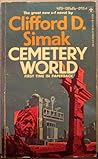
Cemetery WorldCemetery World by Clifford D. Simak


This was not only one of the first Simak books I ever read, it was one of the first science fiction books I ever read. It was Clifford Simak who made me think I liked science fiction, and he remains my favorite ever writer. (Tied with a couple others, tbh. But he was my first favorite, so... tie goes to him.)

It's been about 45 years since I first read it, and I only vaguely recalled what it was all about. I had lost the plot entirely. The truth is, I don't love the plot as much as I did back then. I think Clifford Simak may not have known exactly where he was going when he started writing. But that doesn't diminish my good opinion. I'm even more aware than I was then how I love his style, his tone, his sense of place, his way of putting huge things in perspective. There's something calming in reading his writing; I feel like everything's gonna be okay and I should go sit on the porch and pet my dog.

Some of that was conscious on his part, I'm pretty sure. Often referred to as a writer of pastoral SF, or even as THE pastoralist of science fiction, Simak often (not always) used rural settings for his stories, whether on earth in the present or future or another earth-like planet. Cabins in the woods or small towns in Wisconsin, Minnesota, Ohio, or other such places appealed to a kid growing up in rural Michigan. Guys go for walks in the woods with their dogs and have long chats with ghosts or robots or goblins while smoking a pipe or having a drink. Sometimes they have gadgets, and sometimes they have axes for splitting wood to keep the cabin warm.

Cemetery world is a perfect example. Fletcher Carson returns to earth (something like 10,000 years in the future) to see how things are. Much of the planet is given over to the sprawling cemetery catering to those humans throughout the galaxy who want to be interred in the soil of earth. The rest of the planet is making a slow recovery from the devastation of war. Most of the novel, he and the other characters are meeting the remnants of humanity who live in a wilderness that looks a lot like an early, unspoiled earth. They cross rivers and mountains while unraveling a mystery about the place, all the while philosophizing about life and time and all the big ideas that Simak likes to return to. (Me too.)

There's something about the main characters camping along a stream, cooking food over a fire, that humanizes and puts into perspective the giant SF ideas. Space opera can be very cold; Simak's stories and settings tend to be warm. Dangerous, of course, but still more human lasers in space.

It was nice to revisit. Scrupulous honesty demands I give this novel four stars (to mean "You'll probably like it this **** much) but the sentimental part of me gives it 10.

Whenever people ask "Who would you meet if you could talk to anyone from the past?" I answer Clifford Simak. He's the man.

View all my reviews

Saturday, January 2, 2021

Where the second book is like the second gulp of coffee--just as good as the first

Artificial Condition (The Murderbot Diaries, #2)Artificial Condition by Martha Wells
My rating: 5 of 5 stars

Just like the first book, this novella is fun to read from beginning to end. The voice of the first person narrator is so perfect one almost would believe the author was made for this series. The action is compelling, the protagonist is empathetic, and setting is full and well realized.

Highly recommended.

View all my reviews

Wednesday, December 16, 2020

Patrick Rothfuss* Told Me to Read This, And He Was Right

All Systems Red (The Murderbot Diaries, #1)All Systems Red by Martha Wells
My rating: 5 of 5 stars

This is a great read. Much fun.

The novella is told in first person by the security bot who calls themselves "Murderbot." (I read the character as female, but realized there was no indication and could be read as male, female, or no gender. Not sure why I made the leap I did. But I'm sticking with it.) The character is quirky and odd, inhuman in a way, but is still sympathetic and well drawn, which is key for me to like a book; I need to have someone to root for. Murderbot was fun to root for.

The action is quick and the internal monologue engaging and entertaining. (I don't always like first person narration. I liked it a lot here.) It's also a short work, but I feel like novella is the perfect length for this book. No down time. From the first moment of danger to the conclusion, things were in motion.

I have the second book queued up, and I'm glad to have that bit of entertainment waiting for me. :)

Recommended.

*In his review. Not personally. But that woulda been cool.

View all my reviews

Friday, March 20, 2020

Get Your Science Fiction Here

Master Sergeant (The Makaum War, #1)Master Sergeant by Mel Odom
My rating: 4 of 5 stars

This is straightforward science fiction in the old style--humans and aliens on distant planets coming into conflict, using advanced technology, facing the challenges of a harsh environment, fighting and trying to stay alive. For those who enjoy that kind of SF--like me--it might be just what you're looking for. Good action, good fun.

I like the characters, who are as round as they need to be for SF action, and the setting is sufficiently fleshed out to engage a reader. The pacing is quick and the story rolls along.

My one real quibble is that the novel is sort of incomplete. There is a little resolution at the end, and it is a self-contained novel, but it is also the beginning of a series and leaves most of the conflict and resolution for future novels. That's cool, but it makes it that much less fun for me. I'll probably get the next one, but the serial nature of it is not exactly to my taste.

Still, overall, it's fun, light enough to be enjoyed during an apocalypse, and complex enough to satisfy a regular SF reader. Also, having met the author at a convention, and finding him pleasant, humble, and engaging, I'm happy to be able to give him a boost and recommend this novel.

View all my reviews