Showing posts with label classic SF. Show all posts

Wednesday, June 8, 2022

Where I Take a Sip From a Near-Forgotten Well

Creatures of the Cosmos (Pern (Publication Order) #4.5)Creatures of the Cosmos (Pern by Catherine Crook de Camp
My rating: 4 of 5 stars

This is one of those books I never would have owned if it had not been set out at the high school where I taught, left for the taking as a discard. It lived briefly in my classroom library then came home with me forever--

--where it sat for a long time until recently when I opened it on a whim.

What I forget about many such collections is that they are pretty fun to read, and that they're designed to be the right length to read at a single sitting. That's what I found here. The stories are aimed sort of at young people, and there is nothing technical or sophisticated about any of these stories, but that doesn't mean they're not interesting or have no impact. On the contrary.

"The Bear Who Saved the World" is an uplift story told from the bear's point of view. "Old Man Henderson" gives us a near future where the kind, elderly hero of moon landings is treated as a bore by younger generations who have grown up accustomed to the wonder of space travel. "The Million Dollar Pup" is the story of a handy young girl and an elderly mentor inventing a robotic pet where dogs and cats are outlawed. "The Smallest Dragonboy," the most fantasy-like of the collection, is the story of a bullied underdog coming up big. "The Large Ant" is a first-contact story where we find that humanity's first instinct is violence. "Dead Man's Chest" tells about following a treasure map to a Lovecraftian horror. "Socrates" is the melancholy story of a sweet dog born with human intelligence. And "The Horse Show" tells about a nerdy boy learning confidence from the horse-like creature he brings back from a distant planet.

TL;DR--All of the stories center on an animal or pet or creature, though the character of the creatures and the tone and vibe of every story was quite different.

These stories are all simple, in a way. Quick reads. Limited characters. But they all have surprising depth, leaving the reader to ponder the nature of other intelligences--bears, alien ants, alien horses--and whether they might not be kinder and more generous than we are. They cause one to consider the significance of pets and why we want to lavish our love on them, as well as wonder whether those animals, on the whole, are better or worse off for that attention. They make one think about how small man is compared to the universe. And so on.

On another level, this collection makes me think about all the stories written over the years, the ones showing up in magazines and Hugo-winners collections, where they are read by a few people and then forgotten. Most of the stories are from the 50's and 60's, and one comes from 1938, so that even when the collection was published in 1977, they were being brought back from oblivion. It's nobody's job to keep them alive, I suppose, but it still makes me kinda sad to imagine them languishing in silence on increasingly obscure bookshelves...

I won't try to make the case that there's anything essential here, and this exact book is probably of limited interest to most readers. It's a little dated, obviously. (The words "rocket ship" are used unironically by the authors. It's like that.) This is just one collection, like a hundred or thousand others, which have been mostly forgotten. Any of them might be worthy of opening up if you happen on it, but are not really worth hunting down. However, I wouldn't mind someone else reading these 60-, 70-, 80-year-old stories and comparing their thoughts with mine.

That would be welcome.

View all my reviews

Tuesday, November 30, 2021

Young Me and Old Me Agree

Dune MessiahDune Messiah by Frank Herbert
My rating: 3 of 5 stars

I dunno. I didn't like it.

Maybe it's a good book. Others think so. Quite a few people. Meanwhile, I almost gave it a 2; the 3 was a bit of charity.

I don't have any philosophical reason for disliking this novel. I just found it dull and weird and a drag to open back up. And I almost DNF'ed it, which is what I did the first time I tried to read it back in the 70's.

I liked Dune, this year and when I read it 40+ years ago, so I thought maybe I'd like the second book better this time around. But even though this struck me wrong again, I pushed through to the end. Still, I found nothing much to recommend it. Faux philosophy; forced fatalism; an inexplicable lack of action; lots of annoying, pseudo-zen dialogue...

Anyway. Not my thing. Hard to believe these two books were written by the same person.

View all my reviews

Sunday, February 7, 2021

Mostly Fanboy Stuff

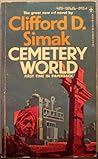
Cemetery WorldCemetery World by Clifford D. Simak


This was not only one of the first Simak books I ever read, it was one of the first science fiction books I ever read. It was Clifford Simak who made me think I liked science fiction, and he remains my favorite ever writer. (Tied with a couple others, tbh. But he was my first favorite, so... tie goes to him.)

It's been about 45 years since I first read it, and I only vaguely recalled what it was all about. I had lost the plot entirely. The truth is, I don't love the plot as much as I did back then. I think Clifford Simak may not have known exactly where he was going when he started writing. But that doesn't diminish my good opinion. I'm even more aware than I was then how I love his style, his tone, his sense of place, his way of putting huge things in perspective. There's something calming in reading his writing; I feel like everything's gonna be okay and I should go sit on the porch and pet my dog.

Some of that was conscious on his part, I'm pretty sure. Often referred to as a writer of pastoral SF, or even as THE pastoralist of science fiction, Simak often (not always) used rural settings for his stories, whether on earth in the present or future or another earth-like planet. Cabins in the woods or small towns in Wisconsin, Minnesota, Ohio, or other such places appealed to a kid growing up in rural Michigan. Guys go for walks in the woods with their dogs and have long chats with ghosts or robots or goblins while smoking a pipe or having a drink. Sometimes they have gadgets, and sometimes they have axes for splitting wood to keep the cabin warm.

Cemetery world is a perfect example. Fletcher Carson returns to earth (something like 10,000 years in the future) to see how things are. Much of the planet is given over to the sprawling cemetery catering to those humans throughout the galaxy who want to be interred in the soil of earth. The rest of the planet is making a slow recovery from the devastation of war. Most of the novel, he and the other characters are meeting the remnants of humanity who live in a wilderness that looks a lot like an early, unspoiled earth. They cross rivers and mountains while unraveling a mystery about the place, all the while philosophizing about life and time and all the big ideas that Simak likes to return to. (Me too.)

There's something about the main characters camping along a stream, cooking food over a fire, that humanizes and puts into perspective the giant SF ideas. Space opera can be very cold; Simak's stories and settings tend to be warm. Dangerous, of course, but still more human lasers in space.

It was nice to revisit. Scrupulous honesty demands I give this novel four stars (to mean "You'll probably like it this **** much) but the sentimental part of me gives it 10.

Whenever people ask "Who would you meet if you could talk to anyone from the past?" I answer Clifford Simak. He's the man.

View all my reviews