Showing posts with label character-driven. Show all posts

Friday, May 17, 2019

Where I Tone Down the Raving for a Book I Liked Better than I Let On

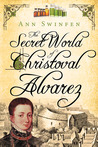
The Secret World of Christoval Alvarez (The Chronicles of Christoval Alvarez, #1)The Secret World of Christoval Alvarez by Ann Swinfen
My rating: 5 of 5 stars

I enjoyed this novel, and it succeeds on many levels. It is fun to read (my main criterion, actually), it deals with themes I care about, it has characters I enjoy knowing, and its well-rendered setting, besides lending the story additional realism, is an engaging source of information.

This is primarily an Elizabethan spy story with a young doctor drawn into the intrigue, which, come on, is good fun. The action is broken up by scenes of Christoval's life and work, which helps to ground the increasingly fantastic spy story. He has his own spoilery secrets which threaten to emerge, adding to the conflict and tension. As a character, Christoval is sympathetic and engaging, with a great backstory: his family is Jewish, from Portugal, forced to hide their religion and flee to England, and he has his own additional secrets. His skill as a doctor, a mathematician, and a musician is part of what makes his story fun--he gets to be awesome sometimes, which I love, watching him save lives and break codes. All within reason, though; He's still a teenager in a dangerous world, not a superhero, and the author does not forget that.

A number of interesting themes emerge through the course of the story. A central one is the place of religion in society. As one of the "hidden Jews," (referred to, uncomfortably, as Marranos, which is acknowledged as a slur but shows up in a casual way a number of times), Christoval is sympathetic to the Catholic conspirators who are forced to hide their religious beliefs in Protestant England. How can a citizen be blamed, he wants to know, for adhering to a religion that was once obligatory? Especially when it passed out of favor, then back in, then back out once more? His ambivalence about bringing such people to justice makes him more believable and sympathetic. Other themes are: wealth disparity (inevitably); the oppression of women; tradition's primacy over new knowledge; and the violence inherent in the system. ;) Happily, these are allowed to surface in a natural way, adding welcome depth to the novel.

The setting is nicely developed with convincing detail. I found it educational, and can only hope and assume the information is accurate. :) How would I know?

I am glad to recommend this novel to other readers. Such quibbles as I have are swamped by my approval, and I can say it was a pleasure to read. I recommend that I go look for sequels.

View all my reviews

Monday, April 1, 2019

Romans in America

Clash of Eagles (Clash of Eagles, #1)Clash of Eagles by Alan Smale
My rating: 5 of 5 stars

This is a wonderful alternate history adventure, and I loved it, but it's also a character-driven novel that is surprisingly affecting, with people you want to meet in real life.

Like Sintikala. She's awesome. Great character.

This is a what-if novel, positing a couple things: the Roman Empire still exists in the 13th Century, having incorporated the Norse and other peoples; with Viking help, they can travel to North America, where they encounter and defeat some of the native peoples; searching for gold, they fight all the way to the Mississippi, to Cahokia, where (spoiler, but it's in the blurb, so...) they are defeated by an organized resistance using theoretically-possible devices related to images and themes of the actual material culture of the real-world people of Cahokia.

That's act I. Act II is about the only surviving Roman, Gaius, who is kept alive through his depression and regret long enough to reach the point where he wants to change. His interactions with the Cahokian people is my favorite part of this, the way he meets and gets to know individuals as unique humans as well as discovering the merits of another civilization. The author doesn't preach, IMO, but in 21st Century terms, Gaius is a colonizer who has his eyes opened to the horrors and evils of his actions, of empire and conquest, and tries to right his many wrongs, at many levels.

It isn't that easy; there are many conflicts--many people he has hurt, many who cannot and will not trust him--and the explosive action in the final act removes the possibility of simple solutions. It is brilliant world-building and conjecture and extrapolation, and I found it moving and entertaining in equal measure.

Recommended, of course.

View all my reviews

Tuesday, November 13, 2018

Rediscovering a Fantasy Master

Conqueror's Moon (Boreal Moon, #1)Conqueror's Moon by Julian May
My rating: 5 of 5 stars

I have not been reading enough Julian May. What was I thinking? I loved the Saga of the Pliocene Exile books when they were new--great characters, great setting, engrossing plot, amazing language--and thought her writing was exceptional. I should have read Conqueror's Moon long ago, because the same characteristics are found in this novel. Of course.

I thoroughly enjoyed it.

I bought this new in 2005 and set it aside. That was about when life and busy-ness intervened, making big fat fantasies time out too often for me, and I just stopped opening them. Now, I'm looking at them again, and pulling this off the shelf, finally, I'm reminded again how much I love her writing. And even as I write this, I discover that she passed away in 2017. Damn. I was just thinking I would try to find her at a convention or something, because I'd love to meet her. Get an autograph. Too late. :( A remarkable writer, incredible talent. Someone to be missed, for certain, though she has left us her books.

My favorite character in this novel is Deveron (Snudge) but there are so many great characters--Ullanoth, Prince Conrig, Ansel, Beynor. Along with each character comes a constellation of well-defined motivations and conflicts, all of them interacting with one another. This creates a dynamic plot where where many plans are made and attempted, yet no one's plans go forward without a hitch. I find the complexity and maturity of the plot, emerging as it does from complex characters, very engaging.

A similar complexity is evident in the prose. It's clear and sharp, with just the right word in just the right place. Since the 80s, when I was reading The Many-Colored Land and its sequels, I've always been amazed at how often that "right word" is new to me, and yet utterly perfect. Thirty years later (30?!) there are fewer such new-to-me words but still more than I find with any other author. I like reading smart language, and that's what she offers.

The author's precision (preciseness?) extends to the action, where scenes of men and women sailing ships, operating machinery, doing battle, climbing mountains, riding horses, doing magic, or engaging in any other action are rendered with unusual clarity. The mechanics of movement, of the interaction of humans and the physical world--or the supernatural world, for that matter--are impressively accurate in detail and well-imagined, and I believe that the author's glittering vision reaches the reader's mind remarkably intact.

That is my experience, anyway. The description of a group of boys tasked with sabotaging a bridge mechanism, for instance, is told with such confidence on the author's part, with such a comprehensive understanding of what must happen, that I marvel at it. It's like she saw it as it occurred and just wrote it down.

One more note regarding the author's mastery of subjects in the novel--the magic system is impressive. I rarely care about this topic, though I see it often discussed by other readers and writers. However, it was so well done here that it deserves special mention. The way magic works in this world, which includes the sources of it (unusual), the cost to the users (painfully high), and the difficulty and danger in managing it (frightening!), adds a wonderful extra dimension to both setting and plot. It is important to the plot, but also used to inform characters, making it integral to the story in a way that is especially effective.

This is a solid novel, with a satisfying arc leading into its sequels, and it was a pleasure to read. Julian May is gone, but I'm grateful she left her art for us, including books I have yet to look into. I look forward to them, even as I hope many new readers discover these treasures.

View all my reviews

Saturday, November 10, 2018

Where I confess my preference for fun books

Fuzzy NationFuzzy Nation by John Scalzi
My rating: 5 of 5 stars

I read the original "Little Fuzzy" back in the 70s when I was a kid, and I remember that I liked a lot. Cute, quick read, fun. I'm pretty sure I read the second book, but I don't remember much about it, so who knows... But I was totally up for the reboot by one of my favorite authors as soon as I saw it, and I should have known about it years before. How'd I miss it? It's cool, everybody, I finally found it. Even if I'm late to the party, I enjoyed it, and Imma tell you why.

This is a fun book, and I put a lot of stock in that. I was reading five other books (you know, a piece of each every day, like a well-balanced diet) when I grabbed this, and it shouldered all the other books aside. Some of those are very good books, too, but this one was more fun. "I'll read just to page 150 and turn out the light," became, "Wow, I'm way past that now. Well, ten more pages."

Sometimes you read for moral improvement, and sometimes you read for fun, because you remember life is short and boring is long. It's okay to read something that entertains you. Seriously.

So, fun how? First of all, it's funny, which is practically a given with a John Scalzi book. Although the main character, Holloway, is likable and sympathetic and has the best lines, he is kind of an ass. In a brief exchange in court where he is discussed, secondary characters are given a few good lines:

"What's your general opinion of Mr. Holloway?" Meyer asked.
"Am I allowed to use profanity?" Bourne asked.
..."Just hit the highlights," Meyer said.
...[Bourne lists his shortcomings]...
"Any positive qualities?" Meyer asked, slightly bemused.
"I like his dog," Bourne said.


All accurate. He pisses people off, and he does have a good dog.

Besides being funny--it's a good story. It's straightforward in both the original and the reboot: humans are extracting mineral wealth from the planet Zarathustra with the belief that there is no sapient race on the planet, and the Fuzzys' existence, if they can be shown to be sapient, undermines the corporate claims to the planet's resources. It's not a complex plot and doesn't need to be, although it still addresses a lot of themes in an entertaining way. The original book was quite sweet and cute for science fiction (and loved in part because of this). While this version has more grit and conflict than the original, giving the reader a little more to chew on, it does so without doing violence to the source material. It achieves this mainly by roughing up the main character and his backstory rather than by introducing anything scandalous or salacious. (Mind you, I like scandalous and salacious fine. But it wouldn't fit this book.) He was a good steward of the Fuzzy tradition.

And, like all of this author's books, it is cinematic. It is easy to imagine this being filmed with a nicely glib smart-ass actor like Harrison Ford/Jamie Foxx/Robert Downey--or someone younger than that whose name I probably don't know yet. (Mindy Kaling? Out-of-the-box casting!) The book has that cool flow, quick read, action-with-humor vibe that makes a good book and a good movie, and even though it's not heavy, dramatically or thematically, (well, spoiler, this book does contain all the emotions, somewhere) it's not flyaway light; there's an effective and satisfying combination of character and plot driving the novel.

When readers say, "I like to read but I'm between books," or "Lately, I've been in a reading dry patch," what they mean is that they're choosing dull and dreary books that sound better than they are. Quit punishing yourself, people! Remind yourself what made you into a reader all those years ago. Read a good book. A fun book.

Hey! Here's one!

View all my reviews