Showing posts with label 17th century literature. Show all posts

Wednesday, October 7, 2026

Where M. Jourdain Becomes a Mamamouchi

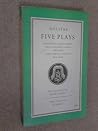
Moliere Five Plays: Moliere Five Plays: The Would-be GentlemanMoliere Five Plays: Moliere Five Plays: The Would-be Gentleman by Molière
My rating: 5 of 5 stars

I thought this was very funny. It feels a bit like a silly high school play, but in a good way.

This is my 5th Molière play, and I only really liked one before; the other three I gave 3 stars for various reasons, but they weren't fun. The one I liked--The Misanthrope--wasn't exactly fun, either, but it was engaging and thought-provoking. Finally, I found one I unironically enjoyed.

It has the usual tropes of French plays of the age: a goofy rich man, a saucy serving girl, an angry wife, a clever servant (rather like Figaro), a number of people taking advantage of the foolish rich man, and lots of pointless arguing. Generally, the arguing and back-talking gets old, but it is managed in a funnier way this time. (How so? Hard to say. Better pacing? Broader farce? Anyway, I liked it this time.)

The "would-be gentleman" is trying to impress a woman not his wife with gifts and entertainment. A nobleman friend, Dorante, is pretending to help him, but every gift M. Jourdain sends to her with him as go-between is given to her in Dorante's name. Meanwhile, his daughter wants to marry a decent young man but her father wants her to marry someone higher on the social ladder. The humor is watching M. Jourdain trying to learn dance and music and language and all the things he believes real gentlemen are supposed to know. He's gullible and easily impressed and comes off like any super-dumb Joey Tribiani type of character off sitcoms. He's rather likable, though it's easier to laugh at him when he's rude to his family and trying so hard to cheat on his wife. The centerpiece of the play is a big trick her daughter's suitor and a servant play on him, presenting him as the Grand Turk who wants to marry his daughter. They speak gibberish and put on a spectacle that would be great fun to watch live, I think.

Happy ending. Funny story. Lots of dance and song in between scenes. I think this one's a winner.

View all my reviews

Saturday, April 11, 2026

Where Rodrigue and Chimène are Caught Between Honor and Love

Le Cid (06) by Corneille [Mass Market Paperback (2006)]Le Cid (06) by Corneille [Mass Market Paperback (2006)] by Corneile
My rating: 4 of 5 stars

First thing I've read by this 17th century french playwright. I liked it more than I thought I would.

For good or bad, Corneille follows the old rule about the three unities--time, place, and action--and it helps to know he's doing that on purpose. There is pretty much just the main plot here; the subplots (if you can even call them that) are just branchings. Rodrigue (later El Cid) loves Chimène, and she loves him back, but her father insulted his elderly father. He has to challenge the man on his father's behalf, and kills Chimène's father. Now she still wants Rodrigue, still loves him, but she must demand justice for her father.

At the same time, Don Sancho loves her as well, and the Infanta loves Rodrigue. Those little complications are barely a blip in the plot. Almost everything is just the two lovers. (Unity of action.)

The story plays out quickly, with the insult, the duel, and a Moorish invasion driven back all in a day or so. (Unity of time.)

And almost the whole story occurs in Chimène's house or the palace. (Unity of place.)

These restrictions make the story a bit simple, in some ways, so that I was wishing for a real subplot, like you see so often in Shakespeare. But it also makes it more straightforward for a reader like me, reading it in translation in a whole 'nother country 400 years later. The conversations are sorta redundant, going over the same arguments about what justice and honor and love demand, but that is required by the conventions of the time, and I think it works fine even now. Of course, what I'm missing is the poetry that it was all clothed in, even though I think the translator did very well. Perhaps for Corneille's original audiences, the music of the language was a big draw. In English translation, I liked it well enough, and I'm just as glad the translator didn't put too much in rhyming couplets, though he couldn't entirely resist.

All in all--it's entertaining enough to read for no particular reason, but it's also interesting for its themes. In a society that regards honor highly, in the type of society where a son will kill the man who insulted his father and everyone nods like that makes sense, is there room for love? Can love be more important or even as important as honor? Poor Chimène loves Rodrigue and surely understands why he had to fight (and kill) her father, and she still wants to marry him--a feeling she is trying to suppress and keep secret--but honor demands she call for his death. Something has got to give.

Pretty interesting. Recommended for readers of drama.

View all my reviews

Saturday, January 10, 2026

Where Lyndaraxa is Very Bad

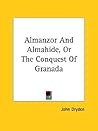
Almanzor and Almahide, or the Conquest of GranadaAlmanzor and Almahide, or the Conquest of Granada by John Dryden
My rating: 4 of 5 stars

[This is a review of the second play, The Conquest of Granada, Part II. I already rated and reviewed the first part. Goodreads lumps both parts together, unfortunately.]

I'm enjoying Dryden more than I expected, and I liked this play more than the first. More closure, more drama that I care about, more movement. Like so many old plays, I feel like I'd do better to study the background and try it again, but life is short, and there are a lot of things still to read for the first time...

I'm not generally a fan of rhyme in poetry, let alone drama, and Dryden's plays are made up entirely of rhyming couplets, or heroic couplets. I didn't expect to be okay with that choice, though I think it works. He's more recent than Shakespeare of Marlowe or some others who moved away from rhyme, which makes these plays feel older than they are, but perhaps the reason it feels appropriate is that the setting for this pair of plays is 15th century Spain, over 500 before present and about 180 years before they were written (~1670). They should seem old, then, and old-fashioned.

The first play is mostly about the civil war between two Granada families or clans, all of them Muslim Moors. The second continues that to some degree, but under threat from Ferdinand and Isabella trying to oust the last remaining Moorish rulers from the peninsula. In Dryden's version, the civic disunity, personal ambitions of certain individuals, and straight-up treason of one character lead to the downfall of the small state.

The real villain of the story is beautiful Lyndaraxa, the sister of the leader of the Zegry family, who entices one man after another to try for the throne with the promise of marriage, a promise that she withdraws when their plans fall short. She wants to be queen, and will ally herself with whoever can bring it about, regardless of the crimes they need to commit to achieve it. Her lies and tricks are as shocking and effective as Iago's lies in Othello. In the end--spoiler--she joins with the invading Spaniards, opening the way to Granada with the promise of being queen. Further spoiler--she gets her way for about 5 seconds. Her death, after so many lies and tricks leading straight to war and the deaths of many, is one of the most satisfying in drama.

Another entertaining revelation comes right at the end, when we discover that the hero Almanzor is the long-lost son of a Spanish duke who he once did a service for (in part I). Additionally, the beautiful but principled Almahide is widowed when her jealous husband the king dies. She was loyal to him, but really loved Almanzor, and will marry him after her grieving is through. These take some of the sting out of the tragedy.

I thought it was pretty fun. I'm curious how it would sound on the stage, if it would sound natural or sing-songy with so much rhyme. For reading, though, I found meter worked quite well--much to my surprise.

Recommended for curious readers--though it might be nice to do the reading with more resources than I took advantage of. Maybe team-read. Or--just jump on in. See what you think.

View all my reviews