Showing posts with label French drama. Show all posts

Wednesday, October 7, 2026

Where M. Jourdain Becomes a Mamamouchi

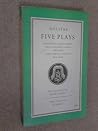
Moliere Five Plays: Moliere Five Plays: The Would-be GentlemanMoliere Five Plays: Moliere Five Plays: The Would-be Gentleman by Molière
My rating: 5 of 5 stars

I thought this was very funny. It feels a bit like a silly high school play, but in a good way.

This is my 5th Molière play, and I only really liked one before; the other three I gave 3 stars for various reasons, but they weren't fun. The one I liked--The Misanthrope--wasn't exactly fun, either, but it was engaging and thought-provoking. Finally, I found one I unironically enjoyed.

It has the usual tropes of French plays of the age: a goofy rich man, a saucy serving girl, an angry wife, a clever servant (rather like Figaro), a number of people taking advantage of the foolish rich man, and lots of pointless arguing. Generally, the arguing and back-talking gets old, but it is managed in a funnier way this time. (How so? Hard to say. Better pacing? Broader farce? Anyway, I liked it this time.)

The "would-be gentleman" is trying to impress a woman not his wife with gifts and entertainment. A nobleman friend, Dorante, is pretending to help him, but every gift M. Jourdain sends to her with him as go-between is given to her in Dorante's name. Meanwhile, his daughter wants to marry a decent young man but her father wants her to marry someone higher on the social ladder. The humor is watching M. Jourdain trying to learn dance and music and language and all the things he believes real gentlemen are supposed to know. He's gullible and easily impressed and comes off like any super-dumb Joey Tribiani type of character off sitcoms. He's rather likable, though it's easier to laugh at him when he's rude to his family and trying so hard to cheat on his wife. The centerpiece of the play is a big trick her daughter's suitor and a servant play on him, presenting him as the Grand Turk who wants to marry his daughter. They speak gibberish and put on a spectacle that would be great fun to watch live, I think.

Happy ending. Funny story. Lots of dance and song in between scenes. I think this one's a winner.

View all my reviews

Wednesday, May 14, 2025

Where Figaro Does It Again

The Barber of Seville / The Marriage of Figaro / A Mother's GuiltThe Barber of Seville / The Marriage of Figaro / A Mother's Guilt by Pierre-Augustin Caron de Beaumarchais
My rating: 3 of 5 stars

[This review is focusing on the third of the plays--I couldn't find an entry for just the one play.]

So--it's fine.

In context, in its time and milieu, this is probably pretty entertaining. I'm guessing, cuz i dunno. But the conventions seem odd now. French theatre of the time (based on nothing more than these three Beaumarchais plays and a few Moliere plays) seems mostly like angry people storming back and forth across the stage, arguing and/or crying, with whispering and eavesdropping interspersed randomly. The servants, notably Figaro here, conspire to make a happy ending (while promoting themselves, generally) though it feels like Figaro is given credit for being more brilliant than he ever proves to be. He's a schemer and a manipulator, and he does succeed in figuring out everyone's secrets so he can prevent a (worse) schemer from hurting his family, so I'll give him that credit. But he's no Sherlock or anything.

(I'm trying to think of a modern equivalent of the Figaro character, someone who discovers secrets and uses tricks and persuasion and lies to make it all turn out for the good and I've got nothing. I can only come up with villains, plotters, and backstabbers. Maybe the Long John Silver character on "Black Sails"? I dunno.)

The ending of this is pretty good, though the difficulties are all overcome in quick succession without a lot of drama. People shout at each other a lot in these plays, but then forgive each other and fall back in love very easily. I guess Shakespeare used the same trope, so it's got a history...

Having read all three, I guess my takeaway is that the prevailing mood in these comedies is anger, with the happy bit coming about a page or a minute from the end. I don't love that.

YMMV

View all my reviews

Wednesday, April 30, 2025

Where the Doctor Knows He Doesn't Know

The Doctor in Spite of HimselfThe Doctor in Spite of Himself by Molière
My rating: 3 of 5 stars

This is a light bit of drama, a quick read, and I liked it a little bit. I disliked parts, too. I'm sure most of the amusement afforded by this little play is in seeing the burlesque, the overacting, the slapstick, rather than looking at the words on the page, but I'm not sure I'd ever pay money for the privilege.

This three-act plays speeds along almost like a one-act play, so fleeting that I wonder how long it ran when it was originally performed. But I like it better for being quick. What I don't like is the Punch and Judy feel, the making light of assault. I get it that marital strife is a comedy staple, but it's still distasteful. Even when looking at it like a sketch, pure lampoon, it's still emerging from a very dark place.

I don't think anyone feels too bad for Sganarelle when his wife gets him back for beating her. She convinces a couple men that her husband is a great doctor, but he pretends not to be, and she directs them to beat him until he confesses he is a doctor. If you picture him as Elmer Fudd or the coyote, maybe it's a funny bit. The genuine, redeeming, useful (IMO) satire follows. He passes himself off as a doctor, prescribing things to anyone who needs a doctor, demanding payment while caring not at all whether any of his remedies work. (They don't, of course.) Now, that sucks, but he makes the reasonable point that doctors of the time did no better than him. I think that's true. In his own words:

I find it's the best of all trades because whether you do good or harm you still get your money. We never get blamed for doing a bad job. We just hack away at the stuff we are working on, and whereas a cobbler making shoes can't spoil a piece of leather without having to foot the bill himself, in our trade we can make a mess of a man without it costing us a penny. If we make a mistake, it isn't our look out: it's always the fault of the fellow who's dead.

He's not wrong.

Sganarelle is not better a human at the end than at the beginning, and he's horrible at the beginning. There's a happy ending for a couple of lovers, though--at the cost of some Deus Ex Machina, come in the form of a sudden inheritance. But this isn't meant to be serious, I guess. A frothy little nothing that makes a good point earns from me a barely passing, probably-skip-it 3.

View all my reviews

Thursday, July 27, 2023

Where Moliere Mocks Pretensions

Molieres Les Precieuses RidiculesMolieres Les Precieuses Ridicules by Molière
My rating: 3 of 5 stars

(Read in English translation)

This is a short play, so a short review:

This is pretty entertaining to read, both for informing myself about the writer and the times and for the play itself. It might be amusing to see it staged. I found it more comprehensible and relatable (in some ways) than I expected, which is good, since this is my first foray into Moliere's writing. Except for being translated, it didn't need a lot of notes for me to make sense of the story and feel like I had a handle on much of the context.

It's a comedy, and it's sorta funny. The "ridiculous young women" of the story are silly and shallow, and it's reasonable to laugh at their affectations, though I didn't care to see them made *too* much fun of. They're not evil; they just read novels.

For me, the most interesting thing about the play is the writer's absolute confidence that the audience would understand that the girls are ridiculous for being silly enough to be tricked by a couple of servants, dressed up in fancy clothes, pretending to be gentlemen. See? How stupid can you be to think an inferior, a common servant, even all dressed up, even mouthing fancy words, could actually be as good as one of the upper class? The supposed gentlemen they were liking so much, once revealed, were clearly far beneath them. What horror. What shame.

That's an attitude that survives in a few places (I see them on the interwebs), or is at least understood still in places where it held sway for so long, but it seems wildly exotic to folks raised outside Europe.

Of course, Moliere could be referring to himself and his troupe, who are commoners all dressed up speaking fancy words. They receive applause on the stage, but too often face the derision of the upper class in public. Maybe this was a bit of ironic protest.

I don't know. I'm not gonna ask anybody, either. That's cheating. Let's see what the next play suggests so I can start to puzzle it out for myself. It's Tartuffe for me, next in the queue.

If you read drama, sure, why not, give this one a try. If you already read this, tell me what you thought. You know, if you feel like it.

View all my reviews