Showing posts with label French court. Show all posts

Friday, September 2, 2022

Where the Jester is the Smartest Guy

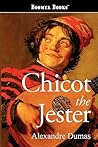
Chicot the Jester (The Last Valois, #2)Chicot the Jester by Alexandre Dumas
My rating: 4 of 5 stars

This is one of those Dumas books that rolls along merrily with lots of action and plotting and polite enemies making dates to kill each other. Chicot, the king's jester, is the heart of the story, though the original French title is La Dame de Monsoreau--the beautiful woman who is pursued by three different gentlemen. One of them, the Count de Bussy, could also be the title character; he's the one that the poor Diane really loves, the one trying to protect her from two possessive noblemen (including Anjou, the king's brother).

Gradually becoming familiar with the French court, I mostly kept the details straight here--who was related to the king, who was on whose side, which titles matched which given names, who was Catholic and who wasn't--but it was a bit of struggle. A couple times I just shrugged and kept reading until it became clear again. For the most part, though, I think a modern American reader will make sense of it. (Students of history will do better.)

The story compares favorably with the Three Musketeers, IMO, and is a lot of fun to read. There is good scheming and humor and action, and it has an ending that is satisfying in most ways. Still, a few parts of the story have to be concluded in the third part of this series, leaving some questions unanswered. If it had been completely self-contained, I would have liked it a touch more...

(I hunted down the sequel on eBay, though it's less common and so more expensive than the other books so far. I hope to find it as enjoyable as this one.)

Chicot is a clever guy, keeping his secrets and manipulating events like an Aramis, and the hero Bussy, a superior swordsman who fears nothing, is a lot like D'Artagnan. And now I think of it, the fat monk, Gorenflot, is a simple man who eats and drinks more than anyone, is a bit like Porthos, but unlike the musketeer he's a coward. I'm not sure who might be like an Athos here; nobody in the story is as completely honorable as he was. In fact, betrayal and false friendship was a theme of this book.

Overall--fun book, with lots of action and quick pacing. The novel is heavy on the dialogue, which I enjoy, because that's part of what keeps it rolling along so quickly. I recommend it for Dumas lovers, especially those who have read the previous book, Marguerite de Valois, although it's not crucial for comprehension. You'll catch up.

Just be careful about the spoilers. Most of these characters are real people you can look up on Wikipedia, and you might learn more than you mean to. :)

View all my reviews

Sunday, September 26, 2021

Where I Continue my Dumas Education

Queen Margot, or Marguerite de Valois (The Last Valois, #1)Queen Margot, or Marguerite de Valois by Alexandre Dumas
My rating: 5 of 5 stars

Dumas just jumps in. You've gotta be ready.

I didn't know who anybody was, and I didn't know much about Huguenots in France, or really any of the court, so the beginning was a little tough. But before long I got my feet under me, and after that it read like any of the D'Artagnan romances. Nobody is quite as cool as D'Artagnan here, but there are a lot of interesting characters just the same. And lots of plotting and sneaking around the Louvre.

Overall, I really enjoyed it, though parts of it were very disturbing. I'm not 100% certain that Dumas meant for me to be upset; the matter-of-fact way that the King of France ordered the murder of France's protestants (referring to the 1572 St. Bartholomew's Day Massacre) and the way so many main characters joined in like it was a weekend outing was horrifying. Innocents are used terribly in the novel, and it *feels* like Dumas meant us to see it as a judgment on the monarchy, but I dunno. I'm not sure he saw it as morally indefensible as I did. I wish I could ask him...

The light-hearted affairs here amused me. Nobody is happily married. Everyone at court is in love with someone besides their spouses, and they go to great lengths to see each other or exchange notes. It gets terribly serious by the end, but in the middle it seems like nobody's gonna actually get caught sleeping around. It feels pretty comical until it becomes tragic.

In many ways, I found the emotional life of the characters to be foreign: friends become bitter enemies in a heartbeat, then friends once more [spoiler! sorry...]; innocents are sacrificed without any sign of remorse; horrific crimes forgiven and never referred to; characters risk serious consequences to embark on affairs with men or women they barely know; everyone lies and often gets caught without the least embarrassment; heartfelt religious convictions are fought for then renounced with little drama; and alliances are made and unmade without any deep soul-searching. I guess all of these matters of life-or-death are treated lightly by the characters in a life is cheap so eat drink and be merry kind of way, and it was like watching enigmatic courtiers in a fairy kingdom.

It was all very odd, and I liked it.

The prose is the same ornate but breezy style familiar to readers of Three Musketeers or Count of Monte Cristo, and the plot is an engaging combination of fact and fiction. Dumas readers will find a lot to enjoy in this novel, and if they're like me they'll learn a bunch of new names from history.

View all my reviews