Showing posts with label medieval. Show all posts

Sunday, August 16, 2026

Where Quentin Makes the Most of His Opportunity

Quentin DurwardQuentin Durward by Walter Scott
My rating: 5 of 5 stars

I'm a huge Sir Walter Scott fan, and this one is right down the middle for me. Great book. All five stars.

Our main character is a Scot, but he's in France, finding a place (with the help of his uncle) in the Scottish Archers, a troop of Scots nobles who served Louis XI. In this period, the Duke of Burgundy was richer and more powerful than the king himself, and the story deals with their conflict.

Quentin is one of those somewhat naive but very earnest young gentlemen who make good impression on jaded old soldiers (or rulers). He's kidded a little by others, but he's well-liked and even respected, and even though he's brand new in his position, he's called in for doing the king a special service immediately. A pair of high-born women--a youth named Isabelle and her aunt--have run from Burgundy because Isabelle is being forced into a marriage she doesn't want, and take refuge with the king. This is embarrassing to him, because he knows he can't protect her. Louis choses to send Quentin with Isabelle and her aunt to Liege to take refuge with a bishop of that city, one of his relatives. But the king is planning to have them ambushed on the way so that she can be carried away by another nobleman who is helping Louis disrupt the city of Liege, trying to weaken his enemy, Burgundy. Louis gets his help with an uprising; De la Marck gets a pretty young wife.

On the way, Quentin falls in love with Isabelle, of course. He also uses his wits to discover the plan, letting him avoid the ambush. The king is frustrated that the young man he chose performed too well; Quentin is angry that the king he vowed to serve would set him up. There's tons of action and intrigue here, history and politics, and lots of great characters. The villains--a couple of Bohemians who work secretly for the king--are some of the most interesting. Scott always has a soft spot for dangerous people on the edge of society.

Near the end, there is a showdown between Burgundy and France, and then an awkward joint attack on Liege, where Quentin has a chance to win Isabelle's hand.

This is the quintessential medieval romance (or 19th century romance if you prefer, set in medieval times). Knights and castles, ladies and fools, battles and debates. It's all written in an elevated, kinda wordy style, but if you've read Scott before, you already know. I love it.

Recommended. :)

View all my reviews

Sunday, May 24, 2026

Where I Liked Some Things More Than Others

The Serpent's Tale (Mistress of the Art of Death, #2)The Serpent's Tale by Ariana Franklin
My rating: 4 of 5 stars

It's good, but annoying. 4 stars.

I find this whole series entertaining, for reasons I can't clarify in my own mind, and I'd almost give this book a 5 for that, but I'm frustrated by some things and it lowers my estimation of the book overall.

Mostly, it succeeds. We're in the 1400's in England, and Adelia is an educated woman--a kind of doctor, though more like a coroner or a forensic scientist--who serves the king by solving important mysteries. The setting is used well in this and the other books in the series, with a clear indication of deep research by the author. There's lots of good action, from sleuthing and fighting to passionate love scenes and man-versus-nature battles through dangerous landscapes--though we do sometimes slow down more than is really fun. Overall, though, it's about as thoroughly entertaining as genre fiction can be.

As a mystery, it's a bit disappointing, because most of the work is done in tiny obscure passages that only pay off at the very end. There's very little collecting of clues, really just hints of it, as if the author wants to keep the facts of the crimes a secret until the end, à la Sherlock Holmes (who is also fun and also annoying). Too much of the time, our main characters are kept powerless, useless to achieve anything, pushed around by circumstance--locked up, tied up, watched, trapped--so that they are inactive and passive for long parts of the book. Don't love that.

And Adelia is frustrating, making herself almost always disagreeable, being argumentative and insulting and rude with everyone on almost every page, including the people she likes as well as people she needs favors from. She's honorable and highly moral, doing good work, but she is so disagreeable that I find her a drag to hang out with.

So I like the books and the story pretty well, but I wish the main character's crankiness was turned down by about a half and her affability at least occasionally turned up a little. But that's just my opinion. Others may find her perfectly pleasant, and that would be fine. In any case, most mystery readers should enjoy the series and this book.

View all my reviews

Monday, May 11, 2026

Where Grimdark Got Its Start

The Divine Comedy, Volume 1: InfernoThe Divine Comedy, Volume 1: Inferno by Dante Alighieri
My rating: 4 of 5 stars

My score of 4 is a bit of a fudge. As a world classic, you'd think it deserves a time-tested 5. Based on how fun it is to read (not very) it's probably a 2 or maybe a 3, and even that is due more to curiosity more than genuine reading pleasure. But the version I read--the Penguin classic--is very useful, with excellent notes throughout and helpful drawings, making the reading much easier, and that support makes me give this volume an overall 4. You wanna read the Inferno? This edition works for that.

As a story, it reads like fantasy, though there's no real plot--no main conflict, no real danger or trouble for the main character. But at least it's in a fanciful, exotic setting, if horrible, and that imagination is probably the most interesting part of the work for me. It wasn't meant to be taken as fantasy, though. Even in its time, people knew the story wasn't literally true, of course, and could read it like a dream or vision or guess about hell, but Dante treats his work as if it really could be true, as if the whole thing was mere extrapolation from church teaching. That hell existed was a given. That sinners (as defined by the church) would go to hell was also a given. That they would be punished eternally was the same thing. Exactly what that looked like was an open question; I don't know whether Dante thought he was even in the ballpark, but my guess is he kinda did.

The work serves as spectacle, like reading cosmic horror along the lines of H.P. Lovecraft, allowing the reader to imagine more fully a barely-glimpsed idea of a hidden universe. That alone is a pretty good selling point, back in the day anyway. But it also teaches religious lessons like you'd only find in fire and brimstone preaching like "Sinners in the Hands of an Angry God." Do the right thing or you'll end up like the liars or the gluttons or the scammers in the Inferno. Probably scared a few straight.

For me, though, it reinforces the emptiness of that kind of faith, the kind of faith motivated by fear of eternal, horrible, unrelenting punishment, an idea so evil that it's hard to imagine it held in the same brain as the idea of virtue. What could be more evil than subjecting a sentient creature to horrible pain, not just for a moment or an hour or a year even but for all eternity? Be good or god will have you tortured. Forever. It's beyond my imagination, though it made perfect sense to Dante and a lot of other people for centuries.

There's a lot to think about, anyway, from art to religion to history to government, and even if you've read it before, or pieces of it, Present You might see more here than Old You did. Who knows?

View all my reviews

Saturday, December 6, 2025

Where Joliffe Learns Stuff He Wishes He Hadn't

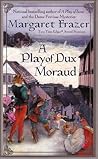
A Play of Dux Moraud (Joliffe the Player, #2)A Play of Dux Moraud by Margaret Frazer
My rating: 4 of 5 stars

Nearly a 5-star read for me. Call it 4.5?

This novel is exactly what it's supposed to be: a clever mystery with interesting characters, set in a well-constructed historical setting. I enjoyed it.

The pace is somewhere between measured and brisk, and that works. There's space for more story than just the mystery, more character development and world-building, because it's not rushing like an action thriller, but it's not slowed down enough to feel plodding. Steady progress, interesting scenes, decent movement all the way through. It feels just about right for pacing.

I like the main character, Joliffe, who is believable in his role as an actor who is pushed to investigate sketchy situations on the sly. He's not an expert in investigation or analysis, but he's sharp and persistent and sneaky enough to get to the heart of mysteries like this one. (Their benefactor, Lord Lovell, needs him to look into the unexplained death of a young man who was going to marry the daughter of a man who owes him homage. The daughter is about to marry a second man, and Lord Lovell thinks something is wrong.)

I don't love the constant sniping between some of the characters, but I sort of get it. Unrelated people in a troupe, forced into company around the clock, probably get a bit annoyed with each other. That's a bit of reality I don't care for. At least it isn't every page.

I've now read three books by this author (collaborators) and they were similar in one thing: when I have several books going, I'm always glad to pick this one up. I have books that languish with a bookmark stuck on page 40, but not this series.

Recommended. This is book 2, but I don't think it matters too much how you read them.

View all my reviews

Tuesday, November 4, 2025

Where Joliffe Plays Detective

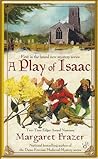
A Play of Isaac (Joliffe the Player, #1)A Play of Isaac by Margaret Frazer
My rating: 5 of 5 stars

My first book by this author, and I really liked it. Went back and forth on a score--4 or 5--because I bet I'll like others in the series even more, but why be cheap? It was a fun book, a pleasure to read, so let's give it all the points.

I've read more than a few mysteries set in medieval or renaissance times, and I find most of them are so dreary I can hardly get through them. I think that's intentional--the dreary part, not the "hardly get through them" part--but I don't like it. Maybe life was mostly dreary then, and this is, after all, a murder mystery, but it's not supposed to be a bad experience for the reader, IMO. It's supposed to be fun to read. And this one is.

Fun why, you ask. First, I generally liked the main characters, which include Joliffe and the others in the troupe. (I found the minor characters interesting and well drawn, too, FWIW.) They're not totally best buds, and so they bicker and annoy each other part of the time, but it's friendly enough, and they all look out for each other. They're pretty good people, too, or so it seems to me, with engaging backstories, though I didn't read the previous series where they showed up. In other words, I like to side with them and cheer for them. Second, the setting is well done, with the land, the town, the society, the economy, and pretty much all the details seemingly accurate. Anything out of place is beyond my knowledge. The story inhabits that setting in a way that I enjoy, kinda like when you have a really good diagram of a ship or something and you can say "Oh, that's how that fits together..." Scratches a brain itch. And third, it's a good mystery.

Joliffe and the troupe he's part of have a gig in Oxford for the Corpus Christi festival, and when they're kind toward a mentally challenged theater-loving young man, they get invited to his rich family's home (well, barn) to stay a few days and perform a little for the family and their get-togethers. A body is found outside the barn where they are camping, and though they aren't explicitly named as suspects, they know how precarious their position is, and Joliffe takes it upon himself to solve the mystery.

It's good stuff: good pacing, plenty of intrigue, no dry patches. Now that I know the characters, I'm eager to see more of their stories, as well as others by this author. Fingers crossed.

Recommended for those historical mystery readers like me who haven't already discovered these books.

View all my reviews

Sunday, May 11, 2025

Where Thomas Fights the Battle of Crecy

Harlequin (The Grail Quest #1)Harlequin by Bernard Cornwell
My rating: 5 of 5 stars

This is a very well constructed historical novel set in the time of war. I liked almost everything here.

This is the third novel by Cornwell I have read, and I'll admit it took me this long to adapt to his rhythm, to learn how to follow his prose. I liked but didn't love his writing at first, finding it quite a chore to follow what was important and not focus on the rest. I didn't feel like I was working as hard this time.

Set during the 100 Years War, taking place mostly in France, it tells about Thomas, a young English man in a band of archers. Much of the story is about fighting smaller battles, looting, tearing up the countryside, coming into conflict with fighters on both sides of the war, but it ends with full retelling of the Battle of Crecy. (I didn't realize until recently that I conflated Crecy and Agincourt, constantly thinking I knew something about one that turned out to be true about the other. Much clearer in my head now.) :) It's very well done. Cornwell has a knack for telling a story from two perspectives: a narrow, personal one, and a larger, bird's-eye one. Most of the big battle is told from Thomas's perspective, but we see how the whole thing unfolds. It reminds me of Waterloo as recounted in Les Miserables, and though it's not as extensive as that one--thank god--it is still a massive set piece that the whole novel is building to.

Thomas has other goals besides just surviving. He is searching for a relic stolen from his home town, and also wants to get revenge against the man who killed his father. He has also fallen in love with a French woman he protected, so he wants to take care of her as well as her family. These goals are sometimes conflicting, and added to that is the personal enmity of an English nobleman who hates Thomas.

Cornwell handles all of these conflicts, twisting them together, letting the pace increase from beginning to end, keeping all of them in mind. It's well done, very entertaining, and I enjoyed it. His careful scholarship regarding Medieval fighting as well as history in general give the whole thing genuine verisimilitude (which I apparently can't spell but can appreciate). The ending works well, and though a lot is lost, because this is a violent story, we are still left with a sense of hope and a hint of happiness.

Recommended for readers of history, especially military history.

View all my reviews

Tuesday, December 10, 2024

Where Fox and Willa Cross Italy

The Last True Templar (Tales of the Lawless Land #2)The Last True Templar by Boyd Morrison
My rating: 4 of 5 stars

This second book in the series, another collaboration between brother and sister Boyd and Beth Morrison, is a lot of fun and a solid historical mystery/adventure. Four stars. Maybe 4.5.

It's another take on the lost and hidden Templar treasure, but it feels fresh just the same. The characters are likable (which I care about, yes) and the conflict is something that feels like it matters, making me eager to see Willa and Gerard reach the place and do the thing. Their happiness and the happiness of people around them is important enough to care about and root for.

Beth Morrison is an actual historian, which makes the details of the times not just accurate but compelling, helping sell the world-building to immerse the reader. And Boyd Morrison is an amazing story-teller, one who knows how to keep on-the-edge-of-your-seat tension going throughout the novel. There is no letup, no relaxing. They are metaphorically chased up the tree and attacked with rocks until the last page of the story.

In fact, that's my only criticism of anything beyond quibbles. Keeping the pressure on the MC's, making it so they are never, for one moment, able to take a free breath makes you keep reading. Ya gotta know if they get through it. But it also stresses me out. I need a breather here and there.

That's just me. It's not an actual flaw in the book, at least not how most people see it.

Anyway, I get a breather at the end of the novel, and it's a satisfying end, leaving me eager for the third book.

Recommended.

View all my reviews

Monday, December 11, 2023

Where Neither Knight Nor Lady Are Quite What They Seem

The Lawless Land (Tales of the Lawless Land, #1)The Lawless Land by Boyd Morrison
My rating: 5 of 5 stars

I really liked this. No question about giving it all the stars.

I'd never heard of this until we went to an a bookstore event to see Stephanie Barron and get the last book in the Jane Austen Mystery series. (So good--all of them, including this final book. My thoughts for that are here: http://inspeculation.blogspot.com/202...) Another author was there that I once tried to like but failed, though most of the attendees seemed to be there to see her. And along with them were Boyd and Beth Morrison, talking about their medieval series, now on its second book. We bought both (and got them signed, of course). Good decision.

The action is excellent, almost non-stop, but is absolutely believable all along. It reads like a fun fantasy, but it's all realistic because the research and scholarship is top-notch. That's partly because Boyd Morrison is a professional writer, but maybe more because his sister and co-author is a curator at the Getty Museum and an expert on Middle Ages documents (and lots of connected stuff, obviously). It's a great collaboration. Not only does the action ring true, but the details of the place do, too, without intruding.

Gerard Fox is racing across England and France with a noblewoman who is escaping a marriage to a horrible man, both of them protecting a secret (a good secret--an interesting secret) that her would-be husband and an ambitious cardinal want to use for their own advancement. Fox is a capable knight and Lady Isabel is a very independent woman, but they're still human and limited and vulnerable to the dangers of the time. The stakes are real. The way they use their strengths, especially their ingenuity, to fight their way through and around perils is fantastic. Action. History. A bit of Romance. Loyal friends. Amazing settings.

It's great.

I'll shortly open the second book, but I'm also gonna look up books Boyd wrote on his own, apparently set in the present. I suspect they're also a great deal of fun.

Highly recommended.

View all my reviews

Thursday, July 20, 2023

Where Tasso Reads Like Fantasy

Jerusalem Delivered: An English Prose VersionJerusalem Delivered: An English Prose Version by Torquato Tasso
My rating: 5 of 5 stars

I definitely liked this more than I expected to.

This English version of the 16th Century Italian epic is in rendered in prose, which I always prefer, and the translator has made it both wonderfully comprehensible (compared to say, The Faerie Queen in the original quaint English) and decently poetic. That makes it simple to enter into the narrative, and I found that really engaging.

Naturally, an account of the First Crusade from the perspective of a Christian author in the 1500s will be partial and prejudiced, inclined toward a double standard and committed to religious bigotry. Yep. It is all that. No avoiding it. In some ways, though, Tasso does a decent job of portraying the Muslim characters, the villains and enemies in the story, as humans just as capable of greatness and honor and sacrifice and love as the heroes. This is at least a little corrective for the inevitable chauvinism.

As far as plot and action, the poem is awesome and strangely modern. It unspools so much like speculative fiction that it's impossible to miss the through-line from epic poetry and romance to epic fantasy, and I found myself reading it much like I would JRR Tolkien or Tad Williams. In addition to castles and palaces, pitched battles and single combat, hidden vales and lonely beaches, fallible heroes and love at first sight, warrior women and soothsayers, it has sorcerers and demons and enchanted forests and magical islands. It's a fun story with a thousand creative touches.

Like Paradise Lost, some of the most exciting and compelling parts involve the spirits of hell who are called for a time to harry the crusaders. Satan, here referred to as Pluto, is described this way in canto 4:

A fearsome majesty in his fierce countenance increases the terror and makes him even more proud: his eyes burn red, and his gaze glowers infected with poison like an ill-omened comet; his huge beard envelops his chin and shaggy and thick comes down over his hairy chest, and like deep-yawning maelstrom his mouth stands open, filthy with black blood.


And here is the scene when he calls the spirits of hell:

The piercing sound of the Tartarean trumpet calls up the inhabitants of the eternal shades. The black capacious caverns tremble and the blind air echoes to that reverberation; nor ever so strident plummets the lightning from heaven's supernal regions nor ever so stricken trembles the earth when she locks up vapors in her pregnant womb.

Straightway the deities of the Abyss in various troops come running from all sides to the lofty portals. Oh how strange, oh how horrible the shapes! how much of terror and death is in their eyes! Some print the earth with beastly tracks, and on a human head have twining snakes for hair; and behind them writhes an immense tail that like a whip coils and uncoils itself.


There are many other exciting supernatural touches in the story, but there are also many human moments, quieter moments, when individuals are trying to decide what to do, whether to fight or to search out a lost love, whether to indulge in private disputes or put aside pride to commit to a greater cause. Despite the miraculous events and supernatural intervention, there is still a core of humanity in the epic, telling the story of men struggling with the competing demands of desire, conscience, faith, and frailty. Tancred and Godfrey and Armida and Erminia and Argante and Solyman and many others are quite human, filled with their own wishes and desires even while they're competing in a terrible war to control Jerusalem.

It is certainly a useful view into the minds of men 500 years ago, but it's also an entertaining bit of art that, despite its flaws, stands on its own as an absorbing work of imagination.

Historians and fantasy nerds can both find a lot to engage them here. Recommended.

View all my reviews

Monday, July 17, 2023

Where Rienzi Tried to Save Rome

Rienzi, Last of the Roman TribunesRienzi, Last of the Roman Tribunes by Edward Bulwer-Lytton
My rating: 5 of 5 stars

You are supposed to make fun of Edward Bulwer-Lytton. The contest named for him is a competition to write "the opening sentence to the worst of all possible novels," harking back to his "dark and stormy night" sentence. (Look it up. It's not that bad. In fact, I want to read that book.) Anyway, that's kinda nonsense. Yes, he writes like a well-educated 19th Century male novelist. That's what he was. High diction, occasionally archaic in tone. Long-ish sentences. A sometimes-intrusive narrator who directly addresses the reader. That does not set him apart from his contemporaries.

Give him a chance--that's my point.

This is a very entertaining adventure novel in the high romantic tradition. Set in Rome in the 14th Century, when the nobles were no better than robber barons, when the people had no allies and Rome was only half populated, a brilliant commoner named Cola de Rienzi rose to prominence and tried to restore some of the glory of the ancient city. (Think Alexander Hamilton, except he was liked by almost everyone.) In real life, recounted here in a fictionalized account, he leveraged the power of the people to evict the nobles and rule for a time as Tribune, bringing justice to the oppressed citizens, never forgetting he was himself a commoner. Later chased from the city by the resurgent nobles and their German mercenaries, and for a time imprisoned by the pope in Avignon, Rienzi rose again years later to retake the city (this time with the pope's support). But Rome looked a lot like other cities waking up from tyranny (Paris in the 1790's, Moscow and Russia in the 1990's), and the route to justice, fairness, opportunity, and safety was still a tough one.

Like other novels of the sort, we have true love, duels, intrigue, children wanting to discover their true parents, and honorable enemies (as well as dishonorable ones). Castles and palaces. Haughty noblewomen. All that stuff. But there's more! The plague hits Rome in the middle of the story; Petrarch is everywhere present and discussed, though never actually met; and some hippy type young people who look a lot like Boccaccio's ten story-tellers from the Decameron are revealed to be hedonistic and unlikable. In the midst of all this, the idealistic but highly intelligent Rienzi is trying to find the right way to lead a fractious people to a better society, scraping together whatever authority and support he can find. His wife, his sister, and his best friend work with him, but almost no one else, and yet he achieves amazing things. For a little while.

It's a great story.

It's the writer's language that put him on the "so bad it's just bad" list, and discourages people from reading him today, but here's a purely random page of his prose for you to judge:

As the traveller neared the city the scene became less solitary, yet more dread. There might be seen carts and litters, thick awnings wrapped closely round them, containing those who sought safety in fight, forgetful that the Plague was everywhere! And while these gloomy vehicles, conducted by horses, gaunt shadowy skeletons, crawling heavily along, passed by, like hearses of the dead, sometimes a cry burst the silence in which they moved, and the traveller's steed started aside, as some wretch, on whom the disease had broke forth, was dropped from the vehicle by the selfish inhumanity of his comrades, and left to perish by the way. Hard by the gate a wagon paused, and a man with a mask threw out its contents in a green, slimy ditch that bordered the road. These were garments and robes of all kind and value; the broidered mantle of the gallant, the hood and veil of my lady, and the rags of the peasant. While glancing at the labor of the masker, the cavalier beheld a herd of swine, gaunt and half-famished, run to the spot in hopes of food, and the traveller shuddered to think what food they might have anticipated!


I like it.

Rienzi is an admirable character, but so is his greatest enemy, the mercenary Montreal. They are sometimes friends, or at least friendly, and their interaction makes the story. But the other amazing aspect of this novel is the setting and how much the novel fills in (for me, anyway) the history of Rome between empire and modern times. It helps me see what life looked like there in those times, who it was who kept the lights on, so to speak, after it dwindled to a backwater. The author speaks with some authority on the topic and includes notes throughout, so even if his scholarship turns out to be out of date, it isn't made up.

And the history of Rienzi is well worth knowing. I'd never even heard of him before.

Recommended

View all my reviews

Saturday, October 22, 2022

Where I Liked the Ending Best

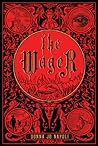
The WagerThe Wager by Donna Jo Napoli
My rating: 4 of 5 stars

Based on an old Sicilian fairytale:

A wealthy young man loses everything in a tsunami that washes over the medieval Sicilian town of Messina, destroying his property and taking every chance he had of paying off his debts. Evicted, scorned, and despised, he struggles to survive in a world that has no interest in helping a foolish nobleman, especially while everyone else is hurting just as bad. He works menial jobs enough to get along for awhile, but when those jobs disappear he needs more help.

The devil offers him a wager--a limitless purse is his, and he can keep his soul even, if he can go three years, three months, and three days without changing clothes or bathing. He accepts. Of course, the devil doesn't play fair, and he is soon filthy and stinking with a long time to go on the wager.

At first he can find places to lodge, paying outrageous fees, but after a time he can't even do that. He's kicked out of every place, reviled because of his stench and disgusting appearance.

The rest of the story deals with the various ways he goes about surviving, trying to win the bet. The middle gets pretty slow, tbh. And then the end, when you want to see how everything is resolved, gets tied up all at once, which I didn't love. Spoiler--(view spoiler) I kinda wanted to see more of the devil, too, but we only get a glimpse here and there. Oh well.

An interesting premise with some good characters and a good ending, I'd say it is better now in retrospect than how I was feeling about it in the middle. I'm glad I finished, I mean. So--cautiously recommended.

View all my reviews

Tuesday, October 4, 2022

Where Things Are Solved but Not Fixed

Hue and Cry (Hew Cullan Mystery, #1)Hue and Cry by Shirley Mckay
My rating: 4 of 5 stars

A medieval mystery set in Scotland. Pretty fun. I liked it well enough to finish and rank pretty highly (I gave it 4, though maybe 3 stars might be closer to the truth for me), but I don't really want to read the rest of the series. I guess I'd say it's a well written story in a niche I don't love to read.

(Reminds me of steak. I don't like it as much as everybody else. Doesn't mean it's not good.)

I guess it's the way everybody is sort of helpless. Nobody, and I mean nobody, can solve any of their problems; what doesn't kill them must be endured, including every kind of loss, separation, and violence. Everybody is watched and everybody is controlled. It's a claustrophobic feeling. And the mystery is only sort of solved, in the sense that we know what happened, but it doesn't really come out to the public. I wanted to see a forceful investigator track down evidence, present it to the world, and truly exonerate the innocent while punishing the guilty, all in a cool medieval city. Sherlock in Scotland. There's only a little of that.

And yet--it has many well developed characters to care about, a real sense of time and space, and excellent prose. I suspect many readers would enjoy this more than I did.

Recommended with reservations.

View all my reviews

Monday, July 18, 2022

Where It's a Big Damn Topic Alright

The Civilization of the Middle AgesThe Civilization of the Middle Ages by Norman F. Cantor
My rating: 4 of 5 stars

This is both a comprehensive, logically presented, useful overview of the civilization of the Middle Ages--and a bit of a slog to read.

Some of it is pretty compelling and memorable, but large swaths are real work to plow through. Probably my fault. TBH, the book is a fifty-gallon tank of detailed information and my brain's a five-gallon bucket...

The good news is I've maybe got room for a bit more now.

As with so many books of the type, I feel like, having read it, I'm now prepared to read something similar and understand a lot more on the topic, ready to read the next book. The book helped me build schema, as we used to say in education, making hooks in the mind to hang the next bit of knowledge on. To give the book it's props, I can say that I perceive the general outlines of the history of the papacy now, and I sorta get the contours of the Holy Roman Empire's history, and I begin to understand how the power dynamics of the monarchies vs. nobility vs. church in France and England had different histories, different seesaws of power, different routes through the past toward a pretty similar present. It makes a lot more sense to me now. Tons of it got past me, but it's all there in the book if I wanted to go back.

To sum up, I'd say that I understand the topic enough to prepare my mind for more, but nowhere near enough to explain the Middle Ages to anyone else.

Anyway, this book offers good to excellent information and fair to middling entertainment, so how you ultimately respond to it will depend on your purpose in reading. IMO.

Recommended especially for those who bring a little knowledge with them.

View all my reviews

Sunday, September 26, 2021

Where I Continue my Dumas Education

Queen Margot, or Marguerite de Valois (The Last Valois, #1)Queen Margot, or Marguerite de Valois by Alexandre Dumas
My rating: 5 of 5 stars

Dumas just jumps in. You've gotta be ready.

I didn't know who anybody was, and I didn't know much about Huguenots in France, or really any of the court, so the beginning was a little tough. But before long I got my feet under me, and after that it read like any of the D'Artagnan romances. Nobody is quite as cool as D'Artagnan here, but there are a lot of interesting characters just the same. And lots of plotting and sneaking around the Louvre.

Overall, I really enjoyed it, though parts of it were very disturbing. I'm not 100% certain that Dumas meant for me to be upset; the matter-of-fact way that the King of France ordered the murder of France's protestants (referring to the 1572 St. Bartholomew's Day Massacre) and the way so many main characters joined in like it was a weekend outing was horrifying. Innocents are used terribly in the novel, and it *feels* like Dumas meant us to see it as a judgment on the monarchy, but I dunno. I'm not sure he saw it as morally indefensible as I did. I wish I could ask him...

The light-hearted affairs here amused me. Nobody is happily married. Everyone at court is in love with someone besides their spouses, and they go to great lengths to see each other or exchange notes. It gets terribly serious by the end, but in the middle it seems like nobody's gonna actually get caught sleeping around. It feels pretty comical until it becomes tragic.

In many ways, I found the emotional life of the characters to be foreign: friends become bitter enemies in a heartbeat, then friends once more [spoiler! sorry...]; innocents are sacrificed without any sign of remorse; horrific crimes forgiven and never referred to; characters risk serious consequences to embark on affairs with men or women they barely know; everyone lies and often gets caught without the least embarrassment; heartfelt religious convictions are fought for then renounced with little drama; and alliances are made and unmade without any deep soul-searching. I guess all of these matters of life-or-death are treated lightly by the characters in a life is cheap so eat drink and be merry kind of way, and it was like watching enigmatic courtiers in a fairy kingdom.

It was all very odd, and I liked it.

The prose is the same ornate but breezy style familiar to readers of Three Musketeers or Count of Monte Cristo, and the plot is an engaging combination of fact and fiction. Dumas readers will find a lot to enjoy in this novel, and if they're like me they'll learn a bunch of new names from history.

View all my reviews

Friday, April 9, 2021

Young Thief Turned Scholar

Grimpow: The Invisible RoadGrimpow: The Invisible Road by Rafael Ábalos
My rating: 4 of 5 stars

Grimpow is a MG/YA medieval adventure that is a lot like Harry Potter (or closer, perhaps, Lyra Belacqua) unraveling a DaVinci Code-style mystery. It starts out slow, almost DNF slow, spending too much time with Grimpow's education and some picaresque meandering (the author is Spanish, so maybe he fully intended to write una novela picaresca) but once we get close to the tournament, the action improves a great deal and the plot kicks in.

From that point it's a four-star novel, and that's how I rate it overall.

The characterization isn't deep, but when the focus turns in earnest to Grimpow's quest it doesn't really matter. It's fun to follow him and his friends as they face real-life villains and ancient puzzles across northern Europe. One of the things I like in stories like this is the way the locate allies who they can rely on, kind people who are glad to help. I get tired of stories where everybody is horrible to everyone and no one can be trusted. It's not like that here.

This book went unread in my classroom library for several years, but I think it has an audience. The reader needs to hold on through some low points in the first bit to get to the fun stuff. I'm not gonna hunt it down immediately, but I'm up for the sequel and have reason to hope it'll be a little more even.

Some fun ideas here. Mostly recommended.

View all my reviews

Monday, January 18, 2021

Where I Discover a Great Series I Missed

The Queen's Man (Justin de Quincy, #1)The Queen's Man by Sharon Kay Penman
My rating: 5 of 5 stars

A very entertaining novel. Sharon Penman has proven that she knows history and can tell a good story in a historical setting, but this is my favorite of hers. I enjoy action and mystery in addition to good characters in an interesting setting, and she offers all of that.

She still requires you to pay attention to characters and remember them from early chapters, but there's less of that thumbing back to see who Luke is (or whoever) compared to her big fat books about kings and queens, but that's manageable. The story is more focused and the plot more tightly wound than in those other books (which I like, btw), and I like this more for that reason.

I more often read fantasies, and this reads like many Medieval fantasies. In a good way. Throw in a dragon or a touch of magic or a prophecy or something and this could be in the fantasy section... :)

It was a pleasure to read. I'm going to look for the sequels. Recommended.

View all my reviews

Saturday, October 10, 2020

Where El Cid Defends His Honor

The Poem of the CidThe Poem of the Cid by Anonymous
My rating: 5 of 5 stars

I've been wanting to read this for ever, and I'm glad I finally did. Not that hard; very readable; very instructive.

I'd like to be able to read it in Spanish, and that's kinda impossible, but I was surprised at how nearly readable it actually is. Printed with the original text on the left and the translation on the right, I found I understood more of the old Spanish than I expected. It is, after all, about 900 years old, and 900-year-old English is incomprehensible to most of us. But a lot of this is readable (with English help).

Example: "¡Ya, Campeador! En buen ora fuestes nacido..." translated is "Campeador, born in a fortunate [good] hour..." That's pretty close to modern Spanish, and many passages are similar.

Still, I read it in English, and the translators made it very readable, with a helpful introduction in the front and excellent notes in the back. Nicely done. It rhymes in Spanish, and I'm grateful that the translators didn't try to recreate that in English; that ruins translations, IMO. Instead, they wrote in simple prose, and it sounds great.

The story of the original poem is interesting all on its own, telling how El Cid left Castile in disgrace but fought his way through neighboring kingdoms, taking booty and collecting tribute, until his gifts to the king earned him into his good graces one more. The best part of the story (IMO) is the third part, which begins with his sons-in-law beating his daughters and leaving them for dead in the wilderness. (That's not the good part.) They recover and return to their father's home, and El Cid demands justice from the king. The king agrees. Cid defeats them in court and his champions defeat the cowards in combat. This section is more personal, more realistic, and gives a more concrete view of life in that time--the life of nobles, anyway--and I learned a lot.

Turns out, tugging on other people's beards was huge in those times; a man had to be vigilant to prevent someone doing it or he'd be shamed forever. Did not expect that. Good to know. :)

The English version in only about 100 pages long and is easily read in a short time. If you've thought about looking into it like I have, you oughta go ahead and read it. Recommended.


View all my reviews

Sunday, March 8, 2020

The Middle Book Never Gets as Much Attention

Ironcrown Moon (Boreal Moon, #2)Ironcrown Moon by Julian May
My rating: 4 of 5 stars

Mostly liked it. Quite good, I would say. 4 stars, though I see why some didn't love it.

Julian May was a brilliant and inventive writer. She sometimes writes over my head, frankly, in many ways; for instance, I've found more new-to-me words in her writing than in any modern author. But I like that. Her historical knowledge in general and and of things medieval in particular are also impressive and used to good effect. I can't help but learn when I read her books.

Sometimes, as in this novel, the pace slows and excitement wanes as she weaves together many different points of view. We're following so many different characters, different individuals and groups plotting against and pitted against so many other groups, that it becomes an impenetrable tangle. The minutiae of their individual planning is sometimes tedious, and trying to remember who knows what and who is double-crossing whom gets to be a challenge.

So you just read and see if it makes sense at the end.... and I think it does.

I love the setting and world-building in this series, and that makes some of the slower bits tolerable. But when it gets good, it's very good. When we get to the scene on the river, with people watching from many different angles, it's very cool. And from that point on, from maybe 60% of the way through the book to the end, it's a lot of fun to read.

IMO, of course.

The very best characters are Deveron (also called Snudge) and a talented healer and magic-user named Induna. (slight spoiler-->) We see them together near the end, and I wanted to cheer when they finally connected. Almost all the main characters are morally compromised people, all engaged in murderous plots, and it's nice to find someone to actually root for.

I liked it overall, and especially the last third and a bit.

I hope the final book in the trilogy leads somewhere good. Fingers crossed.

View all my reviews

Saturday, November 30, 2019

Shakespearish, but Just the Naughty Bits

The Serpent of VeniceThe Serpent of Venice by Christopher Moore
My rating: 5 of 5 stars

I must be the right audience for this. I found this very funny, very amusing, very entertaining, all the way through. I even went and re-read Merchant of Venice to make sure I knew the source material. Worth it.

This novel blends characters and plot elements of Poe's "Cask of Amontillado" and Shakespeare's "Othello" and "Merchant of Venice." I enjoyed the clever weaving of those elements into one plot just as much as I enjoyed the banter and silliness.

Some reviewers decry the constant sex-themed humor. I get it. Not for everyone. I might point out there is also bathroom humor.

Actually (pushes up glasses) the humor that really lands for me was the way Pocket annoys people and frustrates them with his constant joking. (Made me think of Hawkeye in M*A*S*H.) That's who he is. The rudeness is the point, and everyone else's reactions is what made me laugh. (Yes, I laughed.) Jessica's bad temper and pirate talk is the same thing--funny on its own, but funnier in the way that it shows her character and exasperates others. And the giant Drool, childish, profane, and incorrigible, is a crowd pleaser. One would imagine.

I also found the 4th-wall-breaking chorus hilarious.

(Like I say, I was the right audience for this.)

And there were some happy ending surprises to the story that I really appreciated. That's spoilery enough just to mentioning it, so I won't go on, but if you prefer your stories to have happy endings, this is the book for you.

So, turns out this is sort of a sequel to a book I haven't read, but I took the precaution of buying it already, so it's TBR. The main character, Pocket, inhabits the story of King Lear (apparently) so I need to go reread that one, too. It's been a long while. But I'm looking forward to both.

If you like Shakespeare and NSFW humor, check this out. Recommended.

View all my reviews

Thursday, November 21, 2019

Checkov's Red-hot Poker

Edward IIEdward II by Christopher Marlowe
My rating: 3 of 5 stars

There was no one in this drama particularly admirable or memorable. Marlowe's language, as always, is impressive, but there was little else to draw me back to read this play. It took me a crazy long time to push through it.

The most accurate parts of the history were the hardest to believe--fortunes rise and fall over and over, and just about everybody comes to a bad end. Up one day, down another. You're in power; you're banished; back in power; banished; back home; dead. This guy's on your side, then your enemy, then on your side again. You're the king one day; you're a prisoner the next.

Why anyone wanted the crown in those days is beyond me.

Anyway, I'm glad I'm done. I rather root for Marlowe, but didn't love reading this. YMMV, of course. There is always something to catch one's interest in Marlowe's plays.

[Oh, yeah. The assassin asks them to prepare a red-hot poker--supposedly the way Edward II was killed, with it jammed up ow ow ow can't say... it burns... ow--but then they kill him by "pressing" with a table on top of him, standing on it. The poker is never mentioned again. That's just bad form! I bet he got some boos for that.]

View all my reviews