Showing posts with label epic. Show all posts

Sunday, May 17, 2026

Where Cool Stuff Happened Real Slow

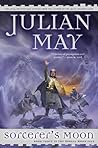
Sorcerer's Moon (Boreal Moon, #3)Sorcerer's Moon by Julian May
My rating: 3 of 5 stars

This series wore me out, but I win. Finished. At f'ing last.

I love Julian May. The Saga of the Pliocene Exile is so cool--a long-time favorite. (I loaned the books to a friend and never saw them again....) And I loved the idea of this series so much--more than I loved the actual books, by a lot.

The first one I gave a 5, but I think that was mostly hopeful. It was good, but it cost so much energy to read that I didn't start the sequel for two years. That one was even harder to get through, and though I gave it a 4 back at the start of Covid, that was still more sentimental than real. I wanted to finish the trilogy, but it took me more than five years to work up the strength to pull out the last book and start reading. And even then it took me months, a small piece at a time, reading some every third or fourth or fifth day. Maybe skipping a week or two here and there.

It's not that there isn't some good stuff there, especially near the end. But the overall pacing was brutal. So dull. So little of note happening. There is a great deal of amazing creativity in the series, with cool magic and wild monsters and many excellent characters, but none of it (IMO) is used well. It goes from a setting-the-scene crawl in book one (I forgave the pacing) to a bridging-the-middle crawl in book two (wore me out) to a just nothing-is-happening-that-anyone-cares-about crawl in book three. You know, up until about 460 or 470 pages in, when stuff started to happen.

Many of the characters become a muddle, impossible to remember or tell apart or know what they're trying to accomplish. There are several kingdoms, all with factions and parties, and they're all scheming and meeting and trudging from here to there to do more scheming, and I gave up caring who was who or which side they were on. Halfway through book three, I was still trying to figure out what the author meant for the main conflict to be. Ultimately, it's the human fight against the huge amphibious Salka, but that is buried under so much chit chat and pointless maneuvering that I thought it was just the fight for the throne. Or maybe the weird battle going on between supernatural creatures in the sky.

I should have DNF'ed. My long love for the author made me stick it out, but the dreadful pace and strange resolution in the last 20 pages left me with little to say that's positive. The overall score of 3 for this book is for imagination and creativity and old time's sake. Otherwise--it was a 2. I couldn't do that to the author, though.

Not really recommended. Read her much better book The Many Colored Land and its sequels. Those I highly recommend.

View all my reviews

Tuesday, July 29, 2025

Where Roland Plays His Horn. Eventually.

The Song of RolandThe Song of Roland by Unknown
My rating: 4 of 5 stars

The Battle of Roncesvals took place in 778. This epic poem of the event comes from maybe two centuries after, give or take, and it can't be relied on to be accurate history, but it serves as a quality literary attempt at telling the story. Honestly, it feels quite foreign to me as a 21st century reader in America, and I suppose that makes sense--I'm not French or Spanish or Catholic or Muslim, and I'm definitely not from the Middle Ages--but it's strange to read the story and just not understand why they do what they do. That's part of what makes this so intriguing and entertaining: trying to understand people from a remote time and place, seeing how they are different and still like us, just the same.

This is an action story, with exaggerated battle scenes like you'd find in King Arthur tales or the Iliad or the Shahnameh or other epics, with one warrior or another wiping out scores of opponents. The army sizes here also have to be wildly exaggerated, but it works in epic like this. The good guys and the bad guys are all heroic in battle, capable of amazing feats, though the Christians are made righteous and the Muslims are slandered horribly. (The poet clearly understood nothing about Islam, even naming Apollo a focus of Muslim worship. The author's errors are as illuminating in their own way of the times and people and general milieu as the stuff he/she/they got right.) In battle, though, even a bad guy can be admired for his heroic feats, and there's a lot of that.

I'll never understand why Roland would rather sacrifice himself and all his troops than blow his horn and call for reinforcements. It's explained, in a way, but I just don't get it. It's just bad tactics, and it's a terrible waste of lives. And the court martial at the end for the traitor--who makes a case for his actions, claiming that Roland deserved it, that his betrayal wasn't treason against the king--ends with thirty of Ganelon's kinsmen being hanged. What? Why?

It's a wild story but entertaining, and brief enough that it's still a good read despite the challenges it poses to a modern reader. The copy I have includes a really good afterword by Guy Gavriel Kay, and he does a good job of putting the poem into perspective for the reader. I recommend getting that version.

View all my reviews

Tuesday, October 29, 2024

Where Satan and Jesus Take a Tour

Paradise RegainedParadise Regained by John Milton
My rating: 4 of 5 stars

Read as a story, as retelling of a myth, as poetry, this is pretty entertaining, and well done. I mean that as a reader separated in time from the author by about 350 years. Dipped into with a little curiosity and a dash of patience, I found this fun and pretty entertaining, even though I'm not the intended audience, and I think many other readers would have a similar response.

As a devotional experience, reading it as a hardcore Puritan might have done three centuries ago, it's probably pretty cool, but I don't think modern Christians can approach it the same way. They might still be charmed by the way Milton approaches matters of theology, even if they don't agree with his take. In any case, that's not my thing now, though I do like that he takes on ambiguities in the language and tries to explain them them for the reader, as he does in Paradise Lost. (In that book, for example, Milton spends some time on the ambiguous phrase "in that day you shall surely die," referring to the day they eat the forbidden fruit. Clearly they don't die that day, so he discusses it, trying to make sense of it. Here, Satan brings up the kingdom Jesus is to inherit, trying to understand what that means: "A kingdom they portend thee, but what kingdom, Real or allegoric, I discern not..." I like it that he anticipates what questions the reader has been wanting to have answered.)

This has received a lot less attention from the average reader over the years than Paradise Lost. It is a much shorter work with a narrower scope and smaller cast, and it's also less "visually" impressive. (There is no scene showing burning demons in hell, no construction of Pandemonium, no description of a war in Heaven, and it's a shame. Those were fun to picture.) It's not entirely lacking, mind you. This part deals only with Jesus getting baptized and then spending forty days fasting in the desert, but that canonically includes Satan tempting Jesus, showing him the great nations of the world and promising to make him king over it all, and those scenes are both awe-inspiring and entertaining. Satan sweeps him magically from one high spot to another, where Milton can describe the amazing scenes all around. It still requires the reader to use their imagination, but it's pretty effective:
With that (such power was given him then), he took
The Son of God up to a mountain high.
It was a mountain at whose verdant feet
A spacious plain outstretched in circuit wide
Lay pleasant; from his side two rivers flowed,
The one winding, the other straight, and left between
Fair champaign, with less rivers interveined,
Then meeting joined their tribute to the sea.
Fertil of corn the glebe, of oil, and wine;
With herds the pasture thronged, with flocks the hills;
Huge cities and high-towered, that well might seem
The seats of mightiest monarchs; and so large
The prospect was that here and there was room
For barren desert, fountainless and dry.

He follows this with a long recitation of the various cities and empires that he could see from that point, which is a chance for Milton to show his erudition:
Here thou behold’st
Assyria, and her empire’s ancient bounds,
Araxes and the Caspian lake; thence on
As far as Indus east, Euphrates west,
And oft beyond; to south the Persian bay,
And, inaccessible, the Arabian drouth:
Here, Nineveh, of length within her wall
Several days’ journey, built by Ninus old,
Of that first golden monarchy the seat,
And seat of Salmanassar, whose success
Israel in long captivity still mourns;
There Babylon, the wonder of all tongues,
As ancient, but rebuilt by him who twice
Judah and all thy father David’s house
Led captive, and Jerusalem laid waste,
Till Cyrus set them free; Persepolis,
His city, there thou seest, and Bactra there;
Ecbatana her structure vast there shews,
And Hecatompylos her hunderd gates;
There Susa by Choaspes, amber stream,
The drink of none but kings; of later fame,
Built by Emathian or by Parthian hands,
The great Seleucia, Nisibis, and there
Artaxata, Teredon, Ctesiphon,
Turning with easy eye, thou may’st behold.
All these the Parthian (now some ages past
By great Arsaces led, who founded first
That empire) under his dominion holds,
From the luxurious kings of Antioch won.

(Spoiler: Jesus says no thanks, we've got a plan already.)

But the huge canvas and the great detail, all delivered in elevated language, is mind-expanding and intellectually invigorating, whether the reader is religious or not. The fact that its only about 2000 lines--about 40 pages--is a plus, too, making it more manageable for uncommitted readers. Overall, it's more impressive and more entertaining than I expected.

I'd like to see this done as an animated feature, with dreamy watercolors. Seeing empires spread across the horizon could be really cool. I wonder if there's a BBC radio show or something we could use for the narration. Hmmm.

Recommended if you already like the series.

View all my reviews

Monday, October 10, 2022

Where It's Pretty Damn Awesome

Shahnameh: The Persian Book of KingsShahnameh: The Persian Book of Kings by Abolqasem Ferdowsi
My rating: 5 of 5 stars

This epic poem of Persia, written about 1000 years ago, traces the legendary line of kings from greatest antiquity to the coming of the Arabs and Islam. It's a giant book, filled with heroes, villains, warriors, kings, sorcerers, demons, holy men, and humble folk, all mixed in a story of war and invasion and intrigues, with the founding of cities, great marriages and the cementing of treaties, and the emergence of new nations. There are good kings and bad kings, great champions and shameful cowards, wise counselors and scheming backstabbers, loving wives and self-serving lovers. Some genuine figures from history can be found here, along with a rough outline of dynasties and their dealings with neighboring powers, but most of it is so fictionalized that it reads like myth. That's okay; it's cool myth. It clocks in at almost 1000 pages, even with a few sections summarized rather than translated, so it isn't the type of thing likely to be picked up by casual readers in the West, but I think anyone led to it with any sort of interest will find a lot to enjoy and learn from here.

The original is told in rhyming couplets, and I'm glad the translator didn't attempt that here. Only in a relatively few places--passages that seemed more like song in the original, ten or twenty lines at a time--did he render it in rhyming English couplets, and I felt like that worked. (It reads kinda like the Lord of the Rings, with lots of prose broken up by a song every now and again.) For the most part, the story is translated in very readable and comprehensible prose. Of course, readers like me won't have a strong grounding in the social norms of 3rd Century BCE Persia (for example), so a lot may get by me or other readers, but it feels pretty straightforward anyway. The attitude toward commoners reminds me a lot of British history, so that the way a successful general, for instance, gets snubbed by the king owing to his common origin seems ridiculous and wrong, but it tracks with a lot of cultural traditions I already know about. A lot of it was like that.

One of the best figures in the story is Rostam. As the king's greatest warrior and champion for a long time (hundreds of years, apparently) he always is respected for his prowess, his success, and his noble bloodlines, but as he is not exactly Persian, he is never quite as accepted as others in the story. After he saves the king (again) he's sent back, with thanks, to his homeland. I had a hard time understanding what was going on with him, why he was celebrated but not completely trusted, and it's because (I guess?) he's from Zabolistan, his mother from around Kabul, making him marginalized in a way that I couldn't quite sort out. At any rate, his stories are the most fun. From the back of a giant horse named Rakhsh, with arrows bouncing off him, he defeats men by the dozens, pulling them off their horses. For the king, he wins battle after battle, campaign after campaign, and the king always rewards him with more camels and elephants and servants and hunting cheetahs, pouring gemstones over his head and giving him huge banquets. They love him and celebrate him but never quite embrace him, always mistrusting him a little, maybe like Caesar with his troops coming too near Rome. Anyway, Rostam is an ancient superhero, a good guy in a rough world, and he has enough traumatic backstory and bitter life experience to suit any comic book or movie fan. (I'm sure there are lots of series about the character in Farsi or something. I haven't looked yet.)

It's easy to read this as an adventure story and enjoy it on that level, which I mostly did. I also liked reading it as a sort of window into historical belief and cultural traditions, including the poetic norms and the role of literature, and I found lots to think about there. No doubt there are many other levels of appreciation and study enjoyed by other readers, but I'm not the guy for that right now, so I'll have to be happy with my bit. But I suspect lots of people who haven't heard of this (like I hadn't until pretty recently) would find this both interesting and entertaining and might find room in their life to give it a shot.

Recommended for those souls.

View all my reviews