Showing posts with label 17th century. Show all posts

Friday, March 20, 2026

Where They're Too Beautiful to Care

The Ivory MischiefThe Ivory Mischief by Arthur Meeker
My rating: 5 of 5 stars

I'd never heard of this novel when I picked it up in a library bookstore. I just liked the looks of the hardcover--that was what sold me.

It's a great novel. It took me some time to read, but I loved it, and I am struggling to explain to myself what exactly held my attention so long. The genre isn't exactly my thing--straightforward historical novel, leaning more literary than popular, though it apparently was very successful in its day, that being the early 1940s.

Set mostly in France in the late 1600s, it is the story of two beautiful, rich sisters, Magdelon and Cateau. Cateau is the clever one, Magdelon the sweet one; Cateau has more beauty and more lovers, and is more adept in society; Magdelon makes a better marriage and has children and grandchildren, a family life her sister never achieves. But despite their differences, they remain close and live lives more similar than different. Both spend decades in the public eye, wearing the most expensive clothes, taking lovers almost without discretion. Both behave throughout the years of their youth and beauty as if nothing will ever change and the world will always be at their feet. But the novel follows them through their fifties, sixties, seventies, and eighties, and we see them desperate and afraid for their souls when everything has been taken from them except each other (and Cateau's money, which they both live on).

Much of the novel is about their earlier years and their brilliant careers as fashion leaders, invited to dances and parties and dinners almost every day of the week. The men in their lives come and go, off to war each year, sometimes not to return. Cateau especially seems to have everything anyone could want, but even rich beauties are not immune to grief and loss. Nor is she or her sister immune to befriending the wrong people, or being too flagrant in their disregard for decorum, and both spend years in hiding, if not repentance, until their fortunes brighten once more.

And all of this is true. The novel is fiction, filled with scenes and events and dialogue that is invented, but the people (I don't say characters) were real, and lived these very lives, rising and falling in public esteem, in wealth, in fortune, as found in letters and other documents from the times. In a real sense, this is their joint biography, if somewhat embroidered. And so the ending, which leads us to their passing months apart in their eighties, is more than usually poignant. It's like we knew them as very young women, right around twenty, with all of their lives ahead of them, and fast-forwarded (well, through about 700 pages) to gray hair, failing memory, and anonymity. I found it very touching.

Maybe every tenth or twentieth book I concern myself with prose. It's not one of my cares, usually. But when it's striking, as it is in this novel, I become aware of how much I approve of it. A dull story with brilliant prose means no more to me than a lovingly-painted image of garbage (I don't know; that might be cool, after all...) but an engaging, lively, stimulating novel with amazing prose is fantastic. Meeker uses a lot of ellipses and em-dashes and parentheses, a style I actually vibe with, and I find it adds to rather than detracts from comprehension. Maybe it's just me. Here's a taste literally at random, from page 340:
At thirty-eight--an age at which most of her contemporaries were grandmothers--the Comtesse d'Olonne [Cateau] was still a beautiful young woman. Her outline was as slender and graceful as ever; her eyes were as blue, her curls quite as yellow--or very nearly: Cateau had lately fancied that they were losing something of their new-minted glitter and had experimented, in spite of La Martin's vigorous protests, with various blond powders, none of which, fortunately, had done any lasting damage. Her complexion, too, had retained its pure ivory pallor [the ivory of the title, btw], so that even from as close a point of vantage as her own dressing-table mirror Madame d'Olonne appeared to be the same white-and-gold idol that had been the admiration of Paris for two decades.


Is it more a novel of manners? Maybe so. It reads like many 19th Century novels, for sure. It's beautifully done, whatever category we want to put it in, and I would love it if more people knew about it. And it makes me wonder how many such novels are waiting in bookstores and basements that cry out to be read, like this one did.

Highly recommended.

View all my reviews

Tuesday, November 18, 2025

The Golem and the Sad Girl

The Book of SplendorThe Book of Splendor by Frances Sherwood
My rating: 4 of 5 stars

I enjoyed this quite a bit. 4 stars.

In part, this is the story of a young woman who falls in love with a golem, and that's my favorite part of the story. Rochel is a marginalized young woman in the Jewish quarter of Prague in the early 17th century. As a child of rape, she looks different and is treated different, though a decent man makes her his wife. He's not a bad guy, but he has blind spots that leave Rochel feeling unseen and unloved. (He does love her. He just isn't good at it.) When threats from the intolerant Christians make them fear for their lives, the rabbi creates a golem (a story which is repeated in legend and is here treated as fact). The golem can't speak but he's intelligent and sensitive, and he definitely sees Rochel.

I would have liked more of their story. They're together on the page too little. The other characters are also interesting, but lead nowhere. We have the Holy Roman Emperor, who's crazy and wants to live forever; Tycho Brahe and Johannes Kepler; the alchemist John Dee; doctors; spies; a rag and bone man who is one of the heroes of the story; Vaclav, the bastard son of the emperor who serves him though the emperor has no idea who he is; and more. As much as I enjoyed them, most of their stories peter out, with their endings coming off-stage or omitted altogether. We don't get the scene when Kelley is hanged. We don't see when Kirakos and Sergey escape to South America. The final scene with Vaclav and the emperor on the sands by the river seem to hint at something, but I don't know what. And Rochel's story, with her husband, has a logical conclusion, but we skip most of the events that get us there.

It was fun to read, but a little frustrating in the end. I can appreciate the excellent prose, and there's an entertaining plot filled with memorable characters, but the loose threads and skimpy conclusion didn't entirely satisfy. I usually feel like books are longer than they should have been; I think this one could have used another hundred pages.

Anyway, I still liked it.

View all my reviews

Saturday, November 8, 2025

Where Rupert Gets No Support

The Stranger PrinceThe Stranger Prince by Margaret Irwin
My rating: 4 of 5 stars

I saw a five-star review of this and a one-star review of this and I agreed with them both. I'm going with four stars, because the book pissed me off over and over and yet I liked it quite a bit.

It's a great story, and though she will try your patience, the author writes many amazing scenes, demonstrating a solid grasp of history, politics, the tactics and strategies of war, and the personalities of the various characters (real people) involved. Her writing tends toward the literary at all times, but when she's telling about a cavalry charge in a complex battle scene, the writing is remarkable.

The difficulty, the one that almost made me DNF about 1/3 in, is how her attention jumps from page to page, paragraph to paragraph, and even sentence to sentence. The focus is so scattered and diffuse that the reader has to scramble to keep up with the current topic. It sometimes feels like the novel is restarting again and again, as if everything before was prelude and throat-clearing, and now she's at last talking about the thing she really wanted to get to.

The thing is, I wanted to like it. So rather than DNF, I intentionally, consciously chose to let her tell the story in her distracted, shiny-object, ADHD, mind-wandering way, and though it was a challenge, the storytelling is so complete and satisfying in other ways I found myself really enjoying it.

Prince Rupert was the nephew of Charles I, and grew up on the continent, taking part in the unending wars there during the 17th century even as a teenager. He was well-liked, tall, capable, energetic, and war-like, literally raised to be a leader of men, and when he went to England, his aunt and uncle really took to him. When Parliament, with Puritan support, opposed the king and openly rebelled, Rupert was the king's best general. The story, as told here, was how Rupert was having great success and could have--and should have--won the war for him if only the king would have listened to him and not his detractors. There's a lot of useful history in here, though it feels like Margaret Irwin wanted to tell about Rupert more than what he did or what happened. Hard to say, TBH.

All in all--the author tells a great story and pens a fantastic novel despite having a sometimes frustrating style. I feel like that's fair. YMMV.

Recommended for readers looking to take a chance on books they've never heard of. You never know.

View all my reviews

Friday, October 17, 2025

Seventeenth Century Scammers

The ALCHEMIST by Ben Jonson The ALCHEMIST by Ben Jonson "Classic Edition" by Ben Jonson
My rating: 4 of 5 stars

With nothing but a few footnotes to help with the language, this is pretty tough going, but I still enjoyed it quite a bit. At 4 stars, I'm going a bit on a limb, with so many other people giving it a 3 or less while comparing it unfavorably with Shakespeare. But I found it witty and amusing. I would like to understand it better, for sure, but the scams and tricks are clever and the action tight enough to amuse a reader, considering always this is a 400 year old play, not a modern novel.

A wealthy homeowner is away for weeks, and while he's out, his servant is using the house to run several scams with a pair of partners: a man posing (pretty convincingly) as a competent alchemist, cooking up potions and pretending to know astrology, and a prostitute posing as a respectable woman. They've got a number of people on the hook, telling them they're getting closer all the time to finishing the long process of making a philosopher's stone, confusing them with fancy alchemical language, putting them off, while making them bring in fabrics, costly metal items (to turn to gold), tobacco, and actual money. The marks will want to get rich and do either good works (so they say) or sleep with lots of women. It's a long scam, and though they're pulling it off, the neighbors notice the strange comings and goings and at a couple people suspect they're being tricked. It looks like they might pull it off despite a whistleblower tricking them, but they get interrupted in their multiple scams when the homeowner comes back weeks early and learns what's happening from his neighbors.

There is a happy ending of sorts, on top of a pretty good skewering of scammers, puritans, ambitious men, and fools of all sorts. This is one I would like to reread with a study guide, and make more sense of it. (Also, I'd like a version that avoids my pet peeve--I hate books that only give the first three letters of character's name at every line. It doesn't work for my brain. I have to rehearse who is who over and over. Doll is 4 letters, but we print Dol? How much room does this save? How many pages? Can't we just put everybody's name?) A more thoroughly annotated copy would also help.

Still, as is, I liked it, and think people looking for other plays from Shakespeare's times would probably also enjoy it.

View all my reviews

Tuesday, September 16, 2025

Where Fate Really Hates Randal

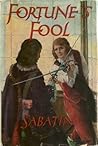
Fortune's FoolFortune's Fool by Rafael Sabatini
My rating: 5 of 5 stars

This is a very entertaining and well-written historical adventure novel set in 17th century England. I enjoyed it.

[Spoilers about plot abound here. Skip ahead if you prefer.]

The story of a mercenary soldier with bad luck his whole life, it tells about a particularly tough period in the main character's life. Returning to England to try to find work, Randal Holles struggles to overcome forces arrayed against him. His father was a famous traitor, making his very name an enemy to luck. Old friends try to entice him to join their rebellion, and even though he doesn't take them up on it he becomes a known associate and at risk of arrest. One acquaintance with a title and pull tries to get him a position overseas, but a nobleman of higher rank forwards his own candidate instead, and he has almost no way forward. In addition to all this, the plague returns, gates are closed, and he has no way to get out of the city.

[Most critical spoiler. Jump down if you want to avoid it.] The biggest turn of bad luck is when another noble acquaintance--Lord Buckingham, a man who had been a boy when Holles saved him--offers him work, but it requires him to help kidnap an actress Buckingham has a fancy for. Holles refuses, but worsening circumstances eventually force him to do him this service, the worst thing he's ever done, over the objections of his pride and conscience. And the woman turns out to be his lost love, a girl from his youth, the woman he searched for and couldn't find.

[That's the end of the spoilers.]

The rest of the novel deals with Holles working through the consequences of his actions, and I feel like the author does a good job of showing us how he changes course, leading to a satisfying and reasonable ending.

Sabatini is, to me, like Sir Walter Scott translated to English a century nearer our own time, with a lot of the digressions and authorial intrusions cut out. I love Scott, but Sabatini writes something closer to the "good parts" version of Scott's historical adventure stories. This book is from 1923, but I feel like a new edition with a decent cover would get people in 2025 and beyond reading his books like they were new, because it reads very modern overall. IMO, obviously.

Good book. Lots of fun. I recommend it for people who enjoy historical adventure novels.

View all my reviews

Saturday, January 4, 2025

Where Julian Fights for Alice

Peveril of the Peak (Edinburgh Edition of the Waverley Novels)Peveril of the Peak by Walter Scott
My rating: 5 of 5 stars

I loved it. Easy 5 stars. This is one of my favorite Scott novels, so it is strange to see that the most common score from other readers was a 3. Huh. But that's alright.

[Summary--skip ahead without worry:]

Julian Peveril, the heir of a minor title and his father's diminishing wealth, is in love with Alice Bridgenorth, a beautiful and kind young woman from a family his hasty father cannot approve. She is from a rich Puritan family, folk who just lost the upper hand when Cromwell's reign was ended; he is from a proper Protestant family that has ties to old Catholics. They were born as neighbors, and for awhile they were friendly. Bridgenorth saved the old Peveril during the time of the Puritans, and later, when politics changed and when Bridgenorth's wife and other children died, the Peverils returned the kindness by raising the baby Alice in their household. But the families were separated by events. Over on the Isle of Man, when the Puritans were cast down, Alice's uncle was killed by Julian's relative, Lady Derby, and when Bridgenorth tried to bring that woman to justice for the killing, the Peverils interfered. They were enemies from that point on. Bridgenorth took his child back and disappeared.

Fate is tricky, and those children became acquainted anyway. And then, through the course of a pretty long novel, they fight to either get their parents' permission to marry or (last resort) honor their parents' wishes by forever parting. Most of the middle concerns the so-called Popish Plot (a real event of history, though the plot itself, at the time, probably was invented just to harm certain people). This brought many very cool characters together, all with intrigues and plots, getting Julian and his family thrown in prison, exposing Alice to men who would use her beauty to their advantage with Lord Buckingham or the king himself.

Fenella, the deaf-mute servant of the Countess of Derby over on the Isle of Man, is probably the best character in the novel. Scott often creates amazing, brilliant, resourceful female characters, giving them so many memorable scenes, and this young woman numbers among the greatest of his creations. Her participation in intrigues, and her manipulation of events, all while being sympathetic and likable, even lovable, makes her one of my all-time favorite characters. Her co-conspirator, Christian, who goes by several names in the novel, is also very interesting, very compelling, though definitely not sympathetic. Well, maybe a little, at the end. But pretty evil. Lord Buckingham is rather in the same vein. Also, Julian is a good MC--an honorable young man, deeply in love, and though he is more naive at times than his opponents, raised on an island as he was, he is active and capable. He can't overcome everything thrown at him by his own power, but he keeps fighting through, gathering help where he can. I liked him.

Sir Walter Scott, as always, does a great job at differentiating his characters, giving them their own voice and their own motivations, and as a master of historical settings--especially this one, apparently, set during the Popish Plot--he creates a believable and highly affecting world for their actions.

It isn't for everyone, though. Most readers wouldn't even open this novel. I get that. And among that smallish number who did trouble themselves to read it, most of them liked it less than me. I'm surprised by that, but I might account for it a little. Obviously, it's an old novel, and his language is a bit difficult, even semi-archaic at times. At the best of times, it is quite ornate, written in a high style. That's cool, but not every modern reader will make a seamless entry into his prose. I know I didn't, originally. However, the more familiar I am with his style, the less impenetrable I find it, so I have no doubt I enjoyed this more for having read other novels by him previously. And his pacing may not be to everyone's taste. This is a pretty long book, with lots of intrigues, and though that leads to some exciting action, most of them are planned and then aborted for various reasons. But I found it entertaining throughout. Plenty of fun. IMO, anyone who can read a Dickens novel (for example) with any pleasure at all will find this a fast-paced adventure that reads like an action movie.

You know, by comparison.

And I liked the ending. So--thumbs up.

Recommended for those who enjoy and have patience for older historical novels. This is one of my new favorites.

View all my reviews

Friday, June 28, 2024

Where the King Hides in a Tree

Boscobel, or the Royal OakBoscobel, or the Royal Oak by William Harrison Ainsworth
My rating: 5 of 5 stars

I like this a lot more than the average reader. That's okay.

I found it really interesting. It's the story of Charles II, trying to retake the throne from Oliver Cromwell after they put his father to death. The first section of the book deals with the loyalists' preparations for a battle at Worcester and the subsequent loss to the "roundheads" of Cromwell. It's well done, full of spies and skirmishes and stratagems, individual heroism and unexpected reversals. Cromwell, in this part, is as important a character and as interesting a character as Charles.

The rest of the book deals with Charles trying to escape after the loss. It's very complete, with lots of heroes. (While I'm reading, I'm rooting for Charles and his loyal supporters. I don't actually care about the monarchy, then or now, but in the books they're the good guys for sure.) There are so many close escapes, so many moments when the troops searching for him almost find him. He goes from house to house, from hidden room to hidden room to hidden cellar, from one woods to another, two or three days here, an hour there. It's pretty exciting, in its way. It's the biggest game of hide and seek I've ever heard of, and Charles won.

He almost takes ship a couple times but can't quite make it work. He pulls off a disguise now and then, and other times it fails him, and he has to fly again. Of course, in real life, he went to all these places, including the huge oak tree that he famously hid in, and eventually got help to escape to France before being ridden down.

I liked it. I thought it was fun, a good book for those who like this sort of romance (action adventure romance, not HEA kissing romance), though it might not work for everyone. It has a lot in common with romances that Dumas wrote, with constant plans and schemes and fleeing on horses and the occasional sword fight, so it might work for some of his fans. (Like me.) It's also suitable for those who like complete descriptions of manor houses and moors and harbors and villages dating back to the 17th century. Ainsworth is precise about details and doesn't stint on that stuff.

This was first published in 1872. I think this edition I have is from 1899. Old enough, anyway, that someone sold it at a yard sale for 19¢. :)

View all my reviews

Thursday, July 27, 2023

Where Moliere Mocks Pretensions

Molieres Les Precieuses RidiculesMolieres Les Precieuses Ridicules by Molière
My rating: 3 of 5 stars

(Read in English translation)

This is a short play, so a short review:

This is pretty entertaining to read, both for informing myself about the writer and the times and for the play itself. It might be amusing to see it staged. I found it more comprehensible and relatable (in some ways) than I expected, which is good, since this is my first foray into Moliere's writing. Except for being translated, it didn't need a lot of notes for me to make sense of the story and feel like I had a handle on much of the context.

It's a comedy, and it's sorta funny. The "ridiculous young women" of the story are silly and shallow, and it's reasonable to laugh at their affectations, though I didn't care to see them made *too* much fun of. They're not evil; they just read novels.

For me, the most interesting thing about the play is the writer's absolute confidence that the audience would understand that the girls are ridiculous for being silly enough to be tricked by a couple of servants, dressed up in fancy clothes, pretending to be gentlemen. See? How stupid can you be to think an inferior, a common servant, even all dressed up, even mouthing fancy words, could actually be as good as one of the upper class? The supposed gentlemen they were liking so much, once revealed, were clearly far beneath them. What horror. What shame.

That's an attitude that survives in a few places (I see them on the interwebs), or is at least understood still in places where it held sway for so long, but it seems wildly exotic to folks raised outside Europe.

Of course, Moliere could be referring to himself and his troupe, who are commoners all dressed up speaking fancy words. They receive applause on the stage, but too often face the derision of the upper class in public. Maybe this was a bit of ironic protest.

I don't know. I'm not gonna ask anybody, either. That's cheating. Let's see what the next play suggests so I can start to puzzle it out for myself. It's Tartuffe for me, next in the queue.

If you read drama, sure, why not, give this one a try. If you already read this, tell me what you thought. You know, if you feel like it.

View all my reviews

Tuesday, June 20, 2023

Where Segismundo Learns a Lesson in Prison

Life Is a Dream (Dover Thrift Editions: Plays)Life Is a Dream by Pedro Calderón de la Barca
My rating: 3 of 5 stars

I found this interesting and thought-provoking but not very entertaining overall. A bit. Lemme explain.

The play explores philosophical themes as its first purpose, or so it seems to me. The king of Poland believes his son is fated to become a tyrant who deposes him, so to prevent this he traps him in a tower in the wilderness, where we find him at the start of the play as a young man. For a short time he is released, brought to the palace, and treated as the prince, as a test, but he kills a man and acts like a tyrant just as his father had been warned. The king has him returned to his cell, drugged, so that they can convince him it was all a dream and he is still just the trapped man he always was. The events that follow, and the long speeches that accompany it, show that one cannot avoid one's fate and should face it--even oppose it, though you fail--but not flee or hide.

The scenes with Prince Segismundo after he is returned to his cell reminds one a bit of Plato's cave, trying to identify what is reality, and even more of Zhuangzi who dreamed he was a butterfly:
"Suddenly he woke up and there he was, solid and unmistakable Zhuang Zhou. But he didn't know if he was Zhuang Zhou who had dreamt he was a butterfly, or a butterfly dreaming that he was Zhuang Zhou."
I don't know if Calderon had heard the story, but he no doubt was aware of others like it, being a much greater scholar than me... Segismundo doesn't know what to believe, which is a lesson to him:
Experience teaches me that each man who lives dreams what he is, until he wakes. The king dreams he is a king, and in this deception spends his days, commanding, governing, disposing. But this renown he receives is written on the wind. At the touch of death--oh dread misfortune--it turns to ashes.

He is more humble because of this realization, leading eventually to a reconciliation with his father.

The story, at least as it's told on stage, is not super compelling. There is the start of a kind of romance, with a young woman traveling in the clothes of a man, carrying a sword that is a clue to her father's identity, which promises to be fun, but not much is made of that. Instead, we get pages-long soliloquys and monologues, very sober action, and characters that take themselves very seriously. The only comic relief, the character of Clarin, gets killed in the end as a bystander hiding from war, and that tells you what the author thinks about humor. At least in this play.

It's moderately fun overall, IMO. The high diction and ultra-serious tone make it hard to read straight, and the long, long speeches feel a bit silly in 2023, but it did get me thinking, and now I'm curious to see if someone could stage it in a way that spoke to modern audiences.

This is the only thing I've read by Calderon, and I'm intrigued enough to be ready for a little more.

View all my reviews

Tuesday, May 16, 2023

Where It's Technically a Comedy

Comedia Famosa De La Verdad Sospechosa/ Famous Comedy of the Suspicious TruthComedia Famosa De La Verdad Sospechosa/ Famous Comedy of the Suspicious Truth by Juan Ruizde Alarcon
My rating: 3 of 5 stars

This early Seventeenth century play by Juan Ruiz de Alarcón, the inspiration for a number of similar plays in other languages, is witty and moderately entertaining, but not super fun. It's alright. I wouldn't really want to see it performed.

It's the story of a young man returning to Madrid after finishing his schooling, and he seems like a young gentleman at first to us and to his father, but moments later is revealed as a wild liar. He tells complex lies for no good reason, and pretty soon has himself tangled up in them. His father is horrified and furious, a rival for the love of a beautiful woman is ready to duel with him, and the woman of his dreams, who was ready to fall for him, discovers he can't be trusted.

In English translation, it's hard to tell whether or not it would come off as comedic. A couple scenes have that feeling, but mostly it feels moral and didactic from beginning to end. You hope the young man will learn his lesson and redeem himself, but [400-year-old spoiler] he doesn't, and goes to the end unrepentant. Oddly enough, he ends up with a beautiful woman, just not the one he was aiming for, so I guess it's a feel-good screwball comedy, but there's no way he deserved the woman. I feel bad for her. He's gonna keep lying.

I'm curious about some of the speeches and how they would appear on the stage. Many of them are crazy long. They speak in paragraphs as a rule throughout the play, but some of the speeches are several hundred words long, and one of them--a particularly involved lie--is over 1000 words. it's the longest I remember seeing in theater. I'm afraid they would turn out dull, but it may be that, staged and delivered properly, they are funny. Probably just depends on the director and the tone they go for.

Anyway, the play doesn't much speak to me, but it is interesting in its own way. I could probably be talked around on it.

View all my reviews

Friday, November 27, 2020

It Doesn't Sound Like an Adventure Novel

Lorna DooneLorna Doone by R.D. Blackmore
My rating: 5 of 5 stars

I really enjoyed it. Beginning to end. Did not expect that.

I acquired this book in a random way (castoff in the library of the school where I taught) and only started to read it because I had finished all my other "classic" type books. But then--it was good.

This story is told in first person by a young gentleman farmer, John Ridd, who is intelligent, hardworking, brave, honorable, and physically impressive. It's a clear voice, that of a man who is self-reliant and confident, who speaks up when he has something to say, who thinks fighting is often necessary, but he's also sensitive for a tough rural man and shows tenderness to the women in his life and apologizes when he's wrong. Sometimes he's full of insight, and other times the reader is aware of his blind spots and prejudices. He seems real, and he is sympathetic.

This is the story of plain man's love for a beautiful woman, Lorna Doone, who comes from the family of his enemies. It might sound a bit like Romeo and Juliet, but it's more like a Western. Think of John as a regular farmer and the Doones as the rich, bullying ranchers who run everything in the area. They are beyond the reach of the law in 1600's west country England, and everyone around them has to make room for them. Even John, who wants to get justice for his murdered father, must treat them respectfully.

Part of the charm of the novel is learning about the contradictory ways of the people in that area at that time. A man they might seek to kill in one moment will be their honored guest at another. Depending on the situation, the people can be patient and polite or argumentative and ready for a brawl. In some ways, they lived simply and were proud of it, but in other ways they showed a real appreciation for good living. So--complex, like real people. When events occur in London or elsewhere in the country, it takes days to reach them, often in garbled form, and those events feel curiously remote. The reader gets a sense of what it would have been like to live in a distant, rural area in those years.

The subtitle, "A Romance of Exmoor," is meant to suggest something more like a story of chivalry than a modern "romance," but in fact both are true. There is romance in the modern sense, but it is also a novel of action, violence, and bloodshed, along with some mystery. It's an entertaining mix.

I think this is an excellent novel, and I wonder why that should come as such a surprise. Lots of good characters, lots of fun action. Why isn't it more popular? And no spoilers, but I can say that the novel has a very satisfying ending. I recommend it.

View all my reviews

Wednesday, August 7, 2019

Loved the Book--But Heed My Warning, Gentle Reader, Lest You Go Astray

The Vicomte de Bragelonne (The D'Artagnan Romances, #3.1)The Vicomte de Bragelonne by Alexandre Dumas
My rating: 5 of 5 stars

I enjoyed this first part of the novel and look forward to the rest. That's my review. Ahem.

Except to add: Dumas is always fun to read, IMO, and this sequel to The Three Musketeers is no exception. But a word of warning--it's published in strange ways, and if you try to get hold of the book in it's entirety, you're bound to get it wrong.

Here's why.

As a single book, it is called, The Vicomte of Bragelonne: Ten Years Later. If you read it in a single book, it would be a very big book indeed. Other than ebooks, I haven't found it like this.

It is usually broken into three parts (as Wikipedia informs me): The Vicomte of Bragelonne, Louise de la Vallière, and The Man in the Iron Mask. So if you want the WHOLE book, and search for and find The Vicomte of Bragelonne, you may be disappointed to learn that you have only the first 1/3 of the novel.

It is also sometimes split into four parts, which is how I found it. The titles then are like this: The Vicomte of Bragelonne, Ten Years Later, Louise de la Vallière, and The Man in the Iron Mask. In this case, The Vicomte of Bragelonne is just the first 1/4 of the whole novel!

The titles seem rather unimportant--it is the same story, whether in one volume, three volumes, or four.

Between lovely Christmas gifts and my own searching on eBay, I put together all four parts from the same edition, volumes 12-15 of Collier's complete Dumas (or something like that--I could look, but the book is already back on the shelf, several feet away) that are about 110 years old. They're still in good shape and have that wonderful smell for sure...

So there ya go. Be careful out there. Eventually, soon, I intend to read the other three parts and then write an actual review for the whole thing. Until then--stay tuned. Or go about your business. Whatever you like. It's all good. ;)

View all my reviews