Showing posts with label Georgette Heyer. Show all posts

Sunday, May 3, 2026

Where William Wouldn't Take No For an Answer

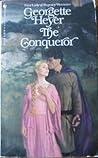
The ConquerorThe Conqueror by Georgette Heyer
My rating: 4 of 5 stars

This is a good book, one well worth reading, even though it took me quite a while to work through it. Rating it for fun, I'd lean more 3, due to some pacing issues (IMO). But there's more to this novel than entertainment. For historical scholarship, its finely crafted setting, its welcome complexity, and a very educational narrative, I'd give it a 4 at least.

I know Heyer mostly from her Regency romances, the books I was sent to when I asked other lovers of Jane Austen what author they thought wrote most like Austen. Since then, I've read maybe 9 or 10 of them, and I've enjoyed them collectively more than I originally expected. I've also read a mystery or two of hers, and I'd say those were okay; I'm not a huge fan of country estate murder mysteries, though I'll read one here and there. What I didn't know until now was that Heyer wrote straight-up historical novels. That's what this is. There's no more than a touch of romance here, and there's no mystery at all. There are women, and lovers, and love stories found in these pages, but this is book is closer to a biography of William the Conqueror. Told mostly from the perspective of Raoul, one of his closest supporters, the book covers about 20 years of William's life, ending shortly after the invasion of 1066.

(Hope that's not a spoiler.)

The beginning wasn't what I expected. Grimmer, maybe. The focus seemed odd. (This was all my fault, btw.) Even 50 or 100 pages in, I started to think the book would turn out to be a romance (of the bodice-ripping, chest-heaving, raven-haired tresses sort that I don't have much interest in), with a melodramatic tone and low stakes. But no. This is a no-nonsense historical novel with a very serious tone and heavy themes. It's about war and battles and strategy and putting down rebellions. It's about friendship and trust and honor and keeping one's word. It's about a man driven to make his mark on history and the people who gradually learned to believe in him, trust him, and follow him, helping him go from a beleaguered warlord to the leader of a stable regional power to the sovereign of a whole nation.

It was pretty fun to read, but not super fun. I didn't relish every page. However, there is nothing I could point to and say should have been edited out or abridged, and overall I'm glad I read it. Yes, I wish it moved a little quicker or varied in tone a bit more, but maybe it's better this way--leaning more toward an educational work of scholarship. This is no textbook, though; it's a novel, and I think a good one. Perhaps the greatest pleasure I've gotten from it is having a fuller picture of the historical setting and the Norman Invasion, filling in a picture that has been very sketchy most of my life.

So, yes, recommended.

View all my reviews

Monday, January 27, 2025

Where the Posh Suspects Can't Stand Each Other

The Unfinished ClueThe Unfinished Clue by Georgette Heyer
My rating: 4 of 5 stars

I liked this quite a bit. I'm already a sort of Heyer fan, so I was prepared to approve of it.

This book, for me, reads like an Agatha Christie novel, but with characters slightly more sympathetic. (I sometimes hate everyone in an Agatha Christie novel. I kinda liked a few of these characters here.) The setup is very similar: a murder has been done in such a way that a group of disparate people in company together (here it's the traditional country house) are all suspects, and all have a decent reason to want the guy dead. There's an emphasis on times, compiling the comings and goings of many people down to the minute, locating every character in time and place, to identify who had opportunity to commit murder. There's the cool, level-headed investigator getting testimony from everyone, deciding nothing until he has all the facts, while fuzzier thinkers accuse the wrong person again and again. And there's the surprising reveal with a twist.

A lot of this is very conventional, and that's fine as long as it's well-written, and IMO this is. The characters are varied and speak with their own unique voices, and the mystery is complex enough to be a puzzle but clear enough to make sense to the reader--without giving away the solution. You might guess what's up, or maybe half of it, but you can't really be sure until the very end. It works.

I'm pretty far from my starting point here. I started at Jane Austen, got directed to Georgette Heyer's somewhat similar Regency novels, and then found myself sliding into Heyer's mysteries. I'm a bit of a visitor here, genre-wise; I don't speak mystery like a native. But I enjoyed this, and I'll read others in a similar vein. I think I have another of her mysteries on my shelves.

Recommended for traditional mystery readers. Most of those folks probably already read this, but I'll recommend it anyway.

View all my reviews

Friday, March 15, 2024

Where Charity Needs a Hero

[Charity Girl] (By: Georgette Heyer) [published: November, 2004][Charity Girl] (By: Georgette Heyer) [published: November, 2004] by Georgette Heyer
My rating: 4 of 5 stars

Like all the Heyer novels I've read, this is a breezy read with a lot to recommend it. Plenty of fun. It isn't my favorite, but it's still entertaining enough that I happily give it a 4.

Viscount Desford picks up Charity, a young woman he barely knows, because she has run away from her aunt's house where she was made pretty unhappy. The main conflict was that he wanted to find a better situation for her--with family, if possible--without ruining her reputation by making it look like he had run away with her. This is trickier than one might expect.

Desford himself is not, IMO, a particularly memorable character. He's a pretty good guy willing to go far out of his way to protect a young woman not connected to him. His heart's in the right place, but he's not terribly interesting, though I can't exactly put my finger on why. I like his love interest more--not Charity, but Henrietta, who helps him find a place for the runaway. She has a little more personality. But the most interesting character, who I'd like to have seen more, especially getting punched, is Charity's long-missing father, who turns out to be a schemer, a feckless, unrepentant failure of a parent, and apparently a cardsharp. He shows up to try to claim Desford stole away his beloved child with a promise of marriage and therefore must marry her. He's that true rogue one usually envisions playing poker in a saloon in the Wild West, and his shameless audacity livens up the final quarter of the book. He is a delight to hate.

There are HEA's spread around in the final chapter that could have had a bit more development earlier in the book to be more satisfying, but that's quibbling. It's plenty fun as is.

Recommended for Heyer fans--second tier, let's say, but still good. :)

View all my reviews

Friday, September 22, 2023

If Henry Crawford Married Harriet Smith

Friday's ChildFriday's Child by Georgette Heyer
My rating: 4 of 5 stars

This is another very fun Georgette Heyer novel. I won't lie--I think it has flaws. But even a flawed Heyer book is a better read and more fun than some folks' most perfect stuff.

As always, she has engaging main characters who are not exactly like any other that I've seen in similar novels. She has a soft spot in her heart, I think, for characters who are silly or foolish or immature but basically good. Lord Sherringham, for example, is foolish and careless and impulsive and (too often) quite selfish; he marries without thinking, wastes tons of money gambling, makes little effort to get along with his own mother, and treats his young, innocent wife like she's just one of the guys. As a result, his desperately childish and trusting wife says the wrong thing and behaves the wrong way all of the time. It's perfect that he calls her kitten; she's like a little kitten that wanders through traffic and construction sites without any awareness of danger. But, like her dopey husband, she's a good person and able to change.

Sherry (Lord Sherringham) is like Mansfield Park's Henry Crawford, if we saw him in a behind-the scenes version of his life, and Hero (Kitten) is like Emma's Harriet Smith, if she were dropped off on the road somewhere and had no one to protect her. Then the reader has to see how this unlikely couple makes it work. This is not a spoiler--they do. And it's charming.

It is flawed, though. The beginning of the courtship and marriage is so improbable that it almost sinks the book, IMO. It could have used a better device. But I'll allow it. Then we probably dwell too long on Hero's introduction into society and her many screwups. (I picture her played by a young Lucille Ball.) Sherry finally loses his temper and is set on sending his wife to his mother's house, to be trained up by a woman who hates her, and Hero is forced to run away. It feels like the story really starts at that point, and it's 2/3 of the way through. I woulda liked that a hundred pages sooner. Anyway, it gets better there, and that last third is thoroughly entertaining. And though the conclusion is satisfying, I could have used a little bigger payoff at the end, seeing them happy for a few pages longer. I feel like she left a bit of the good stuff off.

To sum up--I liked it. I have my notes, but it's still a pleasure to read.

And I still insist that the BBC or somebody needs to start turning some of these novels into 6- or 8-episode miniseries. Who do I talk to?

View all my reviews

Thursday, April 13, 2023

Where the Last Third Is the Best

April LadyApril Lady by Georgette Heyer
My rating: 4 of 5 stars

Halfway through the book, I liked this the least of any of the Georgette Heyer books I had read. It seemed rather silly, more like an I Love Lucy episode than a Regency novel. But past the middle it gets much better. By the end, I liked it much more and found it pretty satisfying.

In the first place, it's odd for a romance from any era, as the lovers in question are already married at the beginning. (No doubt there are many such books out there, and others might supply some titles; I would be surprised if it's a very high *percentage* of novels, however.) That's interesting and quirky, though. Nell loves her husband and Cardross loves his wife, but neither is sure of the other's regard. He thinks she very likely married him for his money and only pretends to care for him; she thinks he chose her just to look respectable while he continues his affair with another woman.

The surface conflict for Nell--the one I don't care for--is that she's spent too much money and owes many people around town. Her husband finds out and is angry but says he will pay for all of it and say nothing if she just gives him every bill at once. She believes she has done that, then discovers the next day that she has forgotten the biggest one, which is being called in, but she is too afraid to admit it to her husband and looks for some way out.

Hijinks ensue.

Her brother pretends to hold her up like a highwayman, but it doesn't work out like he hoped. She almost borrows money from a dangerous moneylender, but a friend stops her at the door. She considers pawning some jewels. Nothing is promising.

This storyline tangles with that of her young sister-in-law who is in love with a good guy who has no money. She wants to elope with him before he leaves the country for his work, so she needs money, too. Her disappearance makes it appear to Cardross that it is his wife--not his sister--who has stolen some family jewels and run away.

It comes together in a reasonable way, with some very sweet scenes that make up for the sitcom-like goofiness of the beginning. Everybody is a little wrong, everybody is a little right, everybody has to forgive everybody else. It's good.

The one thing I always like is how the author commits to making her characters so very different, at least in the dozen or so books I have read so far. She lets them have significant flaws without deciding they don't deserve happiness, which I think is very generous.

Recommended most for readers of the author.

View all my reviews

Sunday, October 16, 2022

Where I Have Notes

Lady of QualityLady of Quality by Georgette Heyer
My rating: 4 of 5 stars

Georgette Heyer is always fun to read. Her characters are vivid and sharply drawn, her dialogue is snappy and amusing, and she always nails the setting. That's true in this novel as much as anywhere else. However, while I typically find her plots to be well thought out and the pacing to be excellent, the plot here is only half-baked, and the second half of the novel feels strangely rushed and patched together. (Instead of saying "This is a good book," then, one might say "This is a good read"--lacking as a novel, but still entertaining to read. It is that. Others might consider this a 2-star or 3-star novel, in other words, but I still enjoyed it.)

I like Miss Wychwood, and I appreciate her independence of mind and confidence, and overall she is a pretty good example of a Heyer protagonist. When she takes in a young woman, Lucilla, who's left her family's home, and we meet her overbearing uncle--the inevitable love interest--it seems like everything is well set up for an excellent story. Somehow, though, the author skips quickly and awkwardly to the falling in love part, forgets to finish Lucilla's story (I was convinced she was going to end up with the guy her family tried to set her up with, as he had been very kind to her, but we don't know what she does after the novel), and rushes an ending where everybody gets the flu and nothing much happens. It was a quite muddled.

As always, the author's wit makes it fun to read, but I wish she'd spent a little more time working out the plot. I usually think her novels would make good movies or short series, but I'm not feeling it this time.

Recommended for fans only.

View all my reviews

Tuesday, August 16, 2022

Where Heyer Assembles a Fun Cast

The FoundlingThe Foundling by Georgette Heyer
My rating: 5 of 5 stars

I feel like I have to defend my rating of 5 stars where so many gave it 3. Surely this is no classic. It's not even in the top 10 of her books ranked by readers. (Over at Ranker, they have this as 26th best-liked of her books--well down in the middle. And some of the plot is a bit over-the-top.) [Examples below.] But here's the thing--

Every time I picked it up, I was glad to find my bookmark, open to the page, and continue reading. According to Marie Kondo rules, that spark of joy means this book is a winner. Mainly, I think, I was rooting for the shy Duke of Sale, hoping for him to defeat the bad guys, demand respect from his controlling uncle, and emerge as a better man. I was also curious what would happen to everybody else, and I was psyched when his (selected by his uncle) bride-to-be turns out to be likable and interesting. Of course, for any of this to matter or seem interesting, the writing and pacing and plotting needs to be pretty tight, and IMO it is.

One of the things I like and find impressive in the 9 or 10 Heyer books I have read is the way she can create such varying characters, from mousy to overbearing, patient to reckless, virtuous to criminal, brilliant to shockingly foolish, and yet somehow make them all sympathetic. (Bird-brained Belinda and troublesome Tom, despite it all, are sympathetic and likable. Even his controlling uncle is round enough to be sympathetic.) Like most authors, her male protagonists tend to be highly competent and confident, which makes it easy to appreciate them, but they aren't always like that, and Gilly is a good example. Compliant, managed, cowed, and diffident, he's a nice guy but is pushed around by everyone. He's nobody's idea of a hero. However, he's not hopeless, even in the beginning, and it becomes easier and easier to cheer for him and hope he's gonna sort his life out.

That leads to some of the over-the-top bits. Belinda, the beautiful foundling he rescues, is so dopey that she has to be watched to keep her from wandering off with the first guy who offers her something shiny. She's such a sweet, foolish little dummy that she's almost unbelievable. But Gilly tries so hard to help her find her way that I couldn't help caring about her, so I'll allow it. On the other hand, when Gilly refuses to prosecute Liversedge, the man who abducted him, the man who was negotiating with his cousin for his life, I found that weird enough, but helping him, letting him act like a valet in his house while he decided what to do with him, trusting him not to escape or harm someone else--that's pretty far-fetched and I may have rolled my eyes a bit. I get it, though. Heyer has a soft spot for old rogues. And while Liversedge is an amusing character, I still would have rather seen the bad guy get more of what he deserved...

Anyway, it's a fun read, and I don't care much about these quibbles, honestly. It's a fun story. Spoiler--things work out, Gilly has his HEA, and there's lots to cheer for. Plenty to spark joy.

Recommended for those who've already read at least a few Heyer books. :)

View all my reviews

Friday, June 24, 2022

Where Heyer Makes It Work

The MasqueradersThe Masqueraders by Georgette Heyer
My rating: 5 of 5 stars

This was a very entertaining book. I was a little confused at first--there is not one but two characters who are cross-dressing, making the names and pronouns terribly confusing until you know what's up. (I reread some of the first pages a couple times. How many people are traveling? Who's on the horse? LOL. I got it eventually.) Brother and sister, Jacobites on the run, children of an adventuring conman father, Prudence and Robin are in disguise while entering London. Prudence is tall for a woman and Robin slight for a man, and both of them are excellent actors, so they make it work. When they meet a young woman on the road who is in trouble, it's Prudence, in the role of Mr. Merriot, who takes on the villainous Markham (and makes an enemy in the process). However, it's Robin who falls in love with her.

When their father shows up ("my lord" through most of it), a capable but narcissistic conman, the story advances in another direction. He has the documents to prove that he is the recently deceased Lord Barham's true heir and should take possession of the title and properties, but it's not clear whether this is true or not, and it's not guaranteed that he will succeed in his attempt. At the same time, he's at risk of being exposed as a Jacobite, which would be death to all three of them. But his confidence is boundless, and he insists on managing his children every step of the way. All of them remain in the public eye, popular and well regarded, flirting and dueling and risking exposure at every moment. Prudence falls in love with the very discerning Sir Anthony, which is the key romantic entanglement of the story, followed by the romance between Robin and the silly young Letty Grayson.

A bunch of stuff happens. Ya gotta read it.

I'm always amazed when I read a Heyer novel that it's not already a movie or mini-series. I feel like it's a natural. Jane Austen kinda set the standard for Regency storytelling, and okay, Heyer's books are less proper than those, with a lot of scandalous behavior being winked at (a conman on the side of the good guys?), but they're still pretty much PG, and they're filled with so much more action and lively conflict. Robin in a dress and Prudence in--what, trousers?--would be odd in an Austen novel, for sure, but it'd be tame in a Shakespeare play. There's more than a little As You Like It in this one, and I do like it.

Anyway, Heyer writes a fast, fun, entertaining book--good action (Robin playing the highwayman to save Letty the second time! Sir Anthony rescuing Prudence from the law!); satisfying romance--two of them; clever plotting; and well-developed, interesting characters. Sir Thomas Bertram would certainly disapprove, but I think it's pretty awesome.


View all my reviews

Thursday, September 23, 2021

Where Ya Gotta Fall In Love With Léonie At Least a Little

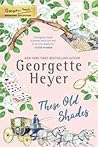
These Old ShadesThese Old Shades by Georgette Heyer
My rating: 5 of 5 stars

Georgette Heyer may have been quite young when she wrote this, but I found it very entertaining and well written. I've read and enjoyed books from much later in her career, and I can see where she matured in certain areas, but she already knew here how to tell a great story with flawed, quirky, engaging characters. I liked it.

This tells the story of [sort of a spoiler here] a young woman rescued from poverty and ill treatment. Lord Avon, usually a rake but capable of kindness, sees something in her and makes her his ward, seeing that she is established in a proper home (with his sister) and given an education into life among the elite. Besides being young and beautiful, Léonie is high spirited, confident, and original, with unaffected manners, and these qualities endear her to Paris society. She is a hit, but she is also a mystery, and the novel tells both how she manages in the new world and how her true identity was discovered.

I don't care for the very first part, when Léonie is passed off as Lord Avon's page, pretending to be the boy she appeared when he rescued her. That section seems odd and almost pointless in terms of plot development. But from the time he takes her to England for her education, I found it super engaging and fun. I thought the ending might be a little different, but it was satisfying and logical and worked very well. As I always do when I read a book by this author, I wonder why it isn't being made into a movie or series. I could see ten awesome episodes out of this book...

Anyway, this is recommended for Austen readers (where I was introduced to this author) and romance readers in general, as well as historical mystery fans. I think most people will fall in love with Leonie. :)

View all my reviews

Thursday, July 29, 2021

More Silliness, Less Austen

Powder and PatchPowder and Patch by Georgette Heyer
My rating: 4 of 5 stars

This novel is somewhat less Jane-Austeny than many other novels by Heyer, which is for me probably the main draw, but I still enjoyed it. It's a good example of what it is--and I stand behind that sentence 100%. It is a silly love story in a pre-Regency setting and reasonably fun to read.

Cleone is a flawed and silly heroine, but she is well-matched with Philip Jettan, a flawed and foolish hero. He's kinda direct and nerdy, and Cleone isn't wrong to want him to up his game, but in cahoots with his father she pushes him to learn how to act fancy (back in the time of powdered wigs and men's makeup) and he goes for it. He ends up in Paris, practicing his French, improving his fencing, learning how to make endless, ridiculous compliments to the ladies, acquiring what must be a very expensive clothing habit, and writing bad poetry. In a movie, we'd get a lot of that in a lovely montage.

Of course, even when he returns, he and Cleone have all the misunderstandings that threaten to separate them, and she wishes he hadn't become so popular with the ladies, what with his fancy compliments and all.

This is more romance (and more comedy, come to that) than it is Jane Austen, which is fine, because it's pretty amusing, but most of Philip's improvements seem unearned. Sure, he takes fencing lessons, but just for 6 months, and then can beat everyone that used to be better than him. He hated fashion courtly behavior but sure picks it up quick. It feels like he's pulled a "Can't Buy me Love" or "Princess Diaries" extreme makeover trick. I guess he's rich, so it's on the edge of plausible...

Pretty much everyone in the book is shallow, but even shallow people deserve their HEA. Heyer was nice to save one for this pair.

I bet it could be adapted into an interesting teen movie. Hmm.

View all my reviews

Friday, April 23, 2021

Making me Root for the Bad Guy

Devil's Cub (Alastair-Audley, #2)Devil's Cub by Georgette Heyer
My rating: 4 of 5 stars

Whew. Heyer pulls this off, but just barely.

The Marquis of Vidal is a bad guy. For reals. He takes advantage of women (as long as they're ridiculous enough and low enough in social status); he gambles and drinks to excess; he gets into duels for stupid reasons, knowing that he will kill the man he's facing because he's done it before; he threatens women in his power; and it seems he really would do every terrible thing he says. (He tells Mary that he will CHOKE HER OUT and carry her if she doesn't do what he wants. I'm pretty sure that goes beyond "problematic.") He's like Darcy mixed with Wickham, if Darcy was also a pirate.

More or less.

But he's not really REALLY bad--at least not in the universe of the novel. He has his rules and he sticks to them. He is protective in his own way. And (spoiler) Mary falls in love with him as much as he falls in love with her, and she is able to curb his worst excesses.

Three quarters of the way through I was not going along with it. I wanted Mary to find a different solution for her problem. (Speaking of problem--the way Mary ends up *sort of* eloping with the marquis without really meaning to is a very clumsy way to get them to France with Mary relying on him and controlled by him. The series of decisions that led her to that point are out of character for her and quite silly. We have to overlook that and let the story unfold.) I hated him and wanted her to get away from a guy I consider dangerously misogynistic, even if my judgment is a touch anachronistic.

However, I'll admit, by the end she has pulled it off. Vidal is largely redeemed, Mary's love for him makes sense, and their HEA is best one the story could have produced.

It feels like someone bet the author that she couldn't successfully make an unlikeable blackguard like Vidal into a love interest, and she took the bet. And IMO whoever proposed the wager should have to pay up.

View all my reviews

Saturday, January 30, 2021

Where the Best Character Is Not Used Enough

The Quiet GentlemanThe Quiet Gentleman by Georgette Heyer
My rating: 4 of 5 stars

I'm not a regular reader of this genre, but I love Jane Austen and I've enjoyed Georgette Heyer ever since I was introduced to her, a year or two ago. This is the fourth of her books I've read, and it was as fun as any, though it was not quite as satisfying as some--so 4/5 stars. Good, pleasant, entertaining, recommended. That's good enough.

The author also wrote mysteries, and in some ways this novel would fit that category a little better than Regency romance. More energy is devoted to who might want to kill the protagonist than is spent on Drusilla, the love interest. In fact, I liked her a lot and would have preferred to see more chapters and scenes with her in it. The conclusion is a bit rushed, which is why it was not quite as satisfying...

But that's putting it in a negative light. On the whole, it's a book well worth reading and enjoying if you like Regency novels of any type--romance, mystery, manners--and I'm perfectly happy picking up the next book by the author. I've only got one left on hand, and then I'll have to go back to eBay to find some others... maybe some actual mysteries this time. Hmm.

P.S. I had this thought before, but why aren't there movies made of her books? I'm certain Jane Austen fans would love them. Must be a reason.

Anyway.

View all my reviews

Thursday, August 20, 2020

Where I Applaud the Plucky Heroine and Morally Upright Hero

The NonesuchThe Nonesuch by Georgette Heyer
My rating: 5 of 5 stars

This is the third Georgette Heyer book I've read, and I just keep on enjoying them. Yes, I'm surprised. Not really my genre. This book is a lot of fun, and I'm amazed it hasn't been made into a movie or mini-series or something. Probably a story in that.

I love reading books filled with admirable (but still realistic) characters, and the author creates several here. Sir Waldo is pretty full of himself, but he is a genuinely good guy trying to make a difference in the world, and it's easy to root for him. Ancilla (terrible name but great character) has come down a bit in the world but isn't above working hard to make the best of things, and she has terrific patience for her young charge. The rector's daughter is even more admirable (IMO), and ends up playing Jane Bennet to Ancilla's Elizabeth. (Sir Waldo's cousin is the Bingley character in this scenario.) They are fun to watch in part because you want to see the good guys rewarded and the bad guys be disappointed. I do, anyway, and (not a spoiler) this novel provides that.

The plot requires some screwups and near-villains, and we find this best exemplified by Tiffany Wield, a beautiful but spoiled young heiress waiting for her money while making every young man fall in love with her. She represents the worst tendencies found in all of them--an over-emphasis on appearance, suffering from the selfishness that comes from unearned wealth, and a toxic level of class prejudice. They *all* suffer from this to some extent except maybe the rector's daughter, but we forgive the main characters because they're trying. If they don't quite see the violence inherent in the system, they at least see that things are a bit unfair and try to do better than their neighbors.

At least, that's how I see it.

Ancilla doesn't think it's proper for her, as a governess, to fall in love with a wealthy lord. She's almost more afraid that people will think she's overreaching than that he won't love her back and that creates much of the tension. It's this whole thing. And then the misunderstanding comes....

It's good drama. I liked it.

I'm informed (just today, by accident and to my disappointment) that some of the author's books include anti-Semitic tropes and beliefs, something which I haven't seen yet but suspect is a fair charge based on the source. She is also accused of holding that all virtues reside in the wealthy and all the vices in the poor, but that isn't the case here; not only are many of the wealthy characters made to be seen as very unlikable--heavy drinkers, gamblers, gossips, and thoughtlessly selfish idlers who accomplish nothing with their privilege--but Sir Waldo is notably a philanthropist who sees the potential in underprivileged youths and sets up schools to give them a chance to succeed. This argues against the accusation on both accounts. However, the author has many books that I haven't read yet, so I dunno about the rest.

I will say this: it is tiresome to have class and social standing play such a prominent role in novels set in Regency England, and it's annoying to have the characters accept such an unjust system as perfectly natural. But I can't blame them or the author who invented them; that is a feature of the setting, and I pick up the novels knowing that. Also, the characters who break out of the strict class structure to some degree are generally counted most virtuous. They are the characters we're meant to... admire. Which I do.

To sum up--fun characters, good drama, and an emotionally satisfying conclusion. Ya gotta like that.

View all my reviews