Showing posts with label Jane Austen. Show all posts

Sunday, July 5, 2026

Where Jane Solves a Christmas Murder

Jane and the Twelve Days of Christmas (Jane Austen Mysteries #12)Jane and the Twelve Days of Christmas by Stephanie Barron
My rating: 5 of 5 stars

This book, like the entire series, is such a pleasure to read. It isn't just that Stephanie Barron gets the language of Jane Austen and the time right, which she really does, or that she gets the details so right, with the appropriate and measured inclusion of all of her meticulous research into Jane Austen's personal story. That's part of it, but not all. As a mystery writer, she has such a deft touch with clues and characters that readers like myself can master the details without growing confused, and can enjoy the story set during the twelve days of Christmas without constantly searching for missed connections or buried clues.

As an observer of human nature, Stephanie Barron always impresses, creating a wide range of characters and behavior while always making them feel familiar and real, their concerns genuine and their motivations human. And as a historian, she grounds the novel in the very real history of England after the loss of the colonies, during Napoleon's rise and fall and subsequent rise.

Sometimes, I appreciate Jane Austen novels (the original novels) for being set almost outside of time, in a bubble made up of the well-dressed and well-mannered, where members of that polite society mingle in balls and drawing rooms, engaging in witty and bright conversation, safe from the darkness of the outside world--our world. But I appreciate this novel, and whole series, for the opposite reason. The author vividly creates the time and place, establishing the characters in that timeline, so that it is real as our own world, so that it IS our world--no bubble--a place where war and invasion is the frequent topic of conversation and constant concern, where the poor and the unfortunate also have their roles and their lives, and where well-mannered ladies might sew tiny dresses for a niece's new doll or drink tea with the neighbors, but might also investigate a murder or regret the passage of time or feel the pain of grief and lost love. The author has done well to create such a real place, and people it with such engaging characters, and craft so satisfying a story.

I enjoyed this book, and I recommend it.

Edit [and spoiler] on rereading: Still love it. Still 5 stars. Still sad that Raphael West, a man similar in many ways to the "Gentleman Rogue" love-interest of the early books, a man who can appreciate our Jane for who she is and who she appreciates for who he is, does not end up with her in an HEA kind of way. I know it's impossible, because we know what really did and didn't happen to Jane Austen. She never married. But you still hope, kinda. And I forgot how the same man appealed to her sister Cassandra, and how she had a hope for a short period of time. It's a bummer. We only know through Cassandra through Jane, but in real life (and in the novels, in our imaginations) she was someone who mattered, someone with her own wishes and dreams, and they don't matter less than those who we know better. Like her sister, Cassandra almost certainly had to leave many of those dreams behind. Poignant reminder about the inner lives of the quiet people in our midst...

View all my reviews

Wednesday, March 25, 2026

Where Everybody Might Have Done It

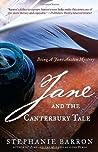
Jane and the Canterbury Tale (Jane Austen Mysteries, #11)Jane and the Canterbury Tale by Stephanie Barron
My rating: 5 of 5 stars

Number 11 in my favorite all-time series. And another 5-star book.

I read this first maybe 15 years ago. Hard to believe it's that long ago. But like the last reread (book 10, I mean), I think I liked it even more this time through. (It was long enough ago that I didn't recall the solution to the mystery, not until I got to the crucial scene, so it was still great fun all the way. Perks of a faulty memory...)

Jane is staying with her wealthy brother near Canterbury when there is a murder, and the victim turns out to be the supposedly-deceased husband of a widow who has just remarried. Jane's brother is the magistrate and has to investigate, leading him to jail a friend of the family and consider others as possible suspects. So many people turn out to have genuine reason to want the man dead, it was hard to find someone who wasn't a suspect.

Lots of twists and turns, lots of social awkwardness (sorry I jailed your sister!), lots of clues and misdirection. All fun. As always, the writing feels both Jane Austeny and modern, a nice trick, and the characters are well-drawn and entertaining. A couple of rogues show up that I think deserve a spin-off series, if only the author could be persuaded. :)

I generally don't reread books. Very rarely. But I enjoy these so much I might become one of those people who goes back through a favorite series every year or two. Not a bad notion.

Highly recommended.

View all my reviews

Friday, August 1, 2025

Where Jane Inherits a Mystery

Jane and His Lordship's Legacy (Jane Austen Mysteries, #8)Jane and His Lordship's Legacy by Stephanie Barron
My rating: 5 of 5 stars

[This is a reread. I didn't write a review first time.]

I love these Jane Austen mysteries. It's the main character that brings me back. The crime-solving version of the beloved author is really likable, sympathetic, and great fun to watch. And we get all of that here, once again. I'm sad when she's sad, I'm amused when she's amused, and when she confounds her enemies by putting all the pieces together, she's awesome.

As much as I like it, this one is slightly less fun, since it includes a very subdued Jane who is reeling from the death of someone she really cared about--was in love with--and she is a bit less active as well. Perhaps as a result, we get most of the reveals and most of Jane's brilliance near the end, though it's still a successful mystery. I liked the journal entries from Lord Harold's papers, and though I would have liked seeing them to impact the plot a little more, they do still play their part.

The setup: Jane and her family are settling in to the cottage in Chawton where they famously lived for many years, and they're not being well received. Not only that, there is a body in the cellar when they first move in. It's a rude welcome, and things don't get better very quickly. Jane needs to figure out who's responsible before there's more violence...

I had a little bit of character overload reading this, even though I read it once before, about 15 years ago. It's the connections between kinda minor characters that I lose track of, and then they turn out to be pivotal details. Well, I bet the third time's the charm.

As always, recommended.

View all my reviews

Tuesday, August 27, 2024

Where Elizabeth and Darcy Have Kids and Grow Old

Gente de PemberleyGente de Pemberley by Marie-Laure Sébire
My rating: 5 of 5 stars

[I read the Spanish version, but I'll do a lot better talking about it in English. As far as the type of language in the novel, I enjoyed it very much, and found it leaned more toward the descriptive than the lyrical, which was perfect for an imperfect speaker of Spanish.] :)

This is a very well-written, enjoyable novel, with a great deal to recommend it, but it is most outstanding as a fine example of a small class of books: Jane Austen sequels and variations. Out of all those books (and there are a surprising number, actually), the ones I most enjoy are the sequels which don't change the original story and keep the characters true to themselves. I don't really care for the variations--what if Jane married Darcy instead?--and I don't like the sequels where the characters change a lot. (Looking at you, Joan Aiken!) Here, we have a true sequel, following the lives of everyone connected with Pemberley in Pride and Prejudice, meaning mostly Elizabeth and Darcy, along with Georgiana and other minor characters from the original novel, along with their children and their families. And with only one exception, I feel like the characters really continued here in a way true to their personality, growing naturally over time, yes, but without doing any violence to the way we remember them, and that made this feel like the story really happened.

It felt like biography, in the best way.

(The only character--spoiler if you want to skip--who changed in an unexpected way, in my opinion, was Jane's husband, Bingley. He seemed to fall out of love with her and became inconsiderate and thoughtless, then was pretty much written out of the story. I wondered if the author had a plot reason for doing this--maybe to keep Darcy at home with his wife more instead of hanging out with the guys. I don't know. But this is the only noticeable deviation from the personalities as established in the original, which seems like a pretty fair percentage. I'll allow it.)

In many ways, this is the story of Pemberley, almost as if the property is a character, but at the same time it feels like Elizabeth is the heart of Pemberley, the physical manifestation of a happy home. Elizabeth includes her husband in that same thought near the end, when they've grown old, basically saying their happiness was going to haunt that house forever:

Lo sabes, no creo en fantasmas, pero pienso que cada uno deja una huella imborrable. La felicidad que ha sido nuestra aquí, el amor tan grande que nos unió, no desaparecerán con nosotros, persistirá en nuestros hijos y flotará para siempre entre estos muros. Me han dicho que, cuando se visita lugares donde los hombres sufrieron, están impregnados de ello y crean un malestar indefinible. Pues los que vengan a Pemberley se sentirán bien, sentirán esta felicidad que fue la nuestra.


English approximation (with apologies to the author):

You know I don't believe in ghosts, but I think that we each leave an indelible trace. The happiness that has been ours here, the great love that united us, will not disappear with us, it will continue in our children and will float forever within these walls. I have heard that when you visit places where men suffered, they are infused with it and create an indefinable unease. Well, those who come to Pemberley will feel good, they will feel this happiness that was ours.


That's a nice way to look at the story, I think. The story is about the love they share filling the place for a generation so that it lives on in each of the following generations.

The novel has a different scale and pace than the original, with chapters representing months and years rather than days and weeks, covering many decades in total, but it doesn't pass over their lives at too great an altitude. We still have many fine moments at celebrations and visits, and many well-conceived, satisfying romances, and lots of dramatic moments and conversations and events. Darcy and Elizabeth have children; the children go to school and grow up; they fall in love and marry; they have children. It's not all as simple and straightforward as that recitation, as there are disappointments and tragedies, the same as in every life. But we follow the characters mostly from one summer to another, from one wedding to another, from one trip to another, with each child and cousin finding their way in love and life. [Skip these spoilers if you prefer.] Their shy oldest son falls in love with a French girl--that's a fun story that could be its own novel. The second (outgoing) son and (kind and honorable) adopted son [who do we know from the original story that could have children but be incapable of taking care of them?--that's where the adopted son comes from] move to Boston and make their way there, trying to find success in a new country. Their brilliant daughter wants to make a difference in the world and struggles with the restrictions of the time. Each of these characters is very different, with very different arcs, but somehow they seem exactly like Elizabeth and Darcy's children.

Like I said, I believed this story. It's canon now. :)

It's a lovely way to see the continued lives of the characters from Pride and Prejudice, and I enjoyed it very much. It will almost certainly cause you some tears, so be prepared, but mostly it's joyous and sweet, and it's a lot of fun getting to know the children and their families. Highly recommended.

In French or Spanish, that is. :)

View all my reviews

Thursday, August 15, 2024

What Happens in Bath Stays in Bath

Jane and the Wandering Eye (Jane Austen Mysteries, #3)Jane and the Wandering Eye by Stephanie Barron
My rating: 5 of 5 stars

Working my way back through these books--and enjoying them a little more, even, than the first time.

The mysteries are very clever, the plotting tight, and the action lots of fun. As always, the settings and period research are excellent, and the language is perfect. But most of all, the characters, Jane herself most of all, are wonderfully drawn. These early novels in the series have the so-called Gentleman Rogue, who is one of the few who knows how to appreciate Jane's merits, so it's fun to see them solving mysteries together.

My only struggle is filing away the details of the action and the many minor characters to keep track of clues and red herrings. I'm finding it's a skill that improves with time and effort. Extra tricky in this one, as the murder takes place at a masquerade party, with so many suspects in disguise. But the solution is logical and works very well.

Who's gonna make these books into a TV series? We're ready. Come on!

View all my reviews

Tuesday, July 9, 2024

Where It's Better the Second Time Around

Jane and the Man of the Cloth (Jane Austen Mysteries, #2)Jane and the Man of the Cloth by Stephanie Barron
My rating: 5 of 5 stars

This is a reread, and I see I originally gave this 4 stars. For me, that means I liked it and it didn't lose my attention anywhere, but it wasn't quite my favorite.

I'm changing that to a 5. Maybe I'm different now. Not sure why. This is what I like to read.

To be honest, I think when I started reading this series, I almost never read mystery, and I wasn't doing it right. Some Sherlock Holmes was about the extent of my mystery reading. I started reading these books because I liked the main character. (Still do.) Now, though, I'm a different reader. With a lot more experience with mystery, I'm better at keeping characters straight, who they're connected to, their comings and goings, and other details, so that I'm less often confused. More genre-savvy, as they say. That makes it easier to just read. I still have to pause once in a while and say wait, is that the guy who loves the fossils or the guy who lost his leg in the war...... But then I get there.

With that advantage, I read this with even more pleasure than the first time. This version of Jane is probably my favorite literary character--I'd have to sit and ponder that for awhile, because there are others I love, obviously, but she's right up at the top for sure--and it's so fun to see her being awesome. She is not an action hero, but she gets to be *involved* in the actual action here, doing things that a proper youngish woman would not do in that era, and so contribute to the outcome. Yes, she gets to be smart and figure stuff out. Yes, she gets to say clever things. But she also risks her own safety to solve the mystery, and it matters.

I love it.

You see, they're in Lyme, and there are some deaths, and there's some smuggling, and maybe some French dudes, and.... it's a whole thing.

Excellent mystery, good misdirections, good action, excellent conclusion. Seriously--5 stars. Recommended.

View all my reviews

Thursday, May 9, 2024

Where Jane Meets a Rogue

Jane and the Unpleasantness at Scargrave Manor (Jane Austen Mysteries, #1)Jane and the Unpleasantness at Scargrave Manor by Stephanie Barron
My rating: 5 of 5 stars

This series concluded this year, a success from beginning to end, and now I can reread it all the way through from the start. So here we go.

I love the Jane Austen that lives in these books--intelligent, independent, tough-minded, kind but capable of delivering a sharp blow, patient, loyal. She feels very close to my impression of her in real life, and even though she probably did not participate in detective work, I have no doubt that, if she had, she should have been a great proficient. She had every tool, except the complete freedom to come and go wherever she wanted. Here we see her start her crime-solving career, and I think it's amazing.

Jane's good friend has recently married, and her husband dies during a big celebration. This is in most ways a cozy mystery, though there is some danger involved; the culprit is almost certainly still there, and there are several suspects. After another murder, the suspicion falls on her friend--for killing her own husband--and her husband's nephew (who she actually loved)--for the death of the serving girl who had some unknown part in the whole affair. Jane herself gathers some of the clues, and they work against her friend, not for her.

The story concludes with a trial in the House of Lords, and it is Jane's clever work that leads them almost too late to the killers and the secret of the plot.

The language here and throughout the series is fantastic. If you've ever tried to write more than a sentence or two in Regency style, sounding like Jane Austen, you see it soon gets difficult. Keeping the diction in the proper place while writing in a way that is clear and entertaining is quite a feat, and it's flawless here. That may be inconsistent with my belief that the language only improves from book to book, but that is nevertheless my opinion.

I'm still tracking down some physical copies of books in the series since I originally read many in ebook. I like and support ebooks, but somehow it's just better on paper. I don't know. Anyway, I want them on my shelf, so don't bug me. ;)

Highly recommended for Austen fans and mystery readers both.

View all my reviews

Monday, November 13, 2023

It Really Is Goodbye to Jane

Jane and the Final Mystery (Being a Jane Austen Mystery Book 15)Jane and the Final Mystery by Stephanie Barron
My rating: 5 of 5 stars

I loved it, of course.

And it was the last of the series. So I also hated it.

Stephanie Barron has done an amazing job throughout this series of marrying the actual events of Jane's life with plausible, fictional mysteries, all of them entertaining, all of them making us fall in love with Jane Austen more. (It's not just me, I'm sure.) These are not mere stories. You'll forgive me for believing that this depiction of Jane really is her, the two-centuries-gone author, the mind beloved of millions. The fictional arc in these books is her real life, from relative youth to her last days, presented to us like an actual biography. She passes through many periods in her life, sees her sister, her mother, her brothers and their wives and children go through all the stages of life, with all of the good and bad that entails.

And then, naturally, the ending is really the ending. And it's so bittersweet.

Here we see a very ill Jane who is still hopeful but realistic, aware that she is likely to have little time left but unwilling to just give up. She still engages in life, still writes letters and visits friends, and in this story is still trying to save the innocent and identify the guilty. The son of her childhood friend is implicated in a murder and held in jail, though no one close to him can believe he's truly responsible. Despite her infirmity, she follows clues and logic to solve the murder and save the unfortunate young man. She can no longer walk far or often, so she husbands her strength and takes a chair if she must. When she can't do even that much, she goes to her bed and sends her nephew or other relative in her place to speak to someone, to carry a letter, to look for some clue or other. As a woman in Regency England, she was always limited in what she could do and where she could go, but here she is additionally limited by what her body will allow her. It's brutal, and it's terribly real.

The setting, therefore, is not so much Winchester during Regency England but the final days in the life of Jane Austen. We inhabit with her the claustrophobic closeness of those last days, tricking our minds with the bright hope of a reprieve though we know even more surely than Jane that it's impossible. There aren't a lot of reminiscences, but when she wistfully recalls her one-time love-interest she refers to as the Gentleman Rogue--remembering his loss a decade earlier--it is just one more log on the fire of melancholy that burns throughout the whole novel. (I remember wishing happiness on her at the time, when he was still alive, knowing then it wasn't to be. Irrational!)

And yet I loved it. All of it. It's past time I started back at book 1 and read them all again.

In short, it's a terrific mystery, fully-formed, with plenty of details and action and red herrings and potential suspects, enough to satisfy any reader; these elements have not been slighted, and it stands on its own as a mystery novel. But it's also an emotional story, sweet and affecting though not maudlin, supplying the reader with appropriate closure. I could say in a matter-of-fact way that it's a tidy end to a well-written series, but I'll be honest and admit it's more than that: it's also a touching, heartfelt, wrenching goodbye to a character who feels like a person.

The entire series is recommended. Essential, even. I give the whole 6/5. Or make it 10/5 while I'm breaking the rules.

***********************

In the author's acknowledgements are these last words:

"In this final journey with Jane, she helped me understand something equally important--that love survives, and can help ease, even the deepest personal loss."

I think perhaps that's true. And for those suffering loss, I fervently hope so.

View all my reviews

Friday, September 22, 2023

If Henry Crawford Married Harriet Smith

Friday's ChildFriday's Child by Georgette Heyer
My rating: 4 of 5 stars

This is another very fun Georgette Heyer novel. I won't lie--I think it has flaws. But even a flawed Heyer book is a better read and more fun than some folks' most perfect stuff.

As always, she has engaging main characters who are not exactly like any other that I've seen in similar novels. She has a soft spot in her heart, I think, for characters who are silly or foolish or immature but basically good. Lord Sherringham, for example, is foolish and careless and impulsive and (too often) quite selfish; he marries without thinking, wastes tons of money gambling, makes little effort to get along with his own mother, and treats his young, innocent wife like she's just one of the guys. As a result, his desperately childish and trusting wife says the wrong thing and behaves the wrong way all of the time. It's perfect that he calls her kitten; she's like a little kitten that wanders through traffic and construction sites without any awareness of danger. But, like her dopey husband, she's a good person and able to change.

Sherry (Lord Sherringham) is like Mansfield Park's Henry Crawford, if we saw him in a behind-the scenes version of his life, and Hero (Kitten) is like Emma's Harriet Smith, if she were dropped off on the road somewhere and had no one to protect her. Then the reader has to see how this unlikely couple makes it work. This is not a spoiler--they do. And it's charming.

It is flawed, though. The beginning of the courtship and marriage is so improbable that it almost sinks the book, IMO. It could have used a better device. But I'll allow it. Then we probably dwell too long on Hero's introduction into society and her many screwups. (I picture her played by a young Lucille Ball.) Sherry finally loses his temper and is set on sending his wife to his mother's house, to be trained up by a woman who hates her, and Hero is forced to run away. It feels like the story really starts at that point, and it's 2/3 of the way through. I woulda liked that a hundred pages sooner. Anyway, it gets better there, and that last third is thoroughly entertaining. And though the conclusion is satisfying, I could have used a little bigger payoff at the end, seeing them happy for a few pages longer. I feel like she left a bit of the good stuff off.

To sum up--I liked it. I have my notes, but it's still a pleasure to read.

And I still insist that the BBC or somebody needs to start turning some of these novels into 6- or 8-episode miniseries. Who do I talk to?

View all my reviews

Saturday, August 5, 2023

Where Sanditon Gets an Ending

Sanditon: Jane Austen's Last Novel CompletedSanditon: Jane Austen's Last Novel Completed by Jane Austen
My rating: 4 of 5 stars

This is the 1975 version of Jane Austen's unfinished novel, completed by "another lady." Probably about 25% is Jane Austen and the rest is Marie Dobbs, the unnamed lady making her best guess as to Sanditon's direction.

I liked it.

I didn't know exactly where Jane Austen ended and the modern writer began (well, I do now, actually, because it's spelled out in the author's "apology" at the end), and though I had a vague idea, the line didn't become obvious to me as I read. No clunkers--the writing is quite good. No obviously weird behavior. However, as the story continued, especially close to the end, even though it's all charming and sensible and pleasant, I become increasingly aware that I was no longer reading a Jane Austen novel. Not really. (It's also pretty different from the series, but I expected that.) And no, it's not quite as good. Of course it isn't. However, it's a pleasure to read, and the actual ending is perfectly satisfying, so you don't part with any hard feelings--the author hasn't done any damage to Jane Austen's fragment--but one can't help but wonder what the novel might have been.

Then you wonder about all the novels that might have been had Jane Austen lived longer.

Then you wonder about all the novelists who died too young or maybe never got published at all for a variety of reasons, including too many women for too long, not to mention all of those people through history who never learned to read and write, and you have to conclude that we're left with a fraction of the amazing literature that might have been but never will be...

Maybe it's just me that would follow that train of thought. But I brought you with me, so that's cool.

If you're an Austen fan who has read the 6 main novels but stopped there, I want to recommend giving this version a try, or maybe one of the other versions. You get at least a few more chapters of Jane Austen that way, and hopefully some decent pastiche to finish it out for you. Then, once you're done, you can sit and dream about what might have been.

View all my reviews

Saturday, June 24, 2023

Where I Approve of Fanny Once More

Mansfield ParkMansfield Park by Jane Austen
My rating: 5 of 5 stars

My feelings have changed. Twice.

When I first read this in college, it was my favorite Jane Austen novel. (Out of 5; I didn't read Northanger Abbey for a a long time.) I'm not sure why I connected with it then. I didn't really even understand for much of the novel that Fanny really liked Edmund in that way since they were first cousins, and I didn't think that was allowed... But I identified with the main characters pretty easily.

I reread this only once since then, maybe 20 years ago, and I found the pearl-clutching, judgmental couple unlikeable. The book was still entertaining, but I kinda liked the Crawfords better than Fanny or Edmund. I was soured by their black and white morality, which did not match my thinking at the time. (Still doesn't, technically.)

But this reread, surprising to me, gives me a different reaction. Where I once saw this story as a morality tale with Fanny and Edmund as The Most Correct Possible People, where their manner and behavior could be taken as Jane Austen's general rule for the rest of us, I now see more nuance. The author clearly has affection for all her protagonists, but they are not really much alike. I'm sure she likes Fanny, but she isn't saying (IMO, of course) that her quiet, submissive, sober style is more correct than Elizabeth's forcefulness and humor; however, I DO think she's saying that Edmund is a better fit for a girl like Fanny than Henry Crawford, for sure, or even a Darcy or Knightley.

That's not to say that good character in a possible husband isn't a prerequisite for any Austen protagonist, or that there's very much gray between good and bad characters. Maria leaves her husband with Crawford, and she will never be forgiven by her family: "Maria had destroyed her own character, and he [Sir Thomas] would not, by a vain attempt to restore what never could be restored, be affording his sanction to vice, or in seeking to lessen its disgrace..." Character is like an egg shell--it could only be broken once, and never restored.

It feels like Willoughby and Wickham (we are meant to understand) were never men of good character--they started out messed up, with nothing to destroy. It was just for the other characters to use their wits and discernment to discover what was always true and save themselves from the heartbreak of falling for their apparent goodness. Maria and (to a lesser extent) Julia were meant to turn out well, but between Mrs. Norris's spoiling and Sir Thomas's ill-timed severity, they achieved the opposite result. (Tom is a mess, too, but Edmund is not; didn't they all have the same education?) And the Crawford siblings were good people, destined for something better, but were also spoiled by the bad example of their relatives. Or so Edmund informs us.

But they were that way from the start of the novel, anyway. Mary was too motivated by money and too critical of religion (for their time), and Henry was revealed as untrustworthy by his shameless flirting with an already-engaged Maria. Only Fanny saw through it, I suppose because she was the least compromised in that way. (It still bothers me when Edmund pats himself on the back for "forming" Fanny's taste and thought. Ugh. Do you want to be her cousin, her husband, or her daddy? Pick one.)

So, to sum up--in the ethical universe of Mansfield Park (the novel), it seems that one might or might not be born with a flawed character, but even if one starts out on the proper side of that question, poor upbringing or faulty education can ruin it. Still, until you do something stupid, like commit adultery or seduce a girl, you don't absolutely destroy your (public) character. But you can't get away with fooling people forever. I think Fanny believes that compromised morality will eventually show itself, which is half the reason she resisted Henry's attention, and why she is finally vindicated when Henry screws up.

Fanny isn't alone among Austen heroines in being judgmental: Elinor judges Willoughby and her sister for their public behavior; Elizabeth misjudges Darcy for his supposed treatment of Wickham, then properly judges Wickham for his behavior; Emma judges pretty much everybody, including Frank Churchill and Mr. Elton; Anne judges her cousin, and her sister, and herself; and so on. But Fanny is especially shy compared to the others, and she is socially conservative, so out of all of those heroines, she's best matched with an Edmund. (Elinor might have liked him, too.) She isn't meant to be read as the ideal heroine. Even here, her sister Susan is seen as cooler and easier to be around. With a "more fearless disposition," "happier nerves," and "no natural timidity," she fit in well and soon became "perhaps, the most beloved of the two."

There's more nuance than my last read suggested to me, and more ways to read the apparent moralizing of the novel that so put me off that time. I feel on solid ground saying that Jane Austen approves of different kinds of people, not just one kind, and recognizes they have different needs, so that what is right for one is not right for another. But a faithful husband is always the right thing.

Lots to chew on.

I liked it.

View all my reviews

Thursday, June 1, 2023

Where Sebastian Meets Jane Austen

Who Buries the Dead (Sebastian St. Cyr, #10)Who Buries the Dead by C.S. Harris
My rating: 4 of 5 stars

I've enjoyed every book in this series so far. This is book 10. Still good.

As always--I love the setting and the research, I love the mix of action and mystery and history, and I'm very invested in many of the characters: Sebastian, Hero, Gibson (the doctor), Tom (his "tiger"), and some others. Even the recurring bad guys are pretty cool, including one who might be Sebastian's half-brother. This novel includes Jane Austen as a character, and I loved seeing that.

It was just a tad less compelling for me this time; the ending still had a lot of action and heightened anxiety, but the novel as a whole had less character movement than usual, and their arcs didn't develop much. We barely see Gibson or his new girlfriend, for example; Tom has no good scenes; and Jane Austen is underutilized, IMO. (On the other hand, Lord Jarvis is suddenly terrifying again.) I think the added complexity of the mystery plot (which was still good, btw, but had a lot of moving parts) sucked up all the oxygen through the middle sections of the book, with maybe too many suspects. As a result, I liked it rather than loved it.

I will take that any day, though. I'm gonna keep rolling on through the series.

Recommended.

View all my reviews

Monday, April 10, 2023

Where We All Grow Up a Little

Sense and SensibilitySense and Sensibility by Jane Austen
My rating: 5 of 5 stars

I've read this a couple times before, and I guess the last time was about 10 years ago. (Longer than I thought.) In addition, I've probably seen the 1995 movie a dozen times at least since then. What surprises and bemuses me, reflecting on that, is to discover how much there is still to enjoy and notice.

And I did enjoy it.

One thing I'm certain of--reading from a nice old hardcover with wider margins, a larger font, and slightly browned paper makes it easier on my eyes, and that, in turn, makes the words dig deeper. Easier on eyes=easier on brain, I mean. I'd only ever read from tiny-print paperbacks before, and not only is that a less optimal experience, I argue it reduces comprehension. (YMMV.) I feel like I entered into the flow of reading much better than when I was younger reading those cheap editions, and the difference made me love the book all over again.

I like how Jane Austen creates imperfect characters that we are meant to censure at least to some degree but still like, and in fact she seems to have a lot of affection for them. (Not everyone. I'm not including her half-brother and his wife, though we don't precisely hate them. And Edward's mom is just a mean old lady. Willoughby, the disappointing rogue, falls in the middle, where we don't like him a lot but still like him more than he deserves.)

Sir John, for example, knows little beyond his narrow scope of interest--dogs, horses, pretty girls, and maybe his tenants--but is affable and generous to a fault. Mrs. Jennings is a gossip and a busybody, but she is genuinely kind and thoughtful. Near the end we see Marianne realizing that herself when she remembers to thank her for helping her when she was sick, sort of including in her thanks all the overlooked kindnesses from the visit to London. (Marianne had been quite rude for a pretty long time, and Mrs. Jennings never seemed to notice.) Mrs. Dashwood, Elinor and Marianne's mother, is wrong about quite a bit, but she has her heart in the right place. Of course, Marianne gets the most criticism, but she's just a kid, really, and grows up a lot in a pretty short time. We definitely still like her and root for her, especially after she reflects on her actions and starts to show a lot more concern for her sister and others. There's comedy in the foibles of these people--more than I sussed out in previous reads--but no malice.

I can't help but wonder how I would fare under Jane Austen's scrutiny. I'm glad to not find out.

The critic John Bailey wrote the introduction to the edition I have (1927), and while he clearly really enjoys Jane Austen in general and this novel in particular, he's critical of a few things. (Hence the title.) He thinks the way Edward is freed of his promise to Miss Steele is a bit clumsy, and I'll admit that part seems a bit unlikely. And the scene where we discover this, when Edward visits at Barton Cottage and they're asking where Mrs. Ferrars is, works better in the 1995 movie. That is actually my favorite scene, and the way it comes out in the books is much less dramatic. In fact, she skips right from Elinor learning the truth (and leaving the house) to them being engaged:
How soon he had walked himself into the proper resolution however, how soon an opportunity of exercising it occurred, in what manner he expressed himself, and how he was received, need not be particularly told. This only need be said: -- that when they all sat down to table at four o'clock, about three hours after his arrival, he had secured his lady, engaged her mothers consent, and was not only in the rapturous profession of the lover, but in the reality of reason and truth, one of the happiest of men.

Seems like a missed opportunity to show us a sweet scene. But I guess I'll allow it.

I'm not a big re-reader of books, but I'm glad to find lately that some are worth the time and TBR postponement. And I highly recommend editions with bigger print!

View all my reviews

Tuesday, January 31, 2023

Where I Saw More Than I Ever Knew I Missed

Pride and PrejudicePride and Prejudice by Jane Austen
My rating: 5 of 5 stars

I think I read this twice in college--one time each at two different universities--and at least one or two times since, but it's still been quite awhile. I seldom read books twice, so whether it's 3 or 4 or 5 times, it's a personal record. (Not counting books I taught in high school. Some of those I read 30-40 times, mostly reading out loud. My Like Water for Chocolate readings got pretty good reviews at one time....) And here's the point--I still really liked it, but I was surprised to find that I liked it better this time.

[On the other hand, I once liked Mansfield Park the best out of Austen's novels, and after a reread changed my mind on that. Young, preachy, churchy me at one time approved of the prudishness of the characters more than old, heretical, morally gray me does now. I still like it okay, but I like the Crawfords more than I should and am more sympathetic to them than I'm probably meant to be.]

Anyway--Reasons I liked it better this time:

Mostly, I'm an improved reader, which I am both relieved and disturbed to discover. Relieved, because aging isn't entirely about things getting better, but disturbed because I was meant to be an actual expert in the topic long ago and maybe shouldn't have had so much room still to grow... But a lot of that difference is relating to knowledge about the world more than words on the page. Not only have I learned quite a bit on random topics in 40 years (like how 19th century English society worked, a subject I knew NOTHING about in my teens and 20s) which helped contribute to deeper comprehension, but more significantly, I've gotten better at paying attention and entering into the narration. I think younger me, even as an adult but especially at college, let a lot of fuzzy, half-comprehended stuff go by without stopping or slowing to figure it out or trying to commit anything (like the names and relationships between characters) to memory. I think that was good-student pride, preventing me from trying too hard because I shouldn't have to. I had always succeeded by just reading stuff--no effort required. Getting into the flow of reading and flying through texts it has its benefits, but pausing to think about things, taking time to get an inch or two below the surface of mere comprehension, even when reading for pleasure, has different payoffs.

My early readings of Austen were handicapped by many kinds of ignorance, including my inability to recognize whose behavior was approved and whose disapproved, either in their time or in ours. Sure, Mr. Collins is ridiculous, and Lady Catherine is a blowhard and a bully, but how irresponsible was Mr. Bennet toward his daughters? And how lazy? I didn't see that back then. Darcy is reserved and judgmental, obviously, but how reasonable (and how rude) was Elizabeth's behavior toward him? I assumed she was exactly right to do as she did, but even she changed her mind about that. Bingley was a nice guy, apparently blameless in everything, but how significant a flaw was his willingness to give way to everyone else? Charlotte seems like she's selling herself short, and it's easy to think she was foolish--but did she not, after all, take the likeliest route available to her in that society for at least a small share of happiness? Did she have any other options at that age if she said no to Mr. Collins?

All things that young dumb me didn't understand or didn't know to think about.

The biggest change I noticed during this reading was how much of the tone came through, and especially how it made me laugh more than any time before. I'm sure that awareness is a result of long experience with the many adaptations as well as from rereading the other novels, but it also comes from being in less of a hurry. Things I didn't notice before, or things that seemed like mere detail at first, now stand out to me in a new way. I get it--Mary's sermonizing and staid pronouncements (made with "a countenance of grave reflection") are meant to be ridiculous. Mr. Bennet is absolutely laughing at Mr. Collins all the time. At his wife, too. Then there's Lady Catherine boasting about things she has never done. Or offering Elizabeth the piano where she will be in "no one's way." Mr. Collins trying so very hard to please her. Darcy messing with Miss Bingley as she tries to distract him from his letters. Mrs. Bennet's petty, selfish, childish reactions to everything, like a grown-up Lydia. Even Jane's inability to see the harm in anyone. All this is more intentional than I ever saw. Old Man me can hear the author's voice so much clearer now.

Not that I'm claiming to have it all sorted, necessarily; but I engage with the text with a lot more sophistication than I could muster 40 years ago. Or even 10 years ago, TBH. I'm picking up a lot more flavors than I once did.

Makes me wonder how differently I might see it ten or twenty years from now--or any novel, for that matter. Not sure what I'm hoping for.

View all my reviews

Tuesday, February 8, 2022

Where I Say What I Really Think

Jane and the Year Without a Summer (Jane Austen Mysteries, #14)Jane and the Year Without a Summer by Stephanie Barron
My rating: 5 of 5 stars

What a pleasure. Truly. Beginning to end.

And a pleasure even now, after finishing, reflecting on the closed book beside me, calling to mind particular scenes and lines. (The last two or three pages! Dang.)

Well done.

I was inclined to think well of the book, I'll admit, even before opening it. My fondness for the author, the series, and the protagonist prepared me to be a sympathetic reader, ready to overlook any of the small disappointments one sometimes encounters even in highly anticipated novels. However, I'm happy to report that nothing of the sort was required of me. No grading on a curve. Without resorting to polite hedging, I can report that I liked it as much as I had hoped and more, finding it clever, touching, inventive, and intellectually satisfying.

It was fun to read, which to me is the test.

The Jane Austen character in this mystery is an old friend for all of us who have read the previous books in the series, and it's nice to see her again, but even new readers will find her familiar, in a way; she embodies many of the characteristics of a Jane Austen heroine, being intelligent, witty, confident, long-suffering, and considerate, and could have featured in any of the original novels without alarming anyone. This Jane is less proper at times, perhaps, but is no less ladylike for that. Less "missish," as they say, than similar characters--but I consider that a decided virtue. Probably more willing to return rudeness for rudeness (the Garthwaites! Ugh!), which I admired, although she would then be all politeness again. Unfazed by ugliness and danger. Direct when directness is required. She's a great heroine, one of my all-time favorite characters, and she is fully present in this novel.

The plot is well crafted and nicely paced, with the romantic elements and the mystery arc integrated with the garden walks and dances and theatre visits one looks for and expects in a Regency novel of any type. All of it seamless. And the author's research contributes so much to the feeling that this story could have actually happened. First, the setting, a small English spa town in 1816, is fully realized, right down to the streets and assembly rooms and nasty water; and second, Jane's real family and history are incorporated into the story, harmonized with real events, in a very believable way. The work in the "suspension of disbelief" is pretty much done for us.

This book is, at its heart, a mystery, and the author doesn't try to outstrip the conventions, doesn't try to swing for the fences, but there is more resonance here, more significance, than one would expect in the 14th installment of a series. The added emotional heft of Jane's incipient but undiagnosed illness, along with the effect that has on her family and her romantic entanglements, makes the novel hit a little harder and mean a little more. We know how events turn out in real life, and the weight of that is felt throughout. I felt it, anyway. So--a mystery, yes, with crimes and clues and sleuthing, but resonance, too. Impact.

In terms of craft, probably the best thing about this work and the series as a whole is the language, specifically Jane's voice. That's what strikes me every time. Stephanie Barron delivers pitch-perfect prose, writing in a way that manages to evoke the cadence and tone of Jane Austen and Regency fiction while still remaining accessible to modern readers. That control is *chef's kiss*.

(I tried desperately to frame a question for the author on this subject at a recent book event, wanting to ask how she manages to walk that line so successfully over so many pages and so many books, but every version I tried out seemed like "more of a comment than a question," so I gave it up. Safer to dork out here, I guess.)

To sum up--this is an outstanding mystery novel in an outstanding series, and I recommend it to all good people, especially readers of mystery, Jane Austen, and historical novels. And if you're not caught up, you totally should do that.

View all my reviews

Monday, January 24, 2022

I Knew It Would Be Good, But I Didn't Know It'd be *Good*

Murder & Miss Austen's Ball (The Dancing Master Book 1)Murder & Miss Austen's Ball by Ridgway Kennedy
My rating: 5 of 5 stars

I really liked this book. It is the best thing I've read in months, and I'm going to have a hard time moderating my praise.

I won this book in a giveaway and was really excited about it. Of course, I already love Austenesque books, so I was inclined to like it no matter what. My favorite series is the terrific Jane Austen mystery series by Stephanie Barron, and as this is right in the same vein, I was cautiously optimistic that it would be pleasant, maybe pretty good. I was pleased to find I had set my expectations too low, that it actually was fantastic, good enough that I could easily promote it without hedging. So here I go.

The novel has a good sense of place, expert pacing, and a tight plot with action and adventure, and it is built on the chassis of an entertaining and satisfying mystery. It also has engaging characters, including Jane and the dancing master and many others, especially a number of minor characters among the working class. But what I love most is watching awesome characters be awesome.

Jane--clever and headstrong and disarming--gets to surprise people, and win them over, and change their opinions from time to time. It's fun to watch her find ways around rules of propriety and get things done that no one else can do or would care to do. Mr. Worth, the dancing master--capable, tough, and world-wise, though compassionate--gets to amaze with his music, and show his nerve when nerve is needed, and demonstrate an impeccable sense of honor. Both befriend people of worth and kindness in the course of their adventure, earning allies by dint of their own worth. It's not that they make all the right decisions, or that everything works out just as they hope; it's not that easy. But they show us why they are the heroes of the story. The reader gets to cheer for them and celebrate when Jane shows she knows how to ride a horse, thank you, or when Worth casually intimidates someone trying to take advantage of Jane's brother, or when the two of them do something clever. That's what makes it fun.

It isn't all mystery or driving plot, though it moves along well; there are plenty of scenes where we see Jane visiting with her sister, or Worth and Jane drinking tea or coffee and just talking, or Worth stopping off with his relatives--little interludes of pleasant banter or character development and world-building between scenes with action. I found the pacing just to my taste and never grew weary reading (as I too often do). It was well done.

Austen fans, I think, will enjoy this, as will readers of mystery. And since he acknowledges Stephanie Barron's support in the end notes, I can shelve this next to her books without feeling weird about it...

; )

Recommended.

View all my reviews

Thursday, December 23, 2021

Where Bingley Loses His Damn Mind

MistakenMistaken by Jessie Lewis
My rating: 4 of 5 stars

A Pride and Prejudice variation. I listened to it as an audiobook.

This novel is well done, and I enjoyed it a great deal. It's the first audiobook I've listened to in about 30 years (for random reasons), and it's definitely a different experience having someone narrate and dramatize the story. For one, it's more engrossing and entertaining than when I read silently; and two, it's much slower. The narrator, Arthur Rowan, was very good, and once I got into the rhythm of a narrated book I thought it was great and was happy to find little blocks of time when I could put it on.

Diverging from the original Pride and Prejudice just after Darcy's first proposal, this version veers credibly into a different plot altogether. It includes a number of additional complications and difficulties as well as some new laugh-out-loud scenes--but nothing forced. One of the complications is

SPOILER
[Bingley grows to like Elizabeth too much, and when he returns to court Jane a second time (as in the original) he almost decides to propose to Elizabeth instead of Jane. His coolness toward Jane and then jealousy of Darcy drives most of the novel.]

I liked this story a lot, and I recommend it, although I have one caution:

SPOILER
[Bingley and Jane become quite unsympathetic. Jane has a falling-out with Elizabeth over Bingley, and Bingley abandons Jane. I didn't love that about this variation, though I still mostly enjoyed it. But some people may have trouble seeing Bingley as practically a villain, and if that's the case this story may not suit you.]

There is a kind of HEA for everybody, though Bingley and Darcy remain estranged at the end. However, Elizabeth and Darcy, IMO, are well drawn and remain entirely faithful to the original.

I won this in a drawing, which was unusually fortunate for me, and I enjoyed it. Recommended for most Austen fans.

View all my reviews

Saturday, February 9, 2019

Fan-fictiony sequel to Pride and Prejudice. Fun, though.

Mr. Darcy's Great Escape: A Tale of the Darcys & the Bingleys (Pride and Prejudice Continues, # 3)Mr. Darcy's Great Escape: A Tale of the Darcys & the Bingleys by Marsha Altman
My rating: 4 of 5 stars

I happened on this novel in the library, literally passing by it when it caught my eye. It is not the first in the series (that was not available) but looked good, so I checked it out. It was good, in fact.

I'm an Austen lover, not quite a fanatic, and enjoy books like this that resemble or follow up on Austen novels. As I enjoyed this book, I recommend it, though I have some cautions.

It has a mixture of tones that I didn't love. Some of the scenes with the children are too precious for me, and are unlike anything in any Austen novel--but they don't last long or take up too much of the novel. Other sections are, in fact, very Austenesque, and that's cool. And most of the novel is an action adventure, nicely done, well researched--but again, completely different from any Austen novel. (Much of the story is in Romania and Russia and Japan, and those parts are very entertaining.)

I'm not saying that I didn't like those parts. I did. I like action adventure novels that resemble Regency literature, or Georgian, or Victorian literature. It's just that it's so different from Pride and Prejudice that it feels like fan fiction more than a sequel (that's fine--I also like fan fiction), but not everyone will respond to it the same way I did. If you want more Pride and Prejudice, you won't find much of it here. You will find the novel's characters, but in a totally different genre. (IMO!)

Anyway, I liked the book, despite my caveats, and liked many of the new characters. I'll keep an eye out for the other books.

View all my reviews

Sunday, October 28, 2018

Mary Bennet's Story--The Austening

The Unexpected Miss BennetThe Unexpected Miss Bennet by Patrice Sarath
My rating: 5 of 5 stars

I recall with fondness the time one of my ESL students--now an English teacher herself!--smiled through her tears at the end of a rather romantic teen movie I showed in class. "That was a pretty movie, Mister," she told me as she exited, still wiping her eyes. :) It was a pretty movie. (Mary Stuart Masterson and Eric Stoltz in Some Kind of Wonderful? "You look good wearing my future." Anyone? C'mon! Classic.)

Well, this is a pretty book, and I hope the author will forgive me for saying so. There is some badassery here, but for the most part the novel is low-key and sweet, and I thought it was great.

It is the quiet story of Elizabeth Bennet's younger sister. No, not the one that ran away. Not the other one that was too much like her, either. And no, not Jane--she's older. Right, the other one. The one at the piano. Mary. There you go!

Lydia and Kitty are here. And Jane, sort of. And quite a bit of Lizzy and Darcy and Georgiana. And Lady frickin' Catherine de Bourgh with her wan and unfortunate and over-protected daughter. And Mr. Collins, paying his elegant little compliments and warning young ladies that they must be humble and they won't go far wrong. And Mrs. Bennet with her nerves.

It is all nicely done, beautifully following up on the characters and character dynamics as they existed at the end of Pride and Prejudice. The author has allowed the characters to grow and to show more than they did in the original Jane Austen novel, but she has not fundamentally altered anyone. Time has passed; the characters are living new lives; they have new preoccupations. And in this new present, everyone wonders what to do with artless, somewhat embarrassing Mary, a young woman who is too serious, too fond of quoting aphorisms, too plain, too poor, and too socially awkward to have much of a future.

The author allows Mary to learn a little from her mistakes and embarrassments as well as from her reading and reflection. She lets her put her foot down, a little, and learn to show a little spirit and wit. Not jarring developments; this is growth, and it is reasonable. Throughout the course of her story, I found Mary easy to root for, to care about, to see as a hero in her own light. It is something of a revelation to discover that the mousy, nerdy girl has thoughts and feelings and hopes that matter as much as anyone else's. When, because of circumstances, she starts attracting the attention of men, you feel both her pleasure and her apprehension, and when she (spoiler? maybe a little...) puts her foot down some, you want to high five her. Or something.

This novel is a lot like an Austen novel, obviously, but it isn't trying to be a copy. The story is an original, and comparatively scaled down. The plot is (intentionally) narrower, more to the point, with a smaller cast of characters inhabiting fewer scenes. I like how that scale works. The tone and diction also only approximate Austen's prose, incorporating enough of that period's cadences and peculiarities to put the reader in the Regency mindset without, in my opinion, drawing too much attention away from Mary's story. The characters are the point, along with their growth and change and development, and the language is just part of what gets you there.

Without summarizing the plot, I'll just say I enjoyed it, and I liked the ending. I liked Mary, too, and I'm glad to discover that. Well done.

So, yes, it's a pretty book. :) And any Austen-type people who haven't read it already should get on it.

View all my reviews