Showing posts with label historical novel. Show all posts

Thursday, April 9, 2026

Where Marcelle Has the Wrong Boyfriend

The Miller of Angibault (The ^AWorld's Classics)The Miller of Angibault by George Sand
My rating: 4 of 5 stars

I like George Sand, and this is a very readable, pleasant novel, though it's probably more like a 3.5 to me.

The main character, Marcelle, is likable, and I'm rooting for her; and the title character, the miller, is pretty cool--though they don't end up together. And that's kinda the problem. Marcelle, a rich noblewoman who lost her husband and is finding their finances in a shambles, is in love with a man, Lemor, who despises money, like a good socialist (apparently) and she still has too much of it. He's so annoying and foolish and unbelievable that I thought sure the author would reveal that to Marcelle, but nope. She still likes him to the end. The notion that he couldn't marry her because she was too well off is just so... well, it's stupid. Just stupid. He's an idiot. The two of them are happier that all their money in the world burns up (oops--that's a spoiler) in a fire than if they'd been able to use it for anything at all.

Who thinks like this? Can you give some to charities and put some in an account for when your child grows up? Help out your neighbors, maybe? Can't you think of anything positive to do with money? Do you think it's the *money's* fault that France's upper class are out of touch?

Despite that annoying aspect to the story, it's mostly pretty entertaining, a decent read, with several other interesting and strange characters. Marcelle is inspecting her remaining property, trying to figure out a new life as a regular, semi-poor person, and because she's so kind she makes lots of good friends who look out for her. I enjoyed that aspect.

I felt 3.5 about the whole novel, but I like the author and want to do her a solid--so it's a 4 from me, dawg.

Modestly recommended.

View all my reviews

Friday, March 20, 2026

Where They're Too Beautiful to Care

The Ivory MischiefThe Ivory Mischief by Arthur Meeker
My rating: 5 of 5 stars

I'd never heard of this novel when I picked it up in a library bookstore. I just liked the looks of the hardcover--that was what sold me.

It's a great novel. It took me some time to read, but I loved it, and I am struggling to explain to myself what exactly held my attention so long. The genre isn't exactly my thing--straightforward historical novel, leaning more literary than popular, though it apparently was very successful in its day, that being the early 1940s.

Set mostly in France in the late 1600s, it is the story of two beautiful, rich sisters, Magdelon and Cateau. Cateau is the clever one, Magdelon the sweet one; Cateau has more beauty and more lovers, and is more adept in society; Magdelon makes a better marriage and has children and grandchildren, a family life her sister never achieves. But despite their differences, they remain close and live lives more similar than different. Both spend decades in the public eye, wearing the most expensive clothes, taking lovers almost without discretion. Both behave throughout the years of their youth and beauty as if nothing will ever change and the world will always be at their feet. But the novel follows them through their fifties, sixties, seventies, and eighties, and we see them desperate and afraid for their souls when everything has been taken from them except each other (and Cateau's money, which they both live on).

Much of the novel is about their earlier years and their brilliant careers as fashion leaders, invited to dances and parties and dinners almost every day of the week. The men in their lives come and go, off to war each year, sometimes not to return. Cateau especially seems to have everything anyone could want, but even rich beauties are not immune to grief and loss. Nor is she or her sister immune to befriending the wrong people, or being too flagrant in their disregard for decorum, and both spend years in hiding, if not repentance, until their fortunes brighten once more.

And all of this is true. The novel is fiction, filled with scenes and events and dialogue that is invented, but the people (I don't say characters) were real, and lived these very lives, rising and falling in public esteem, in wealth, in fortune, as found in letters and other documents from the times. In a real sense, this is their joint biography, if somewhat embroidered. And so the ending, which leads us to their passing months apart in their eighties, is more than usually poignant. It's like we knew them as very young women, right around twenty, with all of their lives ahead of them, and fast-forwarded (well, through about 700 pages) to gray hair, failing memory, and anonymity. I found it very touching.

Maybe every tenth or twentieth book I concern myself with prose. It's not one of my cares, usually. But when it's striking, as it is in this novel, I become aware of how much I approve of it. A dull story with brilliant prose means no more to me than a lovingly-painted image of garbage (I don't know; that might be cool, after all...) but an engaging, lively, stimulating novel with amazing prose is fantastic. Meeker uses a lot of ellipses and em-dashes and parentheses, a style I actually vibe with, and I find it adds to rather than detracts from comprehension. Maybe it's just me. Here's a taste literally at random, from page 340:
At thirty-eight--an age at which most of her contemporaries were grandmothers--the Comtesse d'Olonne [Cateau] was still a beautiful young woman. Her outline was as slender and graceful as ever; her eyes were as blue, her curls quite as yellow--or very nearly: Cateau had lately fancied that they were losing something of their new-minted glitter and had experimented, in spite of La Martin's vigorous protests, with various blond powders, none of which, fortunately, had done any lasting damage. Her complexion, too, had retained its pure ivory pallor [the ivory of the title, btw], so that even from as close a point of vantage as her own dressing-table mirror Madame d'Olonne appeared to be the same white-and-gold idol that had been the admiration of Paris for two decades.


Is it more a novel of manners? Maybe so. It reads like many 19th Century novels, for sure. It's beautifully done, whatever category we want to put it in, and I would love it if more people knew about it. And it makes me wonder how many such novels are waiting in bookstores and basements that cry out to be read, like this one did.

Highly recommended.

View all my reviews

Tuesday, September 16, 2025

Where Fate Really Hates Randal

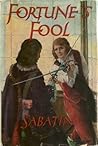
Fortune's FoolFortune's Fool by Rafael Sabatini
My rating: 5 of 5 stars

This is a very entertaining and well-written historical adventure novel set in 17th century England. I enjoyed it.

[Spoilers about plot abound here. Skip ahead if you prefer.]

The story of a mercenary soldier with bad luck his whole life, it tells about a particularly tough period in the main character's life. Returning to England to try to find work, Randal Holles struggles to overcome forces arrayed against him. His father was a famous traitor, making his very name an enemy to luck. Old friends try to entice him to join their rebellion, and even though he doesn't take them up on it he becomes a known associate and at risk of arrest. One acquaintance with a title and pull tries to get him a position overseas, but a nobleman of higher rank forwards his own candidate instead, and he has almost no way forward. In addition to all this, the plague returns, gates are closed, and he has no way to get out of the city.

[Most critical spoiler. Jump down if you want to avoid it.] The biggest turn of bad luck is when another noble acquaintance--Lord Buckingham, a man who had been a boy when Holles saved him--offers him work, but it requires him to help kidnap an actress Buckingham has a fancy for. Holles refuses, but worsening circumstances eventually force him to do him this service, the worst thing he's ever done, over the objections of his pride and conscience. And the woman turns out to be his lost love, a girl from his youth, the woman he searched for and couldn't find.

[That's the end of the spoilers.]

The rest of the novel deals with Holles working through the consequences of his actions, and I feel like the author does a good job of showing us how he changes course, leading to a satisfying and reasonable ending.

Sabatini is, to me, like Sir Walter Scott translated to English a century nearer our own time, with a lot of the digressions and authorial intrusions cut out. I love Scott, but Sabatini writes something closer to the "good parts" version of Scott's historical adventure stories. This book is from 1923, but I feel like a new edition with a decent cover would get people in 2025 and beyond reading his books like they were new, because it reads very modern overall. IMO, obviously.

Good book. Lots of fun. I recommend it for people who enjoy historical adventure novels.

View all my reviews

Wednesday, August 21, 2024

Where the French and English Really Hated Each Other

1356 (The Grail Quest, #4)1356 by Bernard Cornwell
My rating: 4 of 5 stars

This is an exciting, thoroughly believable fictionalized account of the famous battle at Poitiers in 1356, the year named in the title. Bernard Cornwell is legendary for his careful research and period details, and he does not fail us here. Besides being a well-crafted work of historical fiction, though, it is plenty of fun, with lots of crossover for (say) a reader of fantasy.

The book threw me for a loop at first. I was well into it, scratching my head, wondering why the backstory was so dense, why the author was being so sparse with his exposition, feeling like I was missing something, playing catchup all the time. Then I looked into it and discovered this is the 4th book in a series. That's not on me, believe it or not--that's entirely on the publishers. There is no indication anywhere on the cover, in the blurb, or anywhere else that three novels precede this one, or that this is part of the "Grail Quest" series. The other books aren't printed on a page near the beginning with a "be sure to look for these titles" warning. That's annoying.

But I got through it, figuring it out well enough, and bought the other three novels to read out of order. At least I already know some of the characters that survive books 1-3, because they're present in book 4...

Anyway, it's a story set in the 100 Years War, with characters that include a greedy cardinal who wants to be pope, some brutal lords, and a bunch of regular-guy soldiers. The cardinal and his conspirators are looking for the sword Peter used in the Garden of Gethsemane to strike off a Roman soldier's ear, a relic supposed to be buried somewhere in France (though we learn in the notes at the back that the sword is believed to be in Poland, which Cornwell clearly thinks is not the actually case but is too polite to say so). Part of the story is about people searching out the sword, part is about Thomas and others protecting a couple women from brutal men, and the rest is about an outnumbered English/Gascon army trying to retreat or survive an unwanted battle near Poitiers.

The final battle is the best part, and the movement of armies in this part is surprisingly comprehensible--nicely done, Mr. Cornwell. That made up for some frustration early in the novel, when it seemed that the author started every scene so cold that it took paragraphs or pages to understand where we were and what we were doing. I wouldn't mind a little more exposition throughout, a little more context for whatever is happening, but that just isn't his style.

That's alright. A bit of struggle in the middle is well-rewarded by the end. I gave this 4 stars, but if there were half-points it'd be 4.5 from me.

Next I'll see how it all started, how it happened that Thomas ended up in France with a company of mercenaries. Should be good.

View all my reviews