Showing posts with label adventure. Show all posts

Wednesday, November 4, 2026

Where Hawkeye Finally Rests

The Prairie (Leatherstocking Tales, #5)The Prairie by James Fenimore Cooper
My rating: 3 of 5 stars

I pretty much hated most of the book. But it finally got better at the end. (Probably more of a 2 star read. 1.5 even. But I'm sentimental.)

I had decided I would read all of the Leatherstocking Tales, and I found a little to enjoy in all of them, though I grew less and less interested as I worked through the series. They all have the same flaws--IMO--but they generally have a decent story to tell. The story is buried beneath a lot of nonsense, but there it is.

The main problem is JFC's horrible prose. When he's at his best, it's wordy. When he's at his worst, which is about 90% of the time, he's absurdly wordy beyond all reason, but also off-topic, rambling, and sermonizing, and it's especially his dialogue that offends. It is constantly so far removed from any human communication that it's more annoying and frustrating than reading should ever be. He has a naturalist in this story who is so absent-minded and argumentative, with such overblown language, that his dialogue went beyond humor to farce. (I won't quote any of his ridiculous professor-sounding speeches filled with Latin, but they are so bad and go on so long...) A bee-hunter is a character here, and he's an okay addition, but he constantly makes speeches with bee-inspired metaphors. Almost every speech has a bee in it somewhere. (Reminded me of the worst of Dickens.) And there are many others like this. Hawkeye--just called the Trapper in this novel--is the same here as everywhere, answering every question with a long soliloquy on the ways of the world and the gifts of the white man or red man and the natural ways of women or wild creatures or whatever. He gives two paragraph answers to yes/no questions, all without answering the question. And sometimes the narrator calls him prolix, as if we were meant to believe it's Hawkeye's problem and not the author's.

When he gets around to it, Cooper can tell a decent adventure story. That's why I kept reading; I convinced myself I'd learn to appreciate his books. That has only been true to a small degree. This time, he waits until about halfway through the book to start in on the actual plot. It's about then we discover a woman has been abducted and is hidden in a wagon headed across the prairie, all of this occurring in the days before settlers lived there. A family of outlaw rednecks are the villains in this part of the novel; later it's the Sioux. But even when we have Hawkeye in the story, helping the various white travelers, translating with the natives, he seldom does much of interest. He's more Jean Luc Picard here than James Kirk. He uses diplomacy to save his lives and others when they're captured various times, and it's okay, but not very adventurous. He's still pretty robust for a hero now in his 80s, but his part of the story mostly focuses on old-timer wisdom. The only real action he's responsible for is when the natives have trapped them with a wildfire, and he fights back with a fire of his own.

The very end leads us first to his goodbyes with all the settlers heading back to the settlements, followed by a last visit from one of those friends (months later, but only a page later in the book) where Nathaniel Bumppo/Pathfinder/Deerslayer/Hawkeye/Le Longue Carabine/Trapper finally dies. That part is actually very affecting, with language a little less overwritten, filled with a deep sense of melancholy. Those five pages are very good. It almost makes it worth reading the rest.

I'm glad I read these. I'm glad I'm done. You might like them, but they're a lot of work.

I don't think the juice is worth the squeeze, but you're welcome to check.

View all my reviews

Saturday, July 25, 2026

Where I Thought Indy Got a Bit Boring

Indiana Jones and the Raiders of the Lost Ark (Junior Novelization)Indiana Jones and the Raiders of the Lost Ark by Ryder Windham
My rating: 3 of 5 stars

I meant to buy the regular novelization and accidentally got the junior novelization. That's okay; I have a bookcase full of MG and YA novels and sometimes enjoy them as much as or more than mainstream novels. So I read it, somewhat hopefully, and it was fairly entertaining. But I didn't love it. 3 stars.

Honestly? It was acceptable, and the story is engaging enough that it's still fun, so 3 stars feels fair. (A surprising number of readers gave it 4s and 5s, so listen to whoever you trust.) But IMO, while condensing the action and making it mostly inoffensive for a younger audience (which I acknowledge is a difficult task), this exciting adventure story becomes very... plain. The mood tends toward cozy and playful rather than thrilling or menacing. There are a few scenes that still mostly work, where the tension is maintained, but much of the book is matter-of-fact. Because huge sections of action have to be summarized in narration, the reader is drawn farther and farther from the action until it doesn't feel very real. Much of the danger is erased, the exotic feels everyday, and the plot becomes strangely bland.

In general, I'm in favor of junior novelizations for younger readers and reluctant readers, and this version might work for many of them. But I feel like the changes made for readability unfortunately cut out a lot of the drama and tension.

Still pretty good, IMO. Just not awesome.

View all my reviews

Saturday, July 18, 2026

Where Blaise Spies on the Rebels

The King's CavalierThe King's Cavalier by Samuel Shellabarger
My rating: 5 of 5 stars

This 1950 historical fiction novel is one of the best things I've read in in the last year. Set in 1500s France, it tells a story of spies, international intrigue, romance, and sword fighting in the best tradition of The Three Musketeers and The Princess Bride. (No ROUS's, but pretty much everything else.) It was fun all the way through, tightly plotted and action-filled, but it was also very well written, with fantastic prose. Nothing missing here. All five stars, easy.

Blaise Lalliere is a soldier from a minor noble family. He's not considered all that clever, but when his family sides with their liege, the Duke of Bourbon, against the king, he doesn't go along with it. When he defends de Surcy, one of the king's counselors, from the conspirators, he is enlisted to help with covert actions by him and the king's mother, and it is on this mission that he and others discover that he does have a flair for intrigue, that there's more to him than the simple soldier. A good part of the book has him escorting an English woman to Geneva for the regent, keeping an eye on her. The king is interested in her, but she is also a suspected spy. The rest of the book is set up by that start, with new and trickier dilemmas for the main characters; he and Anne Russell are intelligent, noble, and honorable, and both are conflicted by various allegiances that make every action fraught with danger one way or another.

If an action novel this engaging and exciting had been written 200 years ago by Scott or Dumas, I would have read it long ago, along with a million others, and it would probably be a classic with its own Wikipedia page. If it had been written last year, I'd be hearing about it on TikTok. But until I happened on a book by this author in a used book store, I'd never heard of it or him. 1950 is an awkward place for genre fiction like this--both too new and too old to come to our attention except by accident.

Look this one up. I loved it.

View all my reviews

Tuesday, June 23, 2026

Where Mitch Rapp Gets Some Teeth Knocked Out

Order to Kill (Mitch Rapp, #15)Order to Kill by Kyle Mills
My rating: 5 of 5 stars

I liked this quite a bit, and didn't think I would. This is my first book in this series (this particular title being written by Kyle Mills, not the original author Vince Flynn), and I hoped it would be pretty good, maybe sorta fun. It was better than that. I seldom read thriller/bestseller-type novels, and haven't usually enjoyed them much, but this one I did.

I was leaning toward 4.5 stars, but why be a jerk? I liked it, and it cost like a dollar at the library book store, so the least I can do is bump it up to a full 5.

This is an action novel, and it starts right in from the beginning. There is a tiny lull a fraction of the way in, IMO, but after that the story just ramps up pretty much continuously until the conclusion. By the end, I was won over, unironically enjoying it, and I think I might like to go back to the beginning of this series and see if I like all of them. (I started with #15 just because that's the one I picked up when I was in a buying mood.) One of my preferences is having a character with intelligence or superior skills who uses those skills. If you're awesome, be awesome. That's what's fun to read. Sherlock has to be smarter than everyone else. John Wick doesn't miss. An Oscar Wilde character has to be witty. And Mitch Rapp has to be the most badass guy around.

(I hate the books where the character is supposed to be an amazing investigator but he or she dithers and screws up and makes no progress for 90% of the book before pulling it out at the end. That's a drag and a missed opportunity. I want to see them be awesome. I want to see Reacher beat up an obnoxious bully, and I want to watch Patrick Jane trick a suspect into revealing what they're trying their best to hide, and I want to watch President Jed Bartlet school someone who was trying to make him look bad, and I want to hear Mona Lisa Vito tell the prosecutor the exact ignition timing for a 1964 Bel Air with a 327. I love that. Be awesome.)

It definitely costs Mitch something, though. He's not superman. Mitch has to suffer a lot of pain and misery to do what needs to be done, which feels fair in a novel. His goals are something easy to root for, which is stopping some pretty bad terrorism, and his bad guys are generally pretty hateful, so it's easy to side with him. But suprisingly (for me, for this type of book) even the really bad guys can also have a bit of heart, and I think that works. It's largely black-and-white, but the bits of gray help, so that it feels like real life, just with very skilled people.

So--good character, exciting story, lots of action, and clear, sharp writing. It works.

I've usually overlooked this author (well, the original author) and series, because this isn't my usual fare, but I'm adding it to the list. I'll probably find lots more at the thrift shops....

Recommended. Good summer reading, anyway.

View all my reviews

Sunday, June 21, 2026

Where Jonny Finds a Cave Deep in the Sea

The Demon of the Deep (The Real Adventures of Jonny Quest #1)The Demon of the Deep by Brad Quentin
My rating: 4 of 5 stars

Overall, this MG novel does a pretty good job of updating the great 60s cartoon of Jonny Quest. Four stars seems about right. That's how much I approved of it; I think a young reader could be from 3 to 5 with it, but I dunno.

This doesn't have quite as much zing as the old cartoons, which were strangely compelling and exciting in an era when cartoons were usually pretty tame, but it does a good job of giving us a very similar story and feel. Like the cartoon, there is genuine danger, even if it's treated a little like everything will work out. (Nobody is freaking out the way they would in real life.) The characters interact with one another in the same way. They've added a female character, Race Bannon's daughter, and that's a nice update. Makes the story slightly different, more modern, and that's great. She integrates with the team very well. They also sprinkle in concerns for the environment and wildlife in a way I liked. Not heavy-handed, but very direct anyway.

Like the cartoons, we have an exotic setting, off in the south Pacific, including underwater, with some cool science and a dangerous creature. (Not a giant metal spider or Komodo dragon; here we have a giant squid.) From about 25 pages in, this felt a lot like it could have been a Jonny Quest episode on TV. (No, not exactly. But close.)

Compared to an Indiana Jones book I just finished, which for most of the novel didn't seem like the same character or franchise as the movies, this felt quite a bit like the original, especially the dialogue. Dr. Quest gives little speeches, Race is professional and worries about keeping everyone safe, Jonny and Hadji (and Jessie, the new character) joke around like kids, and Bandit the dog--well, he barks. I could picture the characters in my head saying and doing the things they do in this book.

I wouldn't say it will please every reader, but I think it comes close to the target for this franchise. It's a MG book, pretty standard at a bit over 100 pages, with good pacing, so I think a lot of readers would like this, even though they only made a few titles in the series. (Eleven. I checked. That's actually pretty good.) Too bad it didn't catch on--maybe they'll try again.

Some of us old people haven't forgotten Saturday mornings, and we have grandkids who might like the same stuff. :) Recommended.

View all my reviews

Saturday, June 20, 2026

Where Indy Meets Zombies

Indiana Jones and the Army of the Dead (Indiana Jones: Prequels, #13)Indiana Jones and the Army of the Dead by Steve Perry
My rating: 3 of 5 stars

I enjoyed maybe the last 100 pages or so--maybe less--but it's not a great book. Average? Okay. I gave it 3 stars--good enough to finish, maybe read another.

My biggest complaint as I read this was that it was very hard to imagine Indiana Jones as the person in the story. A few times in the last couple scenes, a recognizable Indy seemed to emerge, but for most of the book it felt like just some random character with his name. He was just a guy walking in the jungle without much to do. He should have been much more enterprising, more impressive, doing cooler stuff.

IMO.

Some of this works as an Indiana Jones adventure. Nicely exotic setting? Check. Some Nazis (and some Japanese soldiers, too)? Check. Some supernatural stuff going on? Check. Even a love interest. But it's thin. The whole story takes place in Haiti and a smaller island off Haiti, unlike the variety of settings you get in an Indiana Jones adventure. And the first half at least is very slow, with a long walk across an island that seems kinda pointless. You want a fast pace with lots of action, but we don't get that until the very end.

And in fact, to be fair, the very end is pretty good. There just wasn't enough story leading up to that to make this a full adventure novel. Should have been a novella. Or maybe a tight short story.

I liked bits of this, and I'm curious about all the other tie-in novels that I've never read. So I may look at some more of these. But I hope they feel more like the movies...

View all my reviews

Sunday, April 19, 2026

Another Graustark Adventure

Beverly of GraustarkBeverly of Graustark by George Barr McCutcheon
My rating: 4 of 5 stars

Not really a 4--but more fun than most 3's. 3.5, IMO.

I rather like this book and this series, despite a number of criticisms any reader could easily make. It's not very serious, mostly silly melodrama, and reads a little cartoony. It's coming from outdated turn-of-the-century (120+ years ago, I mean) sensibilities--putting me in mind of early Hollywood. In fact, the whole time I was reading this, I kept imagining it as a very old epic filmed on a soundstage with cheesy costumes, stilted dialogue, and lame sets. That's not a criticism, though, but rather my opinion about the best way to approach this book. You have to let it be a bit over-the-top.

Like the Zenda books, this series is about a fictional small country in Eastern Europe. In the previous book, an American man married the princess of the country, and in this one, a Southern woman, a friend of the princess, visits Graustark and falls in love with a man from neighboring Dawbergen. He isn't what he seems--then he is--then he isn't. You don't know until the last couple pages who he actually is. But Beverly and Baldos fall in love while he is hiding from partisans trying to overthrow the rightful prince of his country. I don't think I could put up with Beverly in real life. Her game playing--pretending not to care about Baldos, then showing him a little attention, followed again by studied neglect--was annoying, but treated like just what women do.

Overall, it's a light adventure, or maybe a cozy romance, with pretty low stakes and a happy ending. It's pretty fun, and though it suffers from many of the outdated attitudes of the time, it's entertaining and silly, and readers might be able to overlook its flaws just enough to be amused by its melodrama.

View all my reviews

Friday, April 17, 2026

Where the Bad Guys Take Your Breath Away. Literally.

Merchants of Disaster (Doc Savage #41)Merchants of Disaster by Kenneth Robeson
My rating: 3 of 5 stars

As always with Doc Savage, the book was okay. Three stars.

For personal and biographical reasons, I have more affection for the series and the characters than the novels really warrant. The cool covers help, too. In truth, there's a little fun to be had reading these books--the "advanced" science from the 30's is kinda fun, and we usually have exotic settings (though not in this one), and there's an advantage to knowing the characters before you open the book. (Star Trek novels, for example, have the same advantage.) But you can tell these books are quickly written and barely edited. In a way, that's part of the charm. This is pulp fiction; that's how they're supposed to sound.

This particular novel has no supernatural trappings, no supposed werewolf or ghost or goblins. In fact none (almost none? not sure) of the books really do--they just tease something supernatural that ends up being explained another way, like Scooby Doo. But even that is skipped here. From the start, it's clear there's some sort of weapon being used by bad guys, and it's clear they're gonna sell it to other bad actors. That plot is not too different from many movies and tv shows out right now--just a straightforward action story with criminal arms dealers. It works fine, tbh.

They're short, moderately entertaining novels, and they give me a jolt of nostalgia when I read them, so even if I almost never give them a 4 (and never a 5) I keep picking one up from time to time. And I've got a couple more on the shelves, so eventually I'll get to those as well.

Just recommended for people who already read old pulp fiction. But anybody might try one, once.

View all my reviews

Tuesday, January 6, 2026

Where Maddock Follows Clues in the American Southwest

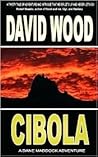
Cibola (Dane Maddock #3)Cibola by David Wood
My rating: 3 of 5 stars

Pretty good. Not my favorite, but I'll read another by this author.

This is a pulp fiction adventure, like a modern-day Doc Savage or something, and it works pretty well. I've liked two previous books by this author. Somehow, this book didn't work as well for me, and I read it sporadically. Too much stopping and starting makes it hard to love a book, and this is probably more entertaining if read straight through, but it didn't hold my interest that well.

It's a good setup for a story--a genuine lead on Cíbola and the seven cities of gold--taking the story to the American southwest and a quest for lost artifacts, both aboveground and below. To a large extent, it works, but I don't really like sequential stories like this, where they find one thing which leads to another and another, like a shopping list. The last third is pretty fun again, as is so often the case, and I bet if I'd read it in bigger chunks closer together I'd have liked it more.

I often like digging up 1920s or 1930s pulp fiction, and that's pretty fun, and this is probably better than that in just about every way, so it's still recommended if you have a taste for such stories. Many readers gave it a 5, so I might be the wrong guy for this particular title.

Anyway, a 3 is still a recommendation--if cautious. Take a look for yourself.

View all my reviews

Tuesday, September 16, 2025

Where Fate Really Hates Randal

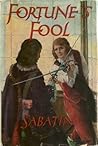
Fortune's FoolFortune's Fool by Rafael Sabatini
My rating: 5 of 5 stars

This is a very entertaining and well-written historical adventure novel set in 17th century England. I enjoyed it.

[Spoilers about plot abound here. Skip ahead if you prefer.]

The story of a mercenary soldier with bad luck his whole life, it tells about a particularly tough period in the main character's life. Returning to England to try to find work, Randal Holles struggles to overcome forces arrayed against him. His father was a famous traitor, making his very name an enemy to luck. Old friends try to entice him to join their rebellion, and even though he doesn't take them up on it he becomes a known associate and at risk of arrest. One acquaintance with a title and pull tries to get him a position overseas, but a nobleman of higher rank forwards his own candidate instead, and he has almost no way forward. In addition to all this, the plague returns, gates are closed, and he has no way to get out of the city.

[Most critical spoiler. Jump down if you want to avoid it.] The biggest turn of bad luck is when another noble acquaintance--Lord Buckingham, a man who had been a boy when Holles saved him--offers him work, but it requires him to help kidnap an actress Buckingham has a fancy for. Holles refuses, but worsening circumstances eventually force him to do him this service, the worst thing he's ever done, over the objections of his pride and conscience. And the woman turns out to be his lost love, a girl from his youth, the woman he searched for and couldn't find.

[That's the end of the spoilers.]

The rest of the novel deals with Holles working through the consequences of his actions, and I feel like the author does a good job of showing us how he changes course, leading to a satisfying and reasonable ending.

Sabatini is, to me, like Sir Walter Scott translated to English a century nearer our own time, with a lot of the digressions and authorial intrusions cut out. I love Scott, but Sabatini writes something closer to the "good parts" version of Scott's historical adventure stories. This book is from 1923, but I feel like a new edition with a decent cover would get people in 2025 and beyond reading his books like they were new, because it reads very modern overall. IMO, obviously.

Good book. Lots of fun. I recommend it for people who enjoy historical adventure novels.

View all my reviews

Wednesday, July 2, 2025

Where the Adventure Became a Weird Trip

The Buried PyramidThe Buried Pyramid by Jane Lindskold
My rating: 3 of 5 stars

I liked Jenny Benet, and I liked a lot of the traditional action adventure story about a group of people hunting for some archaeological site in the 1800s. It was going along pretty well, maybe a bit slow... okay, slowing down a lot... but still pretty fun, and then it got weird.

This was a 4 or even 5 (if it picked up at the end) that trailed off to a "it was all right" score of 3. Even then, I'm not encouraged to look at anything else by this author anytime soon.

Here's the plot, and I'm leaving in spoilers, so skip if you like:

Jenny and her uncle and a learned friend are going to pursue a legend in Egypt, and as they make plans they get cryptic messages from someone warning them off. That's a good start. The threats and attacks get worse as they reach Cairo and start gathering supplies. Still good. They travel in the desert and face many dangers. Awesome. Fellow travelers who they thought were good guys follow them and betray them. Great. They are trapped in an ancient underground complex, and are using their wits to escape. Fantastic. The Egyptian gods are mad at them and put them on trial for disturbing the site after a Willy-Wonka Psychedelic-weird trip up a fantasy Nile that wants to kill them and the sun god, Ra.

What?

And to help their traitorous enemy (a beautiful English widow), who is going to be damned by the gods for her part in the desecration, they take on a sort of job protecting another site sometime in the past, and the gods transport them into the pyramid where they have to fight off ancient grave robbers.

Okay. That's just weird.

Three quarters of this is a realistic action story without any supernatural or fantasy elements. The last chunk is a kinda annoying Star Trek episode that comes out of nowhere with actual Egyptian gods coming to life. The tone was just all over the place.

To be fair, I found it still moderately fun to read, so I finished, but it was so unsatisfying in the end that a 3 ("good enough to finish") is the best I can do. Not really recommended.

But you do you.

View all my reviews

Tuesday, April 22, 2025

Where Dane Maddock Channels Pitt and Reacher

Dourado (Dane Maddock #2)Dourado by David Wood
My rating: 4 of 5 stars

A very entertaining action adventure novel.

A little Dirk Pitt, a little Indiana Jones, a bit of Reacher--this has good bones. It's more pulp fiction than bestseller, but I like it fine that way.

The main characters, Dane Maddock and his SEAL friend Bones, take on a mystery presented by the daughter of an old Navy friend. Her late father had clues leading to an old shipwreck supposed to contain an artifact that went missing about 200 years earlier. Other people are searching for it and want to stop Maddock from finding it. The search takes them underwater, to old libraries, and to Petra, with unknown enemies dogging them the whole way.

It has brisk pace and is filled with exciting action. The prose can be a bit jagged, which is all that kept me from giving it a 5, but it's a fun 4. There's a bit underground that got a little repetitious, but then it rocked again. I can't remember if I got this signed at Comicon in Phoenix or at the Doc Savage convention I visited once, but either way, I liked it better than Doc Savage. The copy I bought has 3 other short-ish novels in it, and I'm hyped to read them. And the guy has a huge catalog, so I'm pretty hopeful after this introduction.

Not to oversell. It's just a solid, entertaining action story (with some cool fantasy stuff at the end) intended to be gulped in a short time. Recommended for that kind of reader.

View all my reviews

Tuesday, April 15, 2025

Where Tarzan Teams Up with Some Scary Beasts

The Beasts of Tarzan (Tarzan, #3)The Beasts of Tarzan by Edgar Rice Burroughs
My rating: 4 of 5 stars

Like the first novel, and unlike the second, this works quite well as a novel with a single, straight-forward, unique plot. At about 75,000 words, it's a good length for a pulp novel--not too long, I mean--and it makes good use of the skills and attributes of the character Burroughs created.

I sort of like urban Tarzan, Lord Greystoke. If nothing else, it's a good palate-cleanser for the jungle scenes. But Tarzan in the wilderness, with animals, with trees to swing from, well, that's the reason you read Tarzan, right?

Like Superman with Lois or Jimmy, Tarzan is only vulnerable with his wife and child, so this story has his nemesis, Rokoff, kidnapping them from their London home and promising to leave them forever in the worst possible situation. His need to get revenge on Tarzan means that, instead of killing him when he has the chance, he keeps him alive to witness or at least know about the horrible life they will be trapped in. Of course, with Tarzan still alive, even marooned on an island, there's still hope.

The title lets you know part of the story. He befriends a panther and dominates a group of gorillas, making them into a kind of tribe or army, and some of the best scenes in the story include them going after the bad guys. With a little tweaking, this could all be converted to fantasy; it's very close.

There is a nice conclusion to the novel, which I'm glad for. I was afraid we were going out on a cliffhanger. Nope. Good ending. All made sense. Satisfying and self-contained, this is about as successful as this type of novel can be.

[*There's tons wrong with these books, especially the harmful stereotypes and casual racism, and maybe I should write a review just on that and then link it every time I mention it. For now, let me just refer to ~all of that~ with a sort of asterisk, reminding the reader that the flaws in society, in every period, inevitably keep showing up in books like a stain on every page. Whether that means one reads those stories with a cautious awareness of the flaws or one avoids reading them altogether I leave to others to decide for themselves. I get it either way.]

In terms of action, though, and creativity, and intrigue, Burroughs is an amazing storyteller. His golden era is well behind us, with movies and TV shows, and future generations may forget him altogether, the way we have done with so many authors of earlier periods, but he might well rebound. These titles of more than a century ago have become something of a niche read, but Tarzan, and some version of his stories, continues to be profitable and famous for good reason.

View all my reviews

Sunday, March 30, 2025

Where the Heroes Punch Above Their Weight

The Shattered Skies (The Cruel Stars, #2)The Shattered Skies by John Birmingham
My rating: 5 of 5 stars

I loved the first book in this trilogy, and the second is just as good. Maybe better.

This is a very rich, well imagined universe that is profoundly real in the best science fiction way possible. It is weird and complex and beautiful and ugly, filled with extrapolations from the present that sure seem possible.

The story is a space opera staple, with star-traveling empires competing for survival in an all-out war, but like the best novels it's told from the perspective of about a half-dozen really engaging, well-developed characters with unique voices. They're all brilliant in their own ways, and hilarious, and super fun to follow.

The bad guys, who are clearly fascist and terrifying, are not entirely wrong, and the good guys, who emerge from somewhat freer societies that also include horrible slavers and noblemen and oligarchs who are crushing the common people, are obviously pretty horrible. There's hope, and there are many people fighting for better lives for people, but there's a lot that's pretty bleak. And I feel like this could represent exactly where we'll be someday--where the rich have infinite lifetimes and the poor are completely shackled by their superior tech.

This book ends with a nice conclusion, as did the first book, but it's the larger arc that brings me back, and I'm bummed that the final part was supposed to be out already and still isn't schedule a year later. I can wait, I guess, but I'm ready for it.

In many ways, this has a fantasy feel, with action and stakes like maybe Joe Abercrombie or someone like that, blended with a bunch of John Scalzi dialogue and humor. Highly recommended.

View all my reviews

Tuesday, March 4, 2025

Where Annja Gets a Rival

The Golden Elephant (Rogue Angel, #14)The Golden Elephant by Alex Archer
My rating: 4 of 5 stars

I think this is a pretty good example of pulp fiction, which is why I give this a 4 (even though I'd score it lower if it were a stand-alone novel). Except for a few lulls, there's lots of Indiana-Jones type action. The setup for the plot--the search for a possibly-legendary relic--is pretty typical, but it works, and it's made to feel as realistic as any action movie of the same type. The characters are as round and believable as most genre fiction, and there are moments of deeper reflection than one might expect from this category of book. The exotic (to a Western audience) settings are fleshed out quite well. And though the stakes don't seem as high here as they might in other kinds of novels, reading a little bit more like a comic book, they are as high as you'd like them for this genre.

(That's a lot of caveats, I realize. But I feel like pulp is a different kind of writing and reading, with specific genre expectations, and I want to be clear about the rubric in my head.)

Annja is hunting for a golden elephant rumored to be somewhere in Southeast Asia. Her search becomes dangerous, and it's complicated by the interference of another young, capable, resourceful adventurer, Easy Ngwenya, who becomes a kind of rival to Annja. Their interactions become the most entertaining part of the story. Because Easy pushes her, Annja has to do some soul-searching about the ethicality of her whole relic-hunting lifestyle. She'd convinced herself she was saving important historical objects from treasure hunters, but she's forced to consider whether she isn't doing exactly that thing.

There's a good amount of philosophical musing taking place in the jungle while bullets are flying overhead, and I think it added something to the story.

Though it dragged in the middle and was headed toward a 3-star rating (in my mind), it pulled it out toward the end, especially the very end, and overall was breezy fun, both entertaining enough and satisfying enough to deserve four stars.

View all my reviews

Wednesday, February 12, 2025

Where Verne Poses Lots of Moral Questions and Tells a Fun Story

The Blockade RunnersThe Blockade Runners by Jules Verne
My rating: 4 of 5 stars

This is an entertaining and enlightening short work. I liked it.

At about 20,000 words, you can consider this as either a long novelette or a short novella. Either way, it's a nice length for the story it told, IMO, though I could easily see this fleshed out into a novel of 80K-100K without harm. It would also make a good movie without changing a thing. Maybe there's already a movie. I dunno.

Written in 1865 and set just a few years earlier, taking place in the middle part of the American Civil War, this opens my eyes a little to the way Europe could have been viewing the conflict and how it affected their lives. From a Scottish viewpoint, the war disrupted trade, making it very difficult to get enough cotton to keep the mills in operation. Naturally, that puts businessmen (the ones not too interested in the morality of the question) on the side of the South. It was strange but informative to see sympathetic characters, people who are apparently decent people in other ways, siding with slavers and finding arguments to be blame the North (here called the Federals) to the point that they considered them in the wrong. That really struck me, even though I know I'd been taught this in history class. Something about fiction gets through, you know? It made me realize that the mills in England and Scotland had been a part of the slavery business from the start. A lot of people's wealth depended on the exploitation of enslaved people.

(Crimes have a way of spreading, don't they? Especially big ones. They start compromising everyone connected in any way. That extends to the lawyers and the bankers and the politicians as well, not just the businessmen. Hmmmm.)

It's horrifying as well instructive to see how easy it is for people to deny the humanity of others, especially if it's in their own economic self-interest. What makes the lesson so useful to me is realizing that this was written during the events of the war, in real time, while it was affecting Americans one way and Europeans in another. Hearing the debates and being privy to the thinking of people in 1865 means a lot more than reading a modern account of what people thought back then.

I was happy to see the main character, James Playfair, get turned around a bit when he takes the side of a young woman whose father, a journalist and fervent abolitionist, was being held captive by the South. His mission to run the blockade and trade weapons for raw cotton gets amended to include rescuing her dad. If they can do that, they have to get past the blockade again, but this time they'll be fired on by both sides. But their new steam engines are the fastest on the ocean...

So--a good story, good action, good characters, with an interesting treatment of a big moral question. I found 20,000 Leagues Under the Sea super dull, and I had expected to like it. Around the World in 80 Days was the opposite--I really liked it, and thought I wouldn't. I didn't have any idea about this, but enjoyed it. The takeaway is that I'm finding Verne's action stories more fun than his science fiction. But we'll test this theory when I read From the Earth to the Moon. Hope it's good; let's find out.

View all my reviews

Friday, January 17, 2025

Where It Was Particularly Pulpy

Homeward Bound (Death Lands)Homeward Bound by James Axler
My rating: 3 of 5 stars

This was close to a 2 for me--and I usually don't finish books like that. However, it picked up a lot in the final quarter of the book, and I enjoyed reading the rest of the way to the end. I'll give it a 3.

I've been checking out various kinds of pulp fiction, most from the 70s, some a bit more recent, and this series popped up. The setup is pretty great--a post-apocalyptic America filled with mutated humans and every kind of danger. Everyone carries weapons, mostly handguns and rifles, and here and there people are trying to civilize the place again. I wondered what made this series work, and I'm not too sure right now.

I kind of understand the appeal of others, like Doc Savage and Tarzan, The Executioner and The Destroyer, Hellboy and Rogue Angel. They all have some hooks to catch your attention, some superhero mojo and some beat-the-bad-guys adrenaline bringing the reader back. This series, though, doesn't have any of that that I can see. I've only read one so far, but it reads like a typical science fiction story, mostly derivative and uninspired, and not only is it long for pulp, I found big chunks of it tough to wade through. I'm a little surprised it was good enough to publish at all. However, I realize I'm probably overlooking some fun stuff. It's got a couple hooks, I guess, depending on the interest of the reader, and it does pick up toward the end. In any case, the series was successful enough that it stretched out past 150 titles. Somebody was buying it. Something drew them in.

So I didn't love it, but it was good enough to finish and good enough to look into some of the other titles. I bought 5 or 6 used ones all at once, so I hope I enjoy the next one more. Those more familiar with the series might be able to tell me what to look for, which titles work best, how to get the most fun out of the books.

After I've read a few more, we'll see what kind of recommendations I have.

View all my reviews

Friday, November 22, 2024

Where an Old Book Is Lots of Fun

The Prisoner of Zenda (The Ruritania Trilogy, #2)The Prisoner of Zenda by Anthony Hope
My rating: 5 of 5 stars

Of course I've heard of this novel. Well, the movie, really. And it always sounded like an old movie that old people liked in old times, not something I would ever like. But I got the book on a whim and tried it out.

I loved it. This is a fun novel. I'm not saying it's good for its time or any other "grading on a curve" reason. No--it's just straight up a good book. This is like the "fun parts" version of a Scott or Dumas novel (both of which I love). Some action, some romance, some friendship and buddy stuff, some danger, some mystery... All good. It was super popular when it was published, and most of the other books he wrote didn't take off, but this stayed popular and got made into plays and lots of movies and so so many adaptations--radio shows, musicals, Bollywood versions, etc. And it's overdue for a Hollywood remake. Because it's good.

The novel is pretty slim at about 60,000 words. But that's cool. The writing is punchy, the pace is relentless, the characters are sympathetic on one side and villainous on the other, the story is engaging, and the ending is satisfying. It's a good romance in the older sense of the word. And the central conceit, that the MC resembles the King of Ruritania (who is technically his cousin) enough to impersonate him and handle his business after the king's been captured and imprisoned by his awful brother, could be awkward and distracting, but is well handled and is in no way ridiculous. In fact, throughout the story, the MC narrator addresses a number of sticky plot points in a natural way and makes it all seem reasonable, and I felt like my credulity wasn't unnecessarily strained. In many ways, despite it all, the novel feels pretty realistic.

I really think it holds up. Reading it reminds me of my experience with Stevenson's Treasure Island, which I always supposed was too old to be enjoyable. That was wrong. When I finally picked it up in my 50s, I found it to be really engaging and fun, and not in an ironic or nostalgic way. Just a good book. Stevenson's language can be somewhat demanding (especially for some young readers) but it is still modern enough to be quite readable for a lot of audiences. And The Prisoner of Zenda, being a little closer to us in time than Stevenson (and even closer than Dickens or Scott), and composed in language that is only slightly elevated compared to modern writing, feels like it could work for a lot of folks in 2024, including even younger and less sophisticated readers.

I liked it. No notes. I think I'm gonna go find one of those old movie versions that I never sat down to watch when I was a kid because now I think it might be really fun, and I'm gonna find other books by the author.

View all my reviews

Friday, June 28, 2024

Where the King Hides in a Tree

Boscobel, or the Royal OakBoscobel, or the Royal Oak by William Harrison Ainsworth
My rating: 5 of 5 stars

I like this a lot more than the average reader. That's okay.

I found it really interesting. It's the story of Charles II, trying to retake the throne from Oliver Cromwell after they put his father to death. The first section of the book deals with the loyalists' preparations for a battle at Worcester and the subsequent loss to the "roundheads" of Cromwell. It's well done, full of spies and skirmishes and stratagems, individual heroism and unexpected reversals. Cromwell, in this part, is as important a character and as interesting a character as Charles.

The rest of the book deals with Charles trying to escape after the loss. It's very complete, with lots of heroes. (While I'm reading, I'm rooting for Charles and his loyal supporters. I don't actually care about the monarchy, then or now, but in the books they're the good guys for sure.) There are so many close escapes, so many moments when the troops searching for him almost find him. He goes from house to house, from hidden room to hidden room to hidden cellar, from one woods to another, two or three days here, an hour there. It's pretty exciting, in its way. It's the biggest game of hide and seek I've ever heard of, and Charles won.

He almost takes ship a couple times but can't quite make it work. He pulls off a disguise now and then, and other times it fails him, and he has to fly again. Of course, in real life, he went to all these places, including the huge oak tree that he famously hid in, and eventually got help to escape to France before being ridden down.

I liked it. I thought it was fun, a good book for those who like this sort of romance (action adventure romance, not HEA kissing romance), though it might not work for everyone. It has a lot in common with romances that Dumas wrote, with constant plans and schemes and fleeing on horses and the occasional sword fight, so it might work for some of his fans. (Like me.) It's also suitable for those who like complete descriptions of manor houses and moors and harbors and villages dating back to the 17th century. Ainsworth is precise about details and doesn't stint on that stuff.

This was first published in 1872. I think this edition I have is from 1899. Old enough, anyway, that someone sold it at a yard sale for 19¢. :)

View all my reviews

Thursday, April 25, 2024

Where Beowulf Gets a MG Makeover

Beowulf: Dragon SlayerBeowulf: Dragon Slayer by Rosemary Sutcliff
My rating: 5 of 5 stars

Rosemary Sutcliff is known for her historical novels and retellings aimed mostly at young readers (we would probably call most of them MG, but you could argue YA for them, too). And she was very successful at this. Here is the retelling of the Anglo-Saxon epic Beowulf, and I thought it was excellent. Not perfect, IMO, but definitely well done and very entertaining.

This is still a slim book--she hasn't made Beowulf into a long novel. More like a novelette, actually, and with the fine drawings it reads very fast. She has embellished the story somewhat, adding sensory details and some exposition that wasn't in the original, and I love it all. The land around Heorot seems like a place people live instead of a fairytale village. The hall itself is finally kind of visible to me. The battle with Grendel seems more plausible and real. And there are a lot of such details, none of which do damage (as always, IMO) to the original story.

She has removed a couple of digressions, and I think that's wise. They don't really work for a modern audience, especially young readers, and they only slow down the narrative. Otherwise, the whole story is here. The only thing I felt it lacked was a bit more added in; every ounce of world-building she includes improves the story, and I feel there was room for about twice as much as she did. In fact, the story rolls along almost too fast (here and in the original) and could have used a little more breathing space. It could have been 20% or 30% longer without doing the pacing any harm at all.

But what she did really works. The language is still stately and feels old fashioned, but it's nicely comprehensible for average to good readers of a young age. I found it entertaining as an old man who already knows the story, so I'm pretty sure this would work with a lot of kids.

Of course, the only reason I even know of this 1962 book is because it was put on the discard rack at the school where I taught and I picked it up. I think most of the other copies of this book have met a similar fate. Like so many books, I suspect a new edition with a modern cover could be successful again, but there's little chance of that.

Alas.

Recommended for MG (especially) or YA readers who like historical adventures with a touch of supernatural. Or for readers of any age, honestly. I liked it.

View all my reviews