Showing posts with label translation. Show all posts

Tuesday, April 8, 2025

Where It's Another Banger

One Hundred More Poems from the Chinese : Love and the Turning YearOne Hundred More Poems from the Chinese : Love and the Turning Year by Kenneth Rexroth
My rating: 5 of 5 stars

This is a very nice collection of ancient Chinese poetry, published in 1970. The great majority of Chinese poetry in translation has come out since then (I'm sure I'm right but I have zero proof for that statement) but I think you could stack this up against almost any volume that has come out in the last 50 years and it would compare very favorably.

I'm not making any claims about the accuracy of the translations (though I suspect it's alright), or whether these selections are a decently representative sampling of (mostly) Tang and Song poetry, or about the "importance" of any of the poets found here. (There are many highly regarded poets here, like Wang Wei and Tu Fu and others, but there are also a bunch I'd never heard of before--which is cool, actually.) And, in fact, as far as representation is concerned, female poets might be overrepresented here--which I applaud. So is love poetry. But the point is: this is not a textbook or a primer. It's a lovely collection of genuine poetry.

I found it an enjoyable read, and had to limit myself to just a handful of poems a day to make it last. The author chose poetry that's particularly accessible for Western readers, with themes that resonate with many of us, and I think it really works. Here's part of "I Return to the Place I Was Born," by T'ao Yuan Ming:

From my youth up I never liked the city.
I never forgot the mountains where I was born.
The world caught me and harnessed me
And drove me through dust, thirty years away from home...
The farm is only ten acres.
The farm house has eight or nine rooms...
When you come through the gate into the court
You will find no dust or mess.
Peace and quiet live in every room.
I am content to stay here the rest of my life.
At last I have found myself.


I totally understand what he's talking about. I feel just the same. And it's from about 1600 years ago.

That poem is found in other collections, but many of the poems here are not in anything else I've run on to. It has sent me on a search for collections of some of the poets in here, and some of them exist, but are rare (and stupid expensive). Still, I hope it'll hook me up with a few new poets and their works.

Like the previous volume, this is highly recommended, and makes a good starting point for anyone casually interested in Chinese poetry.

View all my reviews

Monday, July 22, 2024

Where Zorro Is... Kinda... Well, He's Dull

ZorroZorro by Isabel Allende
My rating: 3 of 5 stars

I was disappointed. I thought this would be a cool retelling of an old adventure story, maybe with some added realism. I thought it would have swashbuckling action. Barely. Almost didn't. Lots of it was a slog, tbh.

I nearly DNF'ed a dozen times. In the end--well, it's okay. Probably 2-2.5 stars if I'm feeling less generous, but 3 on a good day. It's not Zorro, though.

The main problem I had with the book was that Zorro was not awesome. You want him to do amazing things? Well, wait. He's a baby. Then a kid. Then a teenager, for a long time. We get his whole biography, and he's a bit of a mess. The devil-may-care, in control, confident, capable hero doesn't arrive until about 30 pages from the end. Well, he's pretty confident early on, probably overconfident, but he doesn't feel remotely heroic until the end when he's finally doing the stuff from the movies and the TV show. Even there, though, he feels like an imposter, like he's just putting on the costume and doing his best impression of a hero.

We didn't need his whole biography, giving multiple chapters to every stage of his life, especially since he doesn't seem very special for most of this. He's just a kid; coulda been anybody. His legend is diminished by showing him so often powerless, overwhelmed, frustrated. Then his actual adventures are only briefly referenced in the yada yada yada of the epilogue.

Not fun.

And the cheeky, intrusive narrator is not my preference.

I'm gonna read the original pulp novel now. It's been sitting there while I stretched the reading of this out to ridiculous lengths. I'm sure it's full of historical inaccuracies, and probably some problematic attitudes, but if it isn't a good deal more fun I'll be shocked.

Either way, I'll let ya know...

View all my reviews

Thursday, June 6, 2024

Where I Read One Too Many Translations of Beowulf

Beowulf: A New TranslationBeowulf: A New Translation by Unknown
My rating: 3 of 5 stars

This is the 1957 translation by David Wright.

It's fine.

I've read about 5 versions of Beowulf this year, and I found this one comprehensible but not very enjoyable. It reads like a rough draft, with awkward sentences that individually make sense but collectively sound off. I can't quite say why it hits me I like that, but I found it hard to read in a fluent way, especially compared to some other versions.

The Rosemary Sutcliff novelization, for example, isn't as faithful to the text, but it reads like a novel. The Seamus Heaney translation, which is a line by line verse rendering of the original poem, is much more aesthetically pleasing, though it comes at a slight cost of comprehension. And the "No Fear" version of Beowulf--actually two versions--has a very clear, made for students, prose translation of the text which might actually fit into the category of "long footnotes," because I don't think you'd want to read it on its own. It's too compact, leaving out too many details. It is useful, though. What surprised me was that the "original" version of Beowulf in that book, the one considered difficult the same way Shakespeare is difficult, is actually very nice IMO. It's prose, but with a nice poetic feel, with beautiful language, leaning toward the sound of the Heaney version.

Anyway, I gave all of those 5 stars. I was hoping this would be amazing in a different way, but it's neither beautifully poetic nor radiantly clear. It's not bad; it works. And the introductory essay is very good, as are the notes and appendices in the back. It's fine. It's just not as much favorite, ya know?

I read somewhere there are hundreds of translations of Beowulf into English. I think we're good now. Should be enough for a bit.

View all my reviews

Saturday, May 11, 2024

Where Xenophon Gets The Greeks Out of a Jam

The March Up CountryThe March Up Country by Xenophon
My rating: 4 of 5 stars

My 4-star evaluation is a blend of the original story itself (kinda cool, though flawed enough to only be about a 3 from me) and the English translation (which I thought was excellent, 5 stars).

I can't find a definitive date for the translation, but it appears to come from just before or around the time of World War II, and there's no doubt in my mind that someone could do an amazing translation in 2024 that reads more smoothly or, for that matter, has better notes. But I don't have any quibbles with the language, and I barely even thought about the translation as I read, and that usually means he's done the job. So hat tip to Mr. Rouse.

The story itself, in the original Greek, is very cool in its way. It's amazing to hear the thoughts of someone from 24 centuries ago. Kinda shocking, actually. His morality is very different from that of a modern man. And at a surface level, this is a very exciting, illuminating, almost unbelievable adventure story. Ten thousand Greek soldiers 1500 miles from home, in enemy territory, surrounded by armies, have to fight their way back to Greek lands by crossing rivers, climbing mountains, facing tribe after tribe of hostile natives, negotiating or fighting to acquire enough supplies to hold off starvation, devising new defensive strategies to survive, all while trying to hold together a coalition among the various Greeks so that they didn't fracture and die separately.

That's all pretty great.

But then the story reaches a sort of climax, very near to resolution, then proceeds to wander off into random wars that they sign on for, long passages that sound like a courtroom, boring personal and political disagreements, all leading to a vague, unsatisfying conclusion. What I'm saying is that the final third is nothing like a Hollywood script. I would have to end it when they reach the Black Sea and find some Greek colonies, small cities along the shore. Yay! We're saved!

Narrator: they weren't saved. That wasn't the end.

But it's still fun in parts and well worth reading for the insights into the minds of people then. I'm not sure, even after googling, if the frequent sacrifices made through the story were animal or human. (They are often called "victims," which points one way, but might be misleading. Or so I read online.) Putting that question aside, the "might makes right" morality of the story is disturbing but informative. Nobody has any qualms at all about raiding a peaceful village, killing a bunch of people, taking all their food, and making the rest of the people captives to be sold as slaves later. They don't seem too worried about breaking agreements. In fact, using force to hold someone to an agreement seems to be the norm. Being fooled by someone is more shameful, apparently, than fooling someone. It's things like this that I really didn't know that I found particularly interesting.

I wish Xenophon knew the questions we'd have, because I have more now than I did when I started. Very near the end he mentions his servant, and I realize it's the first I've heard of it. I imagined him setting up his own tent and cooking own his food, but nope. These guys had non-combatants with them, even a thousand miles from home. Probably some of the slaves they took. Women aren't mentioned, or I missed it if they were--Cyrus had women with him, members of his family, all in fancy litters, but I thought it was just him--but maybe the Greeks had women with them. Some of the things Xenophon assumes everyone knows are exactly the things I want to read about. He told us how wide every river was, but he didn't tell us everything I wanted to know about their life in camp.

There is a lot of military strategy here, and that's great. It shows how they created a small mounted group because they were getting torn up without it, and how they recruited some of their guys to be slingers, holding off the armies chasing them with their lead bullets. And there are many things like this, where we see them growing more and more sophisticated in order to survive.

Anyway, this is pretty entertaining and quite informative. At about 150 pages, it's not too long to look into if one has a little curiosity about it.

Recommended for writers and history nerds.

View all my reviews

Sunday, April 14, 2024

Where Beowulf Gets Poetic

BeowulfBeowulf by Seamus Heaney
My rating: 5 of 5 stars

(I am reviewing the translation, not the original.)

I thought this was awesome, an excellent, modern version of a very old poem.

Seamus Heaney attempted to give the reader a true translation of Beowulf, providing the modern reader a poem as nearly comparable to the original as possible. It is rendered in natural English though still in verse, nearly line-for-line translating from Anglo-Saxon. (The original Anglo-Saxon is given on the left, the modern version on the right. I read the right.) He uses appropriate poetic language, too, and explains in the introduction the work he did to find the right vocabulary so as to give the modern reader a taste of the original while still being comprehensible. I think he did that very well.

He also gave us an approximation of the Anglo-Saxon meter, with each line (usually) breaking into two parts (where you might pause briefly), with an instance of alliteration on either side. For example:

"Then this roaming killer came in a fury
and slaughtered him in Heorot. Where she is hiding,
glutting on the corpse and glowing in her escape..."

We find "killer" on the left and "came" on the right; "him" and "Heorot" on the left, "hiding" on the right; and "glutting" on the left and "glowing" on the right.

He manages to keep this Anglo-Saxon alliteration rule in mind in almost every line, though not completely. You can find a few without it. But he didn't want to twist the language too much, so I approve of his balance.

The language here, as I said, is decently poetic, though it leans toward comprehension overall. Older versions may sound more elaborately poetic, but I found this very comprehensible while still sounding like poetry. I think it's a good mix.

Recommended for those who want to see if they might like Beowulf more than they did back in school. I think you will like it better.

View all my reviews

Wednesday, February 8, 2023

Where It Didn't Please Me at All

Cloud Gate Song: The Verse of Tang Poet Zhang JiCloud Gate Song: The Verse of Tang Poet Zhang Ji by Jonathan Chaves
My rating: 2 of 5 stars

I usually enjoy Tang poetry; its topics and themes and vibe in general I find very compelling, and I usually find lots to relate to. And I usually like the translator, who is responsible for two other books that I really enjoyed.

I didn't like this one at all.

No, I amend that--I liked some of the shorter poems at the end of the collection. But the longer ones up front I actually kind of hated. Some is the author, whose poetry is mostly not interesting to me, but the rest is all on the translator. I mean, he did it with malice aforethought.

He made it rhyme. Ugh. No.

To be fair, he made a compelling case for it in the introduction, and I kinda thought he was gonna win me over. He doesn't usually try to make it rhyme, but he wanted the reader to come nearer the original experience than is possible with the usual translations. So I gave him a chance. For me, it's still a no. Too many rhymes are awkward, with inverted grammar, like rhyming "broken" with "the words inscribed effaced, so of the date there is no token," or "aback" with "and so I learn how illness does attack," and "pestles in mortars endlessly do smack." It isn't just that I don't care for it; when I read it, my inner narrator starts getting into a sing-songy style and I literally don't know what I'm reading. I re-read so many poems here, some multiple times, and that rhythm and rhyme pulled me back in like a poem in a Hallmark card.

Obviously, others may feel different about it. They might enjoy it. Me, I found myself getting mad. La d-da d-da d-da, la d-da d-de... I shoulda DNF'ed. But it got better, some. I liked the poems more when the translator (who, again, I normally really like) used slant rhymes and other approximations so that it didn't force my brain into a nursery rhyme gallop. (That's why this gets 2 stars. It was gonna be my first ever 1-star review, but I liked some of the short poems at the end.)

Because I prefer to be encouraging I'd like to direct anyone who gets this far to please check out "Pilgrim of the Clouds," and "Heaven My Blanket, Earth My Pillow," to see Ming and Sung poetry (respectively) beautifully translated by Jonathan Chaves. And if you have no hangups about poetry rhyming in English translation, have at this one.

I may investigate Zhang Ji to see if I like his poetry after all. (Not sure if there are other translations. Hafta google.) Right now I can't tell.

View all my reviews

Monday, January 16, 2023

Where I Wanted More

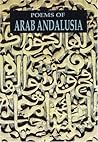
Poems of Arab AndalusiaPoems of Arab Andalusia by Cola Franzen
My rating: 5 of 5 stars

This is a very accessible collection of poetry that gives the reader entry into an exciting time and place that one could hardly reach otherwise. Originally written in Arabic and collected about 800 years ago in Andalusia, which is now in Spain but was then under Moorish control (and had been about 500 years at that point), it includes poems written centuries before that. There is such a mixture of cultures and peoples coming together in that period in that area--Christians, Jews, Muslims; Arabs, Berbers, Goths; speakers of Arabic, Spanish, all of their variants, as well as other languages--and such a melding of their various histories that I find it amazingly rich. This poetry reflects much of that, which is what attracted me in the first place. But there's more.

For one, it's a beautiful translation. It's odd, though; the translator worked with the Spanish version of these originally Arabic works. As is so often the case, necessarily, the formal rules of meter and rhyme that shaped the originals is not represented in the English version. I'm okay with that. In fact, I prefer it. Without imposing those constraints, the language and meaning and imagery and (many of the) figures of speech come through clearly, and it's those elements I most admire in poetry.

Here is a line spoken by a lover:
We were two secrets
held by the heart of darkness
until the tongue of dawn
threatened to denounce us

It is perfectly comprehensible to a modern mind, and we are empathetic to the speaker, feeling the sharp emotions of a stolen night of love and the approach of its inevitable end. And yet it seems fresh, the product of a unique mind expressing himself in his own way, preserving those thoughts in writing. This is the collection in a nutshell.

Also, the richness of the culture behind the poetry attracts me, and I want to know more. The joining or mixing of separate cultures is seen in so many verses where, for example, blonde-haired women are mentioned, or the bells of Christians are heard, and then the same Muslim speaker might then reference fountains or camels or gems or flowers or other details that sound distinctly Middle Eastern or Asian to a Westerner. Another connection is between the people and the land. It shouldn't be surprising--but it kinda is--to hear a Muslim Arabic speaker describing the land of Spain and how much he loves it:
Valley of Almería!
God grant that I never see
myself deprived of you!
...And you, friend, here beside me,
enjoy this time, for there are delights
in this paradise not to be found
in the eternal one.

Of course, his ancestors had been in that land many generations at that point, so there really is nothing strange in that except for the realities of the present that we mistake for eternal truth. But it is these striking combinations that make the poetry so special to me--finding familiar human emotions and familiar human thought clothed in unfamiliar images and terms. There is something both unifying and refreshing in that combination.

Additionally, and quite separate from the translation and my interests in the time and place, I feel these poems stand on their own simply as art. These works are universal in the best way and can be appreciated simply as human expression. This short poem is a nice example:
The wind does the delicate work
of a goldsmith
crimping water into mesh
for a coat of mail.

Then comes the rain
and rivets the pieces together
with little nails.

Although we find a lot of military imagery in these poems, those verses could come from any place and any time. The fact that it came from Abu l-Qasim al-Manishi in 12th century Seville is an interesting detail that does not need to affect the value of the art in any way. IMO, he could have been writing in any age and it would have the same impact and the same meaning.

Recommended. My only complaint is that it is a small volume, less than 100 pages. I would have liked twice as much.

View all my reviews

Monday, June 27, 2022

Where I Had Kinda Strong Feelings

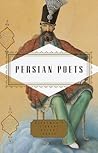
Persian PoetsPersian Poets by Peter Washington
My rating: 2 of 5 stars

I didn't like it much.

There are some great poems here, some interesting translations, but so much of this collection suffers from one problem that I never got into it at all: the translations are off-puttingly English. English like King James, or Shakespeare, or John Donne.

Like this (pretty much random example), from a poem by Rumi, as rendered by a popular British translator:

Time bringeth swift to end
The rout men keep;
Death's wolf is nigh to rend
These silly sheep


(In subsequent lines, we get"smiteth" and "lovest" and "thou'lt." I've never even seen "thou'lt" before. I feel like I need to dissect it to understand what it means.)

In just the first four lines I encounter two words I have never said aloud and two others I've never used unironically. But you know where I've seen them? I mean, the only place I've seen them? Right. British literature.

All through these translations, there's lots of "ne'er" and "offer'd" and "blest" and "'twas" and "pluméd" and "ev'n" and "hark" and "oft" and the like. All perfectly good words, if you're an 18th or 19th century British poet trying to sound traditional and maybe a bit archaic. But they don't say "Persian!" to me. It sounds like Coleridge:
She had dreams all yesternight
Of her own betrothèd knight

or Pope:
'Tis she!—but why that bleeding bosom gor'd,
Why dimly gleams the visionary sword?

or Dryden:
Whate'er he did, was done with so much ease,
In him alone, 'twas natural to please.

That's all I can see when I'm trying to read this very old Persian poetry. It's like someone hung powdered wigs all over the lines and tried to tell me no no it's still super Persian, just ignore the wigs...

Secondly (nope, this rant is not over), most of it rhymes. I hate that.

I get it--it rhymed in the original. But come on--it's hard enough to make a faithful translation that makes sense to readers like me, coming at it from a very different time and culture. Trying to force that language into English rhymes is only doing additional violence to the poem. It's like taking these glass figurines of poetry and packing them in a small box by smashing them up till they fit. What is left of the original at that point?

What I would like is a faithful translation that approximates the feeling and sense of the poetry without bothering with rhyme and archaic poetic diction. Yes, I want it well written, not just transcribed by google translate or something, but stripped down enough that the source material shines through, so that the reader can appreciate something of the original character and sense of the poetry.

Anyway. Not a fan. YMMV

Maybe I need a nap.

View all my reviews