Showing posts with label Spain. Show all posts

Tuesday, May 16, 2023

Where It's Technically a Comedy

Comedia Famosa De La Verdad Sospechosa/ Famous Comedy of the Suspicious TruthComedia Famosa De La Verdad Sospechosa/ Famous Comedy of the Suspicious Truth by Juan Ruizde Alarcon
My rating: 3 of 5 stars

This early Seventeenth century play by Juan Ruiz de Alarcón, the inspiration for a number of similar plays in other languages, is witty and moderately entertaining, but not super fun. It's alright. I wouldn't really want to see it performed.

It's the story of a young man returning to Madrid after finishing his schooling, and he seems like a young gentleman at first to us and to his father, but moments later is revealed as a wild liar. He tells complex lies for no good reason, and pretty soon has himself tangled up in them. His father is horrified and furious, a rival for the love of a beautiful woman is ready to duel with him, and the woman of his dreams, who was ready to fall for him, discovers he can't be trusted.

In English translation, it's hard to tell whether or not it would come off as comedic. A couple scenes have that feeling, but mostly it feels moral and didactic from beginning to end. You hope the young man will learn his lesson and redeem himself, but [400-year-old spoiler] he doesn't, and goes to the end unrepentant. Oddly enough, he ends up with a beautiful woman, just not the one he was aiming for, so I guess it's a feel-good screwball comedy, but there's no way he deserved the woman. I feel bad for her. He's gonna keep lying.

I'm curious about some of the speeches and how they would appear on the stage. Many of them are crazy long. They speak in paragraphs as a rule throughout the play, but some of the speeches are several hundred words long, and one of them--a particularly involved lie--is over 1000 words. it's the longest I remember seeing in theater. I'm afraid they would turn out dull, but it may be that, staged and delivered properly, they are funny. Probably just depends on the director and the tone they go for.

Anyway, the play doesn't much speak to me, but it is interesting in its own way. I could probably be talked around on it.

View all my reviews

Monday, January 16, 2023

Where I Wanted More

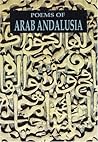
Poems of Arab AndalusiaPoems of Arab Andalusia by Cola Franzen
My rating: 5 of 5 stars

This is a very accessible collection of poetry that gives the reader entry into an exciting time and place that one could hardly reach otherwise. Originally written in Arabic and collected about 800 years ago in Andalusia, which is now in Spain but was then under Moorish control (and had been about 500 years at that point), it includes poems written centuries before that. There is such a mixture of cultures and peoples coming together in that period in that area--Christians, Jews, Muslims; Arabs, Berbers, Goths; speakers of Arabic, Spanish, all of their variants, as well as other languages--and such a melding of their various histories that I find it amazingly rich. This poetry reflects much of that, which is what attracted me in the first place. But there's more.

For one, it's a beautiful translation. It's odd, though; the translator worked with the Spanish version of these originally Arabic works. As is so often the case, necessarily, the formal rules of meter and rhyme that shaped the originals is not represented in the English version. I'm okay with that. In fact, I prefer it. Without imposing those constraints, the language and meaning and imagery and (many of the) figures of speech come through clearly, and it's those elements I most admire in poetry.

Here is a line spoken by a lover:
We were two secrets
held by the heart of darkness
until the tongue of dawn
threatened to denounce us

It is perfectly comprehensible to a modern mind, and we are empathetic to the speaker, feeling the sharp emotions of a stolen night of love and the approach of its inevitable end. And yet it seems fresh, the product of a unique mind expressing himself in his own way, preserving those thoughts in writing. This is the collection in a nutshell.

Also, the richness of the culture behind the poetry attracts me, and I want to know more. The joining or mixing of separate cultures is seen in so many verses where, for example, blonde-haired women are mentioned, or the bells of Christians are heard, and then the same Muslim speaker might then reference fountains or camels or gems or flowers or other details that sound distinctly Middle Eastern or Asian to a Westerner. Another connection is between the people and the land. It shouldn't be surprising--but it kinda is--to hear a Muslim Arabic speaker describing the land of Spain and how much he loves it:
Valley of Almería!
God grant that I never see
myself deprived of you!
...And you, friend, here beside me,
enjoy this time, for there are delights
in this paradise not to be found
in the eternal one.

Of course, his ancestors had been in that land many generations at that point, so there really is nothing strange in that except for the realities of the present that we mistake for eternal truth. But it is these striking combinations that make the poetry so special to me--finding familiar human emotions and familiar human thought clothed in unfamiliar images and terms. There is something both unifying and refreshing in that combination.

Additionally, and quite separate from the translation and my interests in the time and place, I feel these poems stand on their own simply as art. These works are universal in the best way and can be appreciated simply as human expression. This short poem is a nice example:
The wind does the delicate work
of a goldsmith
crimping water into mesh
for a coat of mail.

Then comes the rain
and rivets the pieces together
with little nails.

Although we find a lot of military imagery in these poems, those verses could come from any place and any time. The fact that it came from Abu l-Qasim al-Manishi in 12th century Seville is an interesting detail that does not need to affect the value of the art in any way. IMO, he could have been writing in any age and it would have the same impact and the same meaning.

Recommended. My only complaint is that it is a small volume, less than 100 pages. I would have liked twice as much.

View all my reviews

Monday, September 6, 2021

Will Shakespeare, Hero of the Occupation

Ruled BritanniaRuled Britannia by Harry Turtledove
My rating: 4 of 5 stars

This is another of those great "What if?" books that Harry Turtledove is rightly known for.

Imagining a victorious Spanish Armada and the occupation of Britain, it tells the story mostly of William Shakespeare being drawn into rebellious intrigues against the Spanish. He's getting along the best he can under the occupation when he's tasked with writing a play that will spark an uprising.

The logic of this alternate history is impeccable, the political and social ramifications thoroughly developed. This isn't how it happened, but it's a way it might have happened. The strange Elizabethan setting feels very real.

Shakespeare and his contemporaries are well drawn and compelling. Historic figures--Christopher Marlowe, Lope de Vega, his fellow actors, and the political figures like Sir William Cecil and his son--are fleshed out in a way that gives this story the feeling of history, and the minor characters (some invented, some actual people) are equally convincing. My favorite character is Cecily Sellis, the "witch" who lived in the same boarding house as Shakespeare and defied expectations. (She was probably the closest to a "fantasy" type character in the story, which in every other way feels like straightforward history.)

The author makes wonderful use of Shakespeare's lines throughout the novel, something I really enjoyed. (Despite being a high school English teacher, I'm an indifferent Shakespeare scholar, so I'm certain I passed over many of the quotes without noticing. But I caught plenty.) He works them into dialogue and banter as much as he uses them for the plays within the story, and they are often fun easter eggs without being obtrusive. It's the kind of erudition (no other word works) that is uncommon in modern fantasy as well as a reminder that we are fortunate to have a writer capable of pulling off a novel based on a premise this ambitious.

So, yeah, I liked it.

There is a lot of exciting action and entertaining subplots, especially the love life of Spanish writer Lope de Vega, though some of the middle does not move along with quite as much pace as one might like. The last quarter takes off again, though, and the loose ends are satisfyingly gathered by the end. Despite enjoying some bits more than others, I found it entertaining throughout, and I recommend the novel for fantasy readers as well as Shakespeare enthusiasts. And history people.

And now I have to go educate myself more on Lope de Vega, and I blame the author. ;)

View all my reviews

Saturday, October 10, 2020

Where El Cid Defends His Honor

The Poem of the CidThe Poem of the Cid by Anonymous
My rating: 5 of 5 stars

I've been wanting to read this for ever, and I'm glad I finally did. Not that hard; very readable; very instructive.

I'd like to be able to read it in Spanish, and that's kinda impossible, but I was surprised at how nearly readable it actually is. Printed with the original text on the left and the translation on the right, I found I understood more of the old Spanish than I expected. It is, after all, about 900 years old, and 900-year-old English is incomprehensible to most of us. But a lot of this is readable (with English help).

Example: "¡Ya, Campeador! En buen ora fuestes nacido..." translated is "Campeador, born in a fortunate [good] hour..." That's pretty close to modern Spanish, and many passages are similar.

Still, I read it in English, and the translators made it very readable, with a helpful introduction in the front and excellent notes in the back. Nicely done. It rhymes in Spanish, and I'm grateful that the translators didn't try to recreate that in English; that ruins translations, IMO. Instead, they wrote in simple prose, and it sounds great.

The story of the original poem is interesting all on its own, telling how El Cid left Castile in disgrace but fought his way through neighboring kingdoms, taking booty and collecting tribute, until his gifts to the king earned him into his good graces one more. The best part of the story (IMO) is the third part, which begins with his sons-in-law beating his daughters and leaving them for dead in the wilderness. (That's not the good part.) They recover and return to their father's home, and El Cid demands justice from the king. The king agrees. Cid defeats them in court and his champions defeat the cowards in combat. This section is more personal, more realistic, and gives a more concrete view of life in that time--the life of nobles, anyway--and I learned a lot.

Turns out, tugging on other people's beards was huge in those times; a man had to be vigilant to prevent someone doing it or he'd be shamed forever. Did not expect that. Good to know. :)

The English version in only about 100 pages long and is easily read in a short time. If you've thought about looking into it like I have, you oughta go ahead and read it. Recommended.


View all my reviews

Thursday, August 29, 2019

Where the Story's Too Damn Real, but I Like It

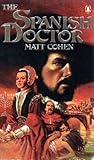
The Spanish DoctorThe Spanish Doctor by Matt Cohen
My rating: 5 of 5 stars

This is a hard book, a painful book, but a good one. Well written. Affecting. Not what I expected, frankly, but that's on me.

This is the story of a Jewish man in 14th Century Spain who becomes a successful doctor, much in demand, but finds that doesn't protect him from his enemies. As much as anything, it is a biography, following him across Europe and across the decades of his life. But in a broader sense, it is the story of the violence against Jews at that time in Spain and France and Italy and elsewhere in Europe, and the intolerable choice they were given--convert, giving up your identity, or face extermination at the hands of the mob, which was fully supported by the church. And, if you convert, be ready to be hated and attacked anyway.

There was one more choice: move away, losing everything, but still face the same violence in another country, sooner or later.

It is suffocating and horrifying to read about Avram Halevi and how he tried to navigate a world that hated him from birth. Before birth, really, as he was conceived when a Christian rioter raped his mother. This theme continued throughout. There were no right choices for him or for his people. There was no "Just leave us alone" option. There was no hiding. There was only murder and destruction, followed by the survivors rebuilding and moving on.

This novel is more literary than I expected; I took it for more of a genre novel, historical fiction with a triumphant hero sort of thing, but it's not that. As a result, the pacing is different than I looked for, the story and conflict broader. But I liked it, despite my scant appreciation, usually, for literary novels. The writing is spectacular, the canvas is wide, the history is engrossing, and I'm glad I gave it a chance.

Some of it is ugly. Some is brutal. Some is tragic. But some is beautiful and even hopeful. I'm gonna hold on to those bits.

Recommended, especially for those who lean toward literary fiction.

View all my reviews

Monday, August 26, 2019

I Finally Learn Who Roland Was

Swords of AnjouSwords of Anjou by Mario Andrew Pei
My rating: 5 of 5 stars

This is an older book--1953--but it's written in the style of much older books, romances such as those Don Quixote would have read, and I enjoyed it.

It is the story, more or less, of Roland from The Song of Roland. Charlemagne and his army are leaving Spain after forcing Zaragoza to surrender, and as they reach the passes through the Pyrenees, the defeated army attacks the rearguard and kills them all, including the famous Roland. The main army returns and defeats Zaragoza once more. The author adds characters from other tales and invents a few more to add love stories and subplots, making them the main characters in the story, following a tradition (according to the author in the historical note at the end) of retelling the Roland story with embellishments and a change of focus. I like that kind of invention and retelling; I enjoy the many forms of Sherlock and Wizard of Oz and Robin Hood and Cinderella; I think that's a fun way to renew a story, and I think it works here.

The author keeps his characters true to the times, which sometimes is annoying. The misogyny and narrow-mindedness and religious bigotry of middle age men is wearisome. That's not his fault--people were horrible, then as now--but 2019 me wants them to learn a lesson. Alas.

It is a fun story, though, if we can overlook our heroes' painful flaws. They also have admirable strengths. The courage and loyalty on display here are as impressive as the chauvinism is disappointing. It is inspiring to see men (and women, in some cases) sacrifice everything for a principle. After seven years, I want to go home, but I will fight on. I will give up the love of my life to serve my nation. The reader has to wonder--would I be able to sacrifice so much for a vow I made, for a principle I believe in?

I dunno.

So--problematic characters seem to reflect problematic times, not a problematic author. But YMMV. I liked the book, the story, the history.

Recommended.

View all my reviews