Showing posts with label fiction. Show all posts

Tuesday, July 7, 2026

Where Lara Chooses Her Life

Tom LakeTom Lake by Ann Patchett
My rating: 4 of 5 stars

This is a very sweet, touching book, beautifully written. Not all of it is sweet, TBH; there are real touches, real life and real pain, even bits of darkness. But overall, it's got a kindness and gentleness that is endearing and pleasant and funny and then, I guess like real life, melancholy.

Any story that tells most of a life always feels that way to me.

I liked it, actually. I loved the narration, the story of young Lara in the past and the grown woman in the present. (I've seen Ann Patchett enough on social media that I heard the whole thing in her voice. She seems like a good person. So does Lara.) I appreciated the writing, which is seldom my main interest, but is very... smooth. And overall, I thought it was a successful book, one that wasn't quite aimed at me but I still liked, one that would probably be somebody's favorite. For me, it's a 4-star book--good, not always fun, but pleasant enough, and skillfully imagined. I didn't fly through it, though I took the last fifth of it at a gulp. Others would surely see it as a 5/5 book. (Some others might never open it. So--you know.)

Lara is retelling the story of her life to her three daughters over many days as they work on their Traverse City cherry farm, and the story goes back and forth between that present reality (in the time of COVID) and her youth, when she became a pretty successful actress but didn't keep it up. The center of the story was her relationship with Duke, a character who, in the novel's world, became a famous actor loved by everyone. We get a little Lara and Duke, a love story, then we get some Mom and daughters (with her husband making small appearances). Past and then present. The author does a great job of helping us keep straight what is happening when, which words are meant for the characters and which are only for the reader, and so on, and she does it seamlessly within the narration. Very nice.

A bigger star of the story, in a way, though he gets fewer pages, is Duke's more responsible brother, Sebastian, and the scene at the very end between Lara and Sebastian is the most emotional part of this book for me. They both loved Duke, but neither could save him from himself.

One of the things I liked about this was how real it seemed, filled with regular (to me) people, not being set in all the usual places. Yes, there's a bit of New York and a bit of LA, but it's mostly New Hampshire and Northern Michigan. It felt to me, as a native of Michigan, that this story could have actually happened (I guess at Interlochen Center for the Arts instead of Tom Lake, though Traverse City is a real place). And it could have happened to the kind of people I grew up with, I suppose, people from the midwest or small towns. That added a layer of reality to the novel that set it apart for me.

Lots to like. Recommended. I actually only picked it up because Ann Patchett is so likable on TikTok. Now I'm required to try another book. Not a new book, necessarily, but if I've never read it, it's new to me.

(IYKYK.)

View all my reviews

Saturday, July 13, 2024

Where the Rules Must Be Followed

CranfordCranford by Elizabeth Gaskell
My rating: 4 of 5 stars

This is a very pleasant little book.

It's not an adventure. Very few elements of a love story. Not a lot of snappy dialogue. But I would call it charming book and an enjoyable read.

Most of the characters here are older ladies in a quiet little town that somehow has very few men attached to it. The women are particular in their habits and expectations. They do not break the rules very often. And they don't associate with those who do. They're crotchety at times, but most of them, especially Miss Matty, who is really the MC, are quite thoughtful and kind. This tells how these ladies get by while living, most of them, on a reduced income, but still trying to maintain appearances and never be vulgar.

As an American, it is so eye-opening to read this, speaking in terms of class and rank and gender. It's so horrible to see how every life here was stunted by being required to fit in narrowly defined roles. Miss Matty might have married and been happy, but was talked out of it because he wasn't the right type. Lady Glenmire, the highest ranking woman in the story, is looked down on for marrying a man of lower rank. Young domestics are discouraged from having "followers," and when Martha is allowed to see a man once a week, it's a huge liberty. And Miss Matty's brother leaves England as a young man after he's beaten for a silly prank that would mean nothing to anyone I knew but embarrassed his father to the point of rage. It's only as an old man that he is reunited with his sister--the one who never married.

So often, Matty tries to guess what her severe sister would have said about this or that, wondering if it is allowed, as if going to see a magician could be wrong, or calling someone by a nickname, or visiting too openly with tradespeople. Behavior that would be considered so arrogant and rude that it would be unthinkable is considered proper here and is applauded. Kissing up to one's "betters" is also expected. It's so strange.

But in context, it's just how their lives were managed. I wish they had felt freer to make different choices, and maybe the author did too, but they still had pretty happy lives. The book is sad in places, and there are disappointments, but overall the story is hopeful and sweet.

The TV miniseries of this seems very faithful to the overall contours of the story, though it elaborates a bit on the book in places. But all of the events in the book are in the show, or so it seemed to me as I read.

Recommended for those who think they like Elizabeth Gaskell. You will likely enjoy this.

View all my reviews

Saturday, July 8, 2023

Why You Should Read Something Else

Madam President (Charlotte Kramer, #3)Madam President by Nicolle Wallace
My rating: 2 of 5 stars

The author seems like such a nice person. Lemme just acknowledge that.

But this is such a very bad book. I can't believe how bad. (I would only give a 1-star if I found something hateful in the book. There isn't anything like that. It's just a bad book.)

And I don't want to give *all* the reasons, or explain in too much detail, but I have to give some justification. In summary: 1, there's so, so much info-dumping exposition, mostly explaining things we never need to know, sometimes for pages at a time, and it's all through the book; 2, the prose is so dull and unprofessional; and 3, literally nothing important happens in the plot.

It sounds like a thriller--multiple terrorist attacks on the same day; what will the president do?

But it's not a thriller, because the answer is that she works really, really hard on the mf speech set for the end of the day. Over many chapters. In fact, the actual plot is how the president's people struggle to control the message. It's not about rescuing the injured; it's not about tracking down leads to see who committed the crime; and it's not about the response to the terrorists. (Well, just barely, in the tacked-on "one year later" sort-of epilogue.) No, instead it's about the press corp and who's leaking to them and how the president's team works to keep the press happy and how her cabinet squabbles over communication tactics, trying to make the president look as engaged and presidential as possible throughout the day, especially in the speech. OMG.

All talk. All spin. All messaging. So crushingly dull.

Once in awhile I finish a book I should have DNF'ed. This was one of them. Seriously, the author is so sweet, I kept rooting for her to pull it together somehow as I half-read, half-skimmed the final 100 pages...

But nope.

Not recommended.

View all my reviews

Wednesday, February 15, 2023

Where It's Not Science Fiction, but It's Fun

Around the World in Eighty DaysAround the World in Eighty Days by Jules Verne
My rating: 4 of 5 stars

This was surprisingly entertaining.

I read 20,000 Leagues Under the Sea a while ago, and I didn't really like it. I thought that was the one I was most likely to enjoy. I had the opposite expectation for this one, and yet it turned out to be pretty fun. I thought there was supposed to be some old-fashioned science fiction elements in it, and there were none, but it worked fine as an adventure novel.

There are some serious flaws in the work, including racist and Eurocentric views that can't be glossed over, so this book wouldn't do well, say, in a modern classroom. Unless you wanted to look specifically at those topics, I suppose. But these flaws are not unexpected. (The anti-American language and bias was a little unexpected, but I kinda laughed at it. Between Charles Dickens, Sir Arthur Conan Doyle, and Jules Verne, one can see that Europeans have been maligning Americans as fools and thugs for a long time.)

Otherwise, the novel is successful, IMO. It's engaging and well paced with characters I was interested in. There's also something exciting about the world at that time--bigger and less thoroughly understood with more adventures possible than now. Steamboats and trains are in a nice groove between horses and sailing ships on one hand and cars and jets on the other. I love that Indiana Jones adventure vibe.

Anyway, it gives me hope that I may enjoy the other stories waiting for me in this omnibus edition, eventually. We'll see.

Recommended, with caveats regarding 19th century colonial attitudes.

View all my reviews

Friday, June 14, 2019

Thoughts While Reading a Book Dad Loaned me Years Ago

Last of the BreedLast of the Breed by Louis L'Amour
My rating: 4 of 5 stars

I can't write a regular review on this book. I liked it, and rated it as objectively as I was able, but I don't feel free to comment on its merits. Even though I have some thoughts along those lines, that wasn't why I read this.

This was my dad's book, and reading it now was a kind of goodbye.

My dad was a reader, so we always had that in common, even though we usually read different genres. He liked lots of things but leaned toward Westerns, and he loved Louis L'Amour, reading all or almost all of his novels. "Christmas '86" this one says on the inside. (Not sure who gave it to him. Mom? Marg? Don?) He thought I would enjoy this particular book, out of all of them, and loaned it to me a loooong time ago. I meant to read it way back then but set it aside; at the time, his recommendation and loan was a small thing, one interaction among hundreds.

He died many years since, and I inherited lots of both parents' books. Even though it wasn't the usual route, this one became mine, too, I suppose.

I've handled the book a few times but somehow always shelved it again. I can't say why now, but it felt like the right time, and I finally picked it up. I think I knew it would always be more than just a book--and so it was.

I was aware as I read it that Dad had read each of those words ahead of me, out of the same book, off the same page. The words connected us, and it was like having a long-delayed conversation. Looking over his shoulder, or with him looking over mine, we followed the main character in his flight across Siberia, crossing rivers, climbing mountains, trying to survive and get back home. It's not a profound story but an everyday one, something read in the normal course of life just for enjoyment, like watching a ball game in the afternoon, and it's more real for all that. We rooted for Joe Mack together and wished bad luck on his enemies, watching the action in our mind's eye, and though I don't know if we pictured everything the same way, I suspect it was pretty close.

It was a pleasure having that time with him all these years later, something like a Field of Dreams game of catch, sharing these words and this story with him. (He would have been only a few years older than I am now when he read it. Strange to think.) But once started, it had to end. It was bittersweet nearing and finally reaching the last page, finishing this last conversation, this last shared story, but I'm grateful for even these few hours. I'm aware that they were never promised.

So, Dad, I enjoyed the book. Thanks for the loan. I'll just hold onto it for you, if that's okay. And I'll say goodbye, one extra time.

View all my reviews

Friday, May 17, 2019

Where I Tone Down the Raving for a Book I Liked Better than I Let On

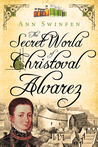
The Secret World of Christoval Alvarez (The Chronicles of Christoval Alvarez, #1)The Secret World of Christoval Alvarez by Ann Swinfen
My rating: 5 of 5 stars

I enjoyed this novel, and it succeeds on many levels. It is fun to read (my main criterion, actually), it deals with themes I care about, it has characters I enjoy knowing, and its well-rendered setting, besides lending the story additional realism, is an engaging source of information.

This is primarily an Elizabethan spy story with a young doctor drawn into the intrigue, which, come on, is good fun. The action is broken up by scenes of Christoval's life and work, which helps to ground the increasingly fantastic spy story. He has his own spoilery secrets which threaten to emerge, adding to the conflict and tension. As a character, Christoval is sympathetic and engaging, with a great backstory: his family is Jewish, from Portugal, forced to hide their religion and flee to England, and he has his own additional secrets. His skill as a doctor, a mathematician, and a musician is part of what makes his story fun--he gets to be awesome sometimes, which I love, watching him save lives and break codes. All within reason, though; He's still a teenager in a dangerous world, not a superhero, and the author does not forget that.

A number of interesting themes emerge through the course of the story. A central one is the place of religion in society. As one of the "hidden Jews," (referred to, uncomfortably, as Marranos, which is acknowledged as a slur but shows up in a casual way a number of times), Christoval is sympathetic to the Catholic conspirators who are forced to hide their religious beliefs in Protestant England. How can a citizen be blamed, he wants to know, for adhering to a religion that was once obligatory? Especially when it passed out of favor, then back in, then back out once more? His ambivalence about bringing such people to justice makes him more believable and sympathetic. Other themes are: wealth disparity (inevitably); the oppression of women; tradition's primacy over new knowledge; and the violence inherent in the system. ;) Happily, these are allowed to surface in a natural way, adding welcome depth to the novel.

The setting is nicely developed with convincing detail. I found it educational, and can only hope and assume the information is accurate. :) How would I know?

I am glad to recommend this novel to other readers. Such quibbles as I have are swamped by my approval, and I can say it was a pleasure to read. I recommend that I go look for sequels.

View all my reviews

Thursday, March 21, 2019

Immoderate Praise for Another New Sherlock. Much love.

A Study in Scarlet Women (Lady Sherlock, #1)A Study in Scarlet Women by Sherry Thomas
My rating: 5 of 5 stars

This is an impressive novel.

I love the main character--which I was predisposed to, already approving of most incarnations of Sherlock--but Charlotte in this book is unique and impossible not to adore. She enjoys the usual suite of Sherlockian skills, but her solution for an intractable problem--how to achieve an independent life of her own, something the original Sherlock never had to think of--was ruthlessly brilliant and somewhat heartbreaking. I also loved Mrs. Jebediah, who adds so much color and interest to the story and became someone to root for. Lord Ingram and his wife and Inspector Treadles (and his wife!) are all interesting in their own ways, and sympathetic, and they all point to the same theme.

Regarding the theme of the novel, I enjoyed and agreed with it, which was an analysis of the "woman question" and the restrictions placed on women at this time. Seeing the pressure put on remarkable women (Charlotte and Inspector Treadles' wife, Alice, and others) to be subservient and perform no useful work brings the question into stark relief, illustrating for the reader what a waste such restrictions were, and how damaging to women's lives. But the effect on average women, those with no power, money, or connections, is shown to be even more cruel, and such women's hopes for fairness even more illusory. Over and over, the actions of characters and the plot are propelled by this asymmetrical tension, by men holding down and taking advantage of women while those women fight to maintain as much autonomy and control as they could manage in an unjust society.

And yet it's a murder mystery. With romance. And Sherlock's signature parlor-trick discernment. All fun things.

A good novelist invents engaging plots and maintains reader interest with effective pacing, which the author does here. But a good novelist is also a good writer, and Sherry Thomas is that. The prose here is wonderful and always tied to her purpose--clues and plot points laid out in clear language, characters speaking in unique voices, beautiful passages where appropriate. In fact, I would say that it is noticeably good writing, which is not a thought I often have. Satisfying, engrossing, and fun--nice combination.

It's impossible, reading this novel, not to think about the intelligent and gifted women in my own life. I think how different things are now from 100 or 120 years ago, how their lives (and everyone else's) have been impacted by generations of change, but at the same time I am confronted by things which have not changed yet. I was pushed to an awkward amount of thinking while reading and reflecting on this novel, and for that, I'm grateful to the author.

View all my reviews