Showing posts with label 19th Century literature. Show all posts

Sunday, June 28, 2026

Where Gotzkowsky Gets Disappointed

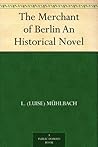
The Merchant of BerlinThe Merchant of Berlin by Luise Mühlbach
My rating: 4 of 5 stars

This novel by the 19th century German author Louise Mühlbach tells part of the life story of a real merchant from the 1700s in Berlin. It is a novel--this is fiction--but the factual heart of this is based on his own autobiography. I liked it and thought it worked pretty well as a novel.

[The antisemitism is open, though, and unrepentant. Many readers will find it disqualifying, even when taking into account the time and social conditions it was written under. I am sympathetic to that perspective, but I'll proceed as if it's possible to forgive long-dead writers for their bigotry, or at least temporarily ignore it.]

The story follows the contours of Shakespeare's Timon of Athens. Here we have a rich merchant who treats his workers well, supports his city, is generous with his money, and is beloved--at the beginning. Timon started the same. Gotzkowsky uses his money and influence to protect Berlin when it is invaded by the Russians, personally cosigning a huge ransom for the city if they would not destroy the place. He intercedes for journalists, other merchants, and the residents of the Jewish quarter, all of whom were going to be beaten or impoverished, and after the Russians leave the whole city celebrates their hero. But near the end of the novel--as in Timon of Athens--reversals beyond his control make him unable to pay his debts, including the ransom owed to the Russians. All those he had helped refused to help him, just as Athens refused to help Timon. He ends bankrupt. (Timon goes off into the wilderness and curses humanity from that point on. Gotzkowsky doesn't go that far, though he's pretty mad.)

There is more to the book, including his daughter's love story and some other subplots, and it's entertaining in that old historical novel way. The business and financing stuff reminded me of similar events in The Count of Monte Cristo, which I must confess to not completely understanding... But it reads pretty fast and actually has a pretty happy ending. I thought.

Half the point in reading a novel like this (for me) is learning about the time and place, in this case how people lived in Berlin in the 1700s, what their world was like. I found that interesting. And the theme of a principled, generous man being forgotten by all those he had benefitted is as timely now as ever. Timon regretted all his generosity and hated all men for the rest of his life; Gotzkowsky celebrated keeping his honor even in poverty. That's probably a better way to react.

Some readers will enjoy this. Cautiously recommended.

View all my reviews

Thursday, March 13, 2025

Where Louisa Resists Being Crushed Under the System

Hard TimesHard Times by Charles Dickens
My rating: 5 of 5 stars

I enjoyed this more than any Dickens novel I have read. I'm not sure I'd go to the difficulty of arguing that this is his best novel, whatever that means, but I can say it's the one that I had the best time reading.

[Bleak House, maybe, could be his "best" book--IMO, I mean, not in some universal way--and A Tale of Two Cities, despite its overexposure making some dismiss it, should be in the same conversation. But neither was as fun to read, even though they had their charms.]

What's the difference? I think it's largely scale. Most of his books are [searching for a kind word...] freaking bloated and in dire need of editing. I get it. That was the norm, the expectation, and he's just giving everyone what they want. In 2025, many fantasy readers ask for the same thing--a Big Fat Fantasy of a thousand or 1500 pages, filled with "world-building," lots and lots of characters, as many POV characters as you can manage, with tons of subplots. Some of those are, to me, grossly padded and dull, but to readers who just want to be in it, to get lost, the length is the key. I feel like that's what a lot of Dickens readers want, too--enough pages to get lost in, to have room to be in the middle of it for a good long time, even if that means lots of secondary characters making lots of long, pointless speeches. (I'm looking at you, Pickwick Papers. And you, Martin Chuzzlewit. And The Old Curiosity Shop. Even you, David Copperfield and Nicholas Nickleby.) And to be fair, there's a lot to enjoy in any case in those very long books. I enjoyed parts of every one of those, and overall found them worth reading. Some people (forgive my incredulousness) actually find the ridiculous speeches of ridiculous characters funny. They find blowhards holding forth, page after page on dry-as-dust topics, amusing in their intentional excess. Bless them for that ability. I don't have it, and it made it hard to finish some of those books.

But this novel doesn't make that demand on the reader. We have one main story in one main setting, and the subplots branching from it are connected and integral and interesting. Nearly every chapter advances the plot, giving us meaningful action and emotional, engaging connections between characters that kept me reading more than his other books.

The plot itself is more direct than is usually the case, with a shape and an arc that are clear enough that we don't wonder where we're going. Louisa and her brother are raised in a no-nonsense home, taught to suppress genuine emotion, to make their wishes and dreams subordinate to practical concerns, especially money. Louisa is taught to be compliant and is married off to a rich old banker and industrialist and her brother goes to work for the man, which means they should be perfectly content. Of course, they aren't. Humans aren't made for such cold rationalization.

The dirty, smoky, impoverished industrial city of Coketown is the perfect emblem of this--the wish for beauty and health and color and happiness is subordinated to the need to earn a living and make money. The city is the system, and we find that it crushes lives, exploits workers, subverts justice, and harms even those sitting at the top of the it. Innocents are slandered. Workers who want to do more for their families, who want to organize to balance the power of the wealthy owners, are treated like criminals. Louisa's father, as an educator, wanted to raise up his children and his students to fit in that system, but it's doomed. He learns this himself, to his credit, and tries to make amends, which he does, to a degree.

(As an old teacher, it's hard not to recognize the parallels to modern education. I hope I did a lot better job making education itself more pleasant, but there are elements of the system--think high-stakes testing and similar state-mandated drudgery and pollution--that were unavoidable. Required. Where teachers are unable to modify or ameliorate the system, they try to prepare students for it. "Yes, this is stupid, but let's make it hurt you as little as possible." As misguided as her father was, that in effect was what he was trying to do--he was making square pegs fit industry's round holes, with all the violence and good intentions that suggests.)

Despite the literal gloom here, it's not a sad novel, really. In parts, yes. But there is hope, and growth, and some good people have good things happen. You have to feel sympathy for the poverty and smoke and horrible work, and I do, but there's a feeling that better things are coming, or are at least possible, and Sissy's children (mentioned on the last page) are a sign of that. And it's told in a way that I found more than usually entertaining, making me push farther each time I picked it up than I usually do, interested in what was going to happen next, wanting to find out what happened to the characters. You know--fun.

It was good. I liked it. 5 stars.

View all my reviews

Thursday, February 20, 2025

Where It's More Science than Fiction

From the Earth to the MoonFrom the Earth to the Moon by Jules Verne
My rating: 2 of 5 stars

This is not a very good book. In fact, I would argue it's not really a novel.

Not because it's short. It is a little short, but it's longer than many pulp novels.

It's that it doesn't contain many of the attributes of a novel. The characters are almost dispensed with for about half of the book--we are instead given calculations and science as if it's textbook.

[skim or skip, by all means]:

But, in order that the moon should reach the zenith of a given place, it is necessary that the place should not exceed in latitude the declination of the luminary; in other words, it must be comprised within the degrees 0º and 28° of lat. N. or S. In every other spot the fire must necessarily be oblique, which would seriously militate against the success of the experiment.

As to the sixth question, "What place will the moon occupy in the heavens at the moment of the projectile's departure?"
Answer.— At the moment when the projectile shall be discharged into space, the moon, which travels daily forward 13° 10' 35", will be distant from the zenith point by four times that quantity, i.e. by 52° 41' 20", a space which corresponds to the path which she will describe during the entire journey of the projectile. But, inasmuch as it is equally necessary to take into account the deviation which the rotary motion of the earth will impart to the shot, and as the shot cannot reach the moon until after a deviation equal to 16 radii of the earth, which, calculated upon the moon's orbit, are equal to...

There are pages and pages like this, describing the motion of the moon, the stresses put on the cannon, the type of gunpowder needed to create a certain kind of explosion, the kind of explosion necessary to move an object of a particular size, the size necessary to make it big enough to see it with a telescope, and the kind of telescope that would needed to do the job... and so on. The text fetishizes numbers and calculations, reveling in them, as if inundating the reader with math and jargon would make us forget how foolish it all is. That's fine. But he forgot a plot. Really, the plot is just planning it and building it and firing it, and much of that happens in a remote way, by unseen hands, and there's virtually no tension or interest anywhere.

The characters are rudimentary and given almost nothing to do except narrate like professors. (There's a tiny bit of personal conflict between the MC and his rival, but that fizzles.) The story reads more like a documentary, or maybe an HGTV renovation show, where it just shows how a job gets done. Except those shows have more humanity in them than this book.

The conflict--"we must build a giant cannon to shoot something to the moon"--is a legitimate conflict, potentially, but it's not given to humans to solve; it's given to physics. The only real obstacle was solving for x. There was a tiny bit of fundraising, but it also amounted to nothing.

Really, this book is what you get when a documentary and a physics textbook love each other very, very much.

And no conclusion, really. The cannon is shot, so you can claim it as a sort of climax, but we know nothing of the three men inside the projectile. Do they survive the initial firing? Does their science work well enough to provide air while they're in there? Do they fight? Are they scared? If he had told the story from their perspective, it would be a lot closer to a novel. Instead, like the crowd gathered to watch the projectile launched into space, we see it fired from the cannon and then... we just wander off, none too sure what, if anything, has been accomplished.

This could have been a very cool short story, and still could be, if we chopped about 80% of it.

Anyway, I didn't hate it, despite my rant. It was interesting as an example of the origins of science fiction. He was aiming for hard science, like Robert Heinlein or Arthur C. Clarke, Liu Cixin or Andy Weir, and it needed to start somewhere. It reminded me of Robinson Crusoe, the way that book also focused on specific, tiny, scientific details--building a home with poor tools, husbanding crops, solving all the problems of survival alone on a desert island--and the through-line from Robinson Crusoe to this to The Martian is pretty clear. I found it worth reading even if just for those insights.

Not much recommended. But who knows? You might like it.

View all my reviews

Saturday, July 13, 2024

Where the Rules Must Be Followed

CranfordCranford by Elizabeth Gaskell
My rating: 4 of 5 stars

This is a very pleasant little book.

It's not an adventure. Very few elements of a love story. Not a lot of snappy dialogue. But I would call it charming book and an enjoyable read.

Most of the characters here are older ladies in a quiet little town that somehow has very few men attached to it. The women are particular in their habits and expectations. They do not break the rules very often. And they don't associate with those who do. They're crotchety at times, but most of them, especially Miss Matty, who is really the MC, are quite thoughtful and kind. This tells how these ladies get by while living, most of them, on a reduced income, but still trying to maintain appearances and never be vulgar.

As an American, it is so eye-opening to read this, speaking in terms of class and rank and gender. It's so horrible to see how every life here was stunted by being required to fit in narrowly defined roles. Miss Matty might have married and been happy, but was talked out of it because he wasn't the right type. Lady Glenmire, the highest ranking woman in the story, is looked down on for marrying a man of lower rank. Young domestics are discouraged from having "followers," and when Martha is allowed to see a man once a week, it's a huge liberty. And Miss Matty's brother leaves England as a young man after he's beaten for a silly prank that would mean nothing to anyone I knew but embarrassed his father to the point of rage. It's only as an old man that he is reunited with his sister--the one who never married.

So often, Matty tries to guess what her severe sister would have said about this or that, wondering if it is allowed, as if going to see a magician could be wrong, or calling someone by a nickname, or visiting too openly with tradespeople. Behavior that would be considered so arrogant and rude that it would be unthinkable is considered proper here and is applauded. Kissing up to one's "betters" is also expected. It's so strange.

But in context, it's just how their lives were managed. I wish they had felt freer to make different choices, and maybe the author did too, but they still had pretty happy lives. The book is sad in places, and there are disappointments, but overall the story is hopeful and sweet.

The TV miniseries of this seems very faithful to the overall contours of the story, though it elaborates a bit on the book in places. But all of the events in the book are in the show, or so it seemed to me as I read.

Recommended for those who think they like Elizabeth Gaskell. You will likely enjoy this.

View all my reviews

Sunday, March 3, 2024

Where It Wore Me Out

The Pickwick PapersThe Pickwick Papers by Charles Dickens
My rating: 3 of 5 stars

I thought it was some heavy going, tbh.

I've come around some on Dickens; things I once found dry as dirt can now seem charming and goofy and moderately humorous. And most of his novels have characters I can care about and hope to see have a happy ending. You root for David Copperfield or Pip or Oliver Twist, and some of his books can evoke strong feelings. I even shed a tear or two reading A Tale of Two Cities.

But this book tried my patience. It is about nothing. It's more about nothing than any book I've ever read. Some guys hang out. They go to some places. They meet some people and get invited to their place. They drink--all the time they drink--and eat some stuff.

Somebody says I have a story, and we hear the story, even if it has nothing to do with anything else in the book. (A couple of the stories were significantly more entertaining than the main plot. The ghost story set in warehouse of old carriages was actually pretty cool.)

So what's the plot? What do they want to do? What is anybody's intention? Goal? Purpose? Is there a plot in the normal sense? (My opinion is no, unless you're willing to stretch the definition of plot a long way.)

Dickens always includes a lot of nonsense, partly for the sake of satire and partly (I suspect) to pad his word count. He likes to belabor meaningless incidents and transcribe every word in every pointless conversation. It's in all his books. He really liked having minor characters talking about random stuff, especially if they have impenetrable accents. I think it's meant to be funny, and I expect there are people who actually find it funny, but I never ever ever ever do. I try to work though it patiently to get to the parts that matter in my estimation, but that pointless nonsense is the heart of this novel. If you took out the eating and drinking and irrelevant conversations, the book would be about 50 pages.

I liked his servant, who was smarter than everybody else and did some good stuff while nobody was looking. He was more often entertaining, and his contribution let me give this a barely-passing 3 in good conscience. And I liked the happy endings, though I could not tell any of the minor characters apart enough to care who was Wardle or Winkle or Tubman or Snodgrass. It didn't really matter, though. That was the problem.

This was an early work, and he makes enough adjustments to let me enjoy his later writing more. I found this pretty hard to like.

Not recommended unless you really love Dickens in general.

View all my reviews

Wednesday, November 22, 2023

Where the Lady and the Painter Fall in Love

AntoniaAntonia by George Sand
My rating: 4 of 5 stars

This is my introduction to George Sand, and I enjoyed it very much. I bought a small collection of 1898 Sand novels that started their life in a public library in Nebraska (last checked out in 1975--the card is still in it), and they are somewhat fragile but still hanging in there. I have six more such novels waiting for me, and that feels like riches.

This is the story of the Countess d'Estrelle--Julie--a widowed woman left in debt by her husband, who is facing all kinds of pressure by her friends in high society to live a certain way while being threatened by her creditors. Her father-in-law's second wife is in both categories, and she is a pure villain who will not lift a finger to help her with the debts her stepson left her with. Everyone is so invested in Julie's marrying some rich aristocrat, including her friends, that they bring every kind of pressure to bear against her. M. Antoine, her solicitor's rich old uncle, buys up her debt to use it against her, mostly to make her marry him, though he loves no one and doesn't seem to want anything from her except her humility. He works with her cruel mother-in-law at one point to force her to do what they both want.

This is complicated by a love story. A young painter who lives on the property beside Julie's home, adjacent to her garden, is in love with her. His mother (also a widow, also left in debt by her husband, and also from an aristocratic background) becomes friends with her and visits her in her garden, but the young man--Julien--cannot be friendly with the widow and visit the garden because he is a man and like his father is working class. Still, he sees her in the garden sometimes through the blinds in the room where he paints, and inevitably they meet and really fall in love. It's a very nice love story, in parts.

But wow, the conspiracies against them... The rich old man, the solicitor's uncle, is also Julien's uncle, and he suspects they are in love and he will do anything to keep them apart. In the end, he arranges matters so that Julien and his mother will be supported in the nice home they used to live in and Julie will have her debts paid and be allowed to keep her home (hotel in the novel), as long as they don't meet again and never try to marry. If either breaks the agreement, all lose and end in poverty. Nobody wants to be responsible for ruining the lives of the others, especially hurting Julien's old mother, so they agree to it.

If this were the end, I would kinda hate it, but it's not a horrible sad ending (spoiler--sorry). Ultimately, the rotten old uncle gives in when both Julien's mother and Countess d'Estrelle, independently, kneel for him to ask his pardon for ridiculous imagined slights. Once he has that, he's willing to let everyone have a happy life. Yay!

I haven't researched this, but since it takes place just before the French Revolution, it feels like M. Antoine is deliberately made to represent the wealthy bourgeoisie who resent the old (often debt-ridden) nobility and want to take them down a peg--I'm as good as you!--but I don't know if the author wants it read as allegory. For certain, the ridiculous belief, so deeply held it was encoded into law, that the nobility were not to marry someone from the low classes, that they were innately different, innately superior to them, is mocked here. (I think that's awesome.) Julie and Julien are the best characters in the story, both of them selfless and virtuous, and they deserve each other.

The story is not very long, which I like, but it also has very few characters, which is less fun. Most scenes include only two people, sometimes three; there are no balls or parties in the story, and except one scene with maybe five characters meeting up it feels very lonely. I wonder if it could be staged as a play... Actually, yeah, it would be pretty simple to do that. Maybe it started that way. Hmmmm.

Despite missing the sights and sounds of dinners or big social events (as we might find in Jane Austen, I mean), I enjoyed this a lot, and I'm eager to see what the other novels on my shelf turn out to be like.

Recommended for readers of 19th century novels.

View all my reviews

Tuesday, November 21, 2023

Where Lady Windermere Has Many Protectors

Lady Windermere's FanLady Windermere's Fan by Oscar Wilde
My rating: 5 of 5 stars

I found this thoroughly enjoyable. Emotional. Witty. Funny. Clever.

What's not to like?

It's in this play that we find the quip, "I can resist everything except temptation." There are so many effective, witty quips in the play, you could probably write a book about them. Maybe there is one.

Lady Windermere has never had reason to suspect her husband, but another gentleman, Lord Darlington, reveals some actions which call his faithfulness into question. The facts are confirmed. Then her husband insists she invite the woman named in the gossip to the ball at their home. The setup is complete when, certain of her husband's shockingly open infidelity, Lord Darlington offers to take her away to live in true love.

In a fit of pique, she writes a letter to her husband and goes to meet her admirer. But Lady Erlynne reads the letter and chases her down...

There are many parallels with An Ideal Husband, but that doesn't detract from the charm of this rather cozy comedy. One can admire virtually every character here in one way or another (which reinforces the theme that no one is wholly good or bad, making such categorical distinctions among people foolish and harmful). I like Lady Windermere; I like her husband; I like Lady Erlynne, who still has a great deal of good in her despite her shocking career; and I like simple old Lord Augustus, who is willing to believe everything she tells him so that they can marry. I'm not too keen on Lord Darlington, but I can hardly blame him.

I'm surprised that there isn't a fun movie adaptation from this generation. (There is one poorly-received modern version, but I'm not eager to try that one.) It is very straightforward and rather brief; it would need a bit of fleshing out to be a 100 minute movie. But I'd go see it, for sure, if someone made it happen. (I'm manifesting another movie. It hasn't worked so far.)

I love Wilde's comic style, though it may not suit everyone. If you tend to like it, you should read or go see this. I thought it was great.

View all my reviews

Saturday, November 11, 2023

Where Paquita Can't Hide Her Feelings

When A Girl Says Yes (A Play)When A Girl Says Yes by Leandro Fernández de Moratín
My rating: 3 of 5 stars

I enjoyed this somewhat. I'm surprised it's considered a "great play," though there are things I like about it.

IMO, this three-act play could have been--and sort of is--a one-act play. There's a single set, and every scene is about how the young lady isn't showing much excitement about marrying the old man (and secretly likes someone else). Very straightforward--no subplots, nothing else of interest to shift the focus even for a minute. In fact, they run out of things to talk about. A lot of the dialogue ends up being redundant, enough so that I was thinking, yes, Paquita's mom, we know what you think...

That said, it's very readable and decently entertaining, though I think it's the theme that is most compelling. Poor Doña Paquita, trapped in a convent as a girl, is only being removed from that environment to marry old Don Diego, at the insistence of family. She actually loves her fiancé's son, Don Carlos, who found a way to visit her at night outside her room for several months, though they did nothing but talk. Keeping them apart, marrying her to a much older man, seems very unfair, even cruel, though we know many, many marriages were arranged in this way. Doña Paquita will do her duty to her family, but she is very unhappy and can't quite hide it.

In short, neither she nor her lover have actually done anything wrong, but their feelings are not being consulted, and they will be chastised for being normal young people. They're right for each other, and they've fallen in love, though they still respect their elders enough to do everything they're asked to do except be happy about it.

I grew to hate old Don Diego, but he ends up being a reasonable person, and expresses in clear language what a modern reader or theater-goer would think--that people should be allowed to choose for themselves who they marry:

"I could separate them forever and claim this lovable child for myself, but my conscience won't let me... He and your daughter were madly in love, while you and the aunts built castles in the air and filled my head with illusions that have vanished like a dream. This is the result of the abuse of authority, and the oppression our young people suffer. These are the assurances that parents and tutors give, and how far they should be trusted when a girl says yes... By accident I discovered my mistake in time. Woe to those who discover it too late!"

Abuse of authority. Oppression of young people. I agree with what he's saying.

So, a nice bit of melodrama with a happy ending. I like that.

View all my reviews

Monday, July 17, 2023

Where Rienzi Tried to Save Rome

Rienzi, Last of the Roman TribunesRienzi, Last of the Roman Tribunes by Edward Bulwer-Lytton
My rating: 5 of 5 stars

You are supposed to make fun of Edward Bulwer-Lytton. The contest named for him is a competition to write "the opening sentence to the worst of all possible novels," harking back to his "dark and stormy night" sentence. (Look it up. It's not that bad. In fact, I want to read that book.) Anyway, that's kinda nonsense. Yes, he writes like a well-educated 19th Century male novelist. That's what he was. High diction, occasionally archaic in tone. Long-ish sentences. A sometimes-intrusive narrator who directly addresses the reader. That does not set him apart from his contemporaries.

Give him a chance--that's my point.

This is a very entertaining adventure novel in the high romantic tradition. Set in Rome in the 14th Century, when the nobles were no better than robber barons, when the people had no allies and Rome was only half populated, a brilliant commoner named Cola de Rienzi rose to prominence and tried to restore some of the glory of the ancient city. (Think Alexander Hamilton, except he was liked by almost everyone.) In real life, recounted here in a fictionalized account, he leveraged the power of the people to evict the nobles and rule for a time as Tribune, bringing justice to the oppressed citizens, never forgetting he was himself a commoner. Later chased from the city by the resurgent nobles and their German mercenaries, and for a time imprisoned by the pope in Avignon, Rienzi rose again years later to retake the city (this time with the pope's support). But Rome looked a lot like other cities waking up from tyranny (Paris in the 1790's, Moscow and Russia in the 1990's), and the route to justice, fairness, opportunity, and safety was still a tough one.

Like other novels of the sort, we have true love, duels, intrigue, children wanting to discover their true parents, and honorable enemies (as well as dishonorable ones). Castles and palaces. Haughty noblewomen. All that stuff. But there's more! The plague hits Rome in the middle of the story; Petrarch is everywhere present and discussed, though never actually met; and some hippy type young people who look a lot like Boccaccio's ten story-tellers from the Decameron are revealed to be hedonistic and unlikable. In the midst of all this, the idealistic but highly intelligent Rienzi is trying to find the right way to lead a fractious people to a better society, scraping together whatever authority and support he can find. His wife, his sister, and his best friend work with him, but almost no one else, and yet he achieves amazing things. For a little while.

It's a great story.

It's the writer's language that put him on the "so bad it's just bad" list, and discourages people from reading him today, but here's a purely random page of his prose for you to judge:

As the traveller neared the city the scene became less solitary, yet more dread. There might be seen carts and litters, thick awnings wrapped closely round them, containing those who sought safety in fight, forgetful that the Plague was everywhere! And while these gloomy vehicles, conducted by horses, gaunt shadowy skeletons, crawling heavily along, passed by, like hearses of the dead, sometimes a cry burst the silence in which they moved, and the traveller's steed started aside, as some wretch, on whom the disease had broke forth, was dropped from the vehicle by the selfish inhumanity of his comrades, and left to perish by the way. Hard by the gate a wagon paused, and a man with a mask threw out its contents in a green, slimy ditch that bordered the road. These were garments and robes of all kind and value; the broidered mantle of the gallant, the hood and veil of my lady, and the rags of the peasant. While glancing at the labor of the masker, the cavalier beheld a herd of swine, gaunt and half-famished, run to the spot in hopes of food, and the traveller shuddered to think what food they might have anticipated!


I like it.

Rienzi is an admirable character, but so is his greatest enemy, the mercenary Montreal. They are sometimes friends, or at least friendly, and their interaction makes the story. But the other amazing aspect of this novel is the setting and how much the novel fills in (for me, anyway) the history of Rome between empire and modern times. It helps me see what life looked like there in those times, who it was who kept the lights on, so to speak, after it dwindled to a backwater. The author speaks with some authority on the topic and includes notes throughout, so even if his scholarship turns out to be out of date, it isn't made up.

And the history of Rienzi is well worth knowing. I'd never even heard of him before.

Recommended

View all my reviews

Wednesday, February 15, 2023

Where It's Not Science Fiction, but It's Fun

Around the World in Eighty DaysAround the World in Eighty Days by Jules Verne
My rating: 4 of 5 stars

This was surprisingly entertaining.

I read 20,000 Leagues Under the Sea a while ago, and I didn't really like it. I thought that was the one I was most likely to enjoy. I had the opposite expectation for this one, and yet it turned out to be pretty fun. I thought there was supposed to be some old-fashioned science fiction elements in it, and there were none, but it worked fine as an adventure novel.

There are some serious flaws in the work, including racist and Eurocentric views that can't be glossed over, so this book wouldn't do well, say, in a modern classroom. Unless you wanted to look specifically at those topics, I suppose. But these flaws are not unexpected. (The anti-American language and bias was a little unexpected, but I kinda laughed at it. Between Charles Dickens, Sir Arthur Conan Doyle, and Jules Verne, one can see that Europeans have been maligning Americans as fools and thugs for a long time.)

Otherwise, the novel is successful, IMO. It's engaging and well paced with characters I was interested in. There's also something exciting about the world at that time--bigger and less thoroughly understood with more adventures possible than now. Steamboats and trains are in a nice groove between horses and sailing ships on one hand and cars and jets on the other. I love that Indiana Jones adventure vibe.

Anyway, it gives me hope that I may enjoy the other stories waiting for me in this omnibus edition, eventually. We'll see.

Recommended, with caveats regarding 19th century colonial attitudes.

View all my reviews

Friday, October 28, 2022

Where It Ran a Bit Long

Little DorritLittle Dorrit by Charles Dickens
My rating: 3 of 5 stars

Not my favorite Dickens novel. I kinda thought I was gonna really like it, too.

TBH, it's just too damn long with too many unnecessary side characters. You can say that with some justice about every Dickens novel, but this time I really mean it. Over a thousand pages, with probably only about 400 of them fun to read, with a dozen subplots, about half of which are properly tied up.

Dickens likes to dwell on the arrogant and ignorant and obnoxious and haughty and slimy characters, and I suppose that's his charm, for some. Sometimes I can enjoy his villains and lowlifes and antagonists, like Flintwich and Clennam's mother. For the most part, though, I like the good guys, the underdogs, the kind ones, the morally defensible people. Here, that's Little Dorrit (Amy) and Mr. Clennam and just a couple others. But instead of making the story about them--which it absolutely is, particularly at the end--we get Mr. Dorrit and his rotten daughter Fanny, and the tedious Mr. Gowan and Pet and Tattycoram and Miss Wade, and Mr. Merdle the fraud along with all the rotten folks at the Circumlocution Office. Then all those people fall away, sometimes moving the plot forward but mostly not, and we finally get back to the people that matter. Visually, the story arc is a curve at the beginning and a curve at the end with miles of scribbles in the middle.

IMO.

I support his rhetorical goals for the most part: describing the grief of poverty and futility of debtor's prison, the uselessness of government bureaucracy, the lure and false promise of unregulated investing and speculating, and the disgusting self-congratulations of wealth. I'm not as keen on duty as he is, but I can appreciate loyalty in any case, and humility, and patience, all of which he gives to a few characters like Little Dorrit and Mr. Doyce. I just wish their stories hadn't been shared with so many dull and pointless others.

Some things to like, anyway. But I'm not gonna read a Dickens novel for awhile. This wore me out.

YMMV.

View all my reviews

Monday, May 23, 2022

Where Kenelm Finds Himself

Kenelm Chillingly: His Adventures and Opinions; Rienzi, the Last of the Roman TribunesKenelm Chillingly: His Adventures and Opinions; Rienzi, the Last of the Roman Tribunes by Edward Bulwer-Lytton
My rating: 4 of 5 stars

I liked this book. I thought at times I would love it, and there were passages I did love, but not quite overall. In any case, it's interesting and thought-provoking and definitely deserves more than the almost hostile obscurity it has fallen into.

The novel is written by Edward Bulwer-Lytton, of "dark and stormy night" fame. On account of that famous novel opening, the worst first-line competition is named for him--rather unfairly, I think--and has poisoned his novels in the mind of the public. I always had the impression that it suggested purple prose, which I kinda like, tbh, and was rooting for, but it doesn't; those who have read his work are more critical of his high diction, long sentences, and complex syntax. He does go on a bit, for sure, perhaps more than Dickens or Scott--but no more than Hugo, and certainly less than Sterne.

Speaking of which--in the beginning, when his father convenes a family council to select his name, he refers directly to Tristram Shandy, and you can see some of Sterne's influence in that section and elsewhere. But this novel's got a tighter plot than Tristram Shandy; things actually happen. Still, the narrator is often quite intrusive, in tune with other 19th century British writing. (You might skim the following, or skip ahead if you prefer.) It sounds like this:

Mr. Travers is listening to a young man of about two and twenty, the eldest son of the richest nobleman of the county, and who intends to start for the representation of the shire at the next general election, which is close at hand. The Hon. George Belvoir is tall, inclined to be stout, and will look well on the hustings. He has had those pains taken with his education which an English peer generally does take with the son intended to succeed to the representation of an honourable name and the responsibilities of high station. If eldest sons do not often make as great a figure in the world as their younger brothers, it is not because their minds are less cultivated, but because they have less motive power for action. George Belvoir was well read, especially in that sort of reading which befits a future senator,—history, statistics, political economy, so far as that dismal science is compatible with the agricultural interest. He was also well-principled, had a strong sense of discipline and duty, was prepared in politics firmly to uphold as right whatever was proposed by his own party, and to reject as wrong whatever was proposed by the other. At present he was rather loud and noisy in the assertion of his opinions,—young men fresh from the University generally are. It was the secret wish of Mr. Travers that George Belvoir should become his son-in-law; less because of his rank and wealth (though such advantages were not of a nature to be despised by a practical man like Leopold Travers) than on account of those qualities in his personal character which were likely to render him an excellent husband.


TL;DR--yeah, it can be wordy. But lots of it is still engaging and fun.

Kenelm is a highly educated, eccentric upper-class young man who travels around England and the continent through his mid-20's trying to learn how to fit in better. He excelled in college but doesn't know what to do with himself after. The way he stands outside society looking in for much of the novel makes him come off at times as almost autistic and other times, at a minimum, as super nerdy. Sometimes the conversations he gets into are deeply philosophical--everyone is willing to have long, deep talks with Kenelm--but that's part of his character and becomes almost a joke. But at other times he's honorable, energetic, noble, and even heroic, and would almost make a decent Georgette Heyer hero. (Not quite. The ending's not exactly sad--it suggests a productive future for him--but there's no HEA. For me, that was a bit of a let-down.) I bet if it were made into a miniseries, we could manage a happier ending. He has no fans to enrage, as far as I can tell...

Anyway, I kinda liked it. Enough to look at some of his other novels. I will keep you informed.

View all my reviews

Monday, May 24, 2021

Just Not My Bag of Worms

The Picture of Dorian GrayThe Picture of Dorian Gray by Oscar Wilde
My rating: 3 of 5 stars

I love Oscar Wilde plays, and he's an amazing writer, but I didn't like this book. Almost gave it a 2. All those people loving it must have some gene I'm lacking, cuz I don't get it.

Some of the language here is fantastic (which is why I bumped it to a 3). You can pick a page at random and find some pithy saying or memorable epigram and probably some witty dialogue, and if you don't find that then there's probably some fantastic description or useful insight. He can surely put the words together.

But I pretty much hated the story. And the characters. And the sh*t they talked about. And their collective attitude toward the world and everything in it. I hoped there would be something wonderful in the novel, but I just found it depressing, and I gotta say, I really don't care for depressing. Life's hard enough.

The action leads to some interesting discussions about life and art and morality (and the worthlessness of the moneyed class), and some of the language was funny and poetic and surprising, so I feel like it was worth reading. I got something of value out of the exercise.

But now I wanna go read something a lot more fun.

View all my reviews

Sunday, March 21, 2021

A Bit of a Slog

The Master of Ballantrae: A Winter's TaleThe Master of Ballantrae: A Winter's Tale by Robert Louis Stevenson
My rating: 3 of 5 stars

Though I generally enjoy Robert Louis Stevenson, this novel was a bit dry for my taste.

There are some great scenes and some very nice language, but if you're looking for an adventure novel, this isn't the one. There is a bit of adventure, a bit of piracy, and a bit of skulking in the woods along the frontier, but this is mostly a character study.

The narrator is a servant in the house of Ballantrae, and he is a meddling and supercilious functionary who inspires little empathy from the reader. (Well, I'll speak for myself--I didn't like him.) He's alright, I guess, most of the time, and gives decent advice, but you kinda feel he earns the names they call him (old woman, for instance) and the bullying he gets for being a judgmental scold. He doesn't mix with company well. When he's made sport of, he doesn't deny anything as if he's fully aware of who he is, and you figure he should have been a better person if he knew how he was perceived.

The Master of Ballantrae refers to the older brother who loses his inheritance by being involved in the Jacobite conspiracy. He's charming at times but otherwise is a real jerk--when he isn't being an out and out criminal. On reflection, he's close to the definition of sociopath, especially the way he tries to turn his brother's wife and son away from him, though I don't think that was intended (even if substituting more fitting language for the 19th century). However, like so many bad boys in literature, he's the most interesting part of the story. His exploits as an accidental pirate are the best part of the novel, and when he was in the midst of evil men I was rooting for him. Written from his perspective instead of the younger brother and his servant, this might have been more exciting. Definitely would have.

IMO, this story isn't very entertaining, and I don't much recommend it. But you know. Maybe. It might could make a better musical or something.......

View all my reviews

Monday, January 25, 2021

The Other One Where Bad Things Happen to Good People

Oliver TwistOliver Twist by Charles Dickens
My rating: 4 of 5 stars

First twist--I liked the book. (I had intended never to read Oliver Twist, going back to college. I was pretty firm on this. Obviously, I relaxed this ban.)

Second twist--Oliver isn't really the main character, is he? I mean, other than being adorable and hard done by, he doesn't do much. (TVTropes.com lists Oliver as a pinball protagonist, a character who "provides no plot impetus in and of himself, and essentially [spends] the entire story... in a reactive state." They also insist that tropes are not inherently bad, and I agree. It's just an interesting observation about the main character.)

From a mystery point of view, Oliver is the right character to focus on. He has no idea where he come from or who his relatives might be, and it is revealed over the course of a few years. He doesn't do anything himself to solve the mystery, but he is at least at the heart of it.

Monks is more central to the story, in many ways, but it would be hard to focus more on him without giving away the mystery from the start. Besides, he's horrible. Fagin is next in line among the villains, and he features in many more pages of the novel, but he could only ever be an anti-hero as awful as Monks.

The two kind families who care for Oliver at various times make for better protagonists of the story, as they are present for more of the events (both in the pages of the novel and in the broader story that preceded it), and they are more active, doing more to move the plot than anyone else. Perhaps Mr. Brownlow is the most central of these characters, though I'll admit it would be hard to think of this book as The Adventures of Mr. Brownlow......

In other ways, the hero is Nancy, the fallen, messed-up young woman. She's the one I'd most like to meet, and she's the one that sneaks into the reader's heart. (Apparently.) It's not her story, but she steals it.

I had always thought that the story would be about Oliver becoming a pickpocket and living a horrible life. The second part is pretty true, but I'm glad that we're saved from watching him steal handkerchiefs like Moll Flanders or something. The actual plot is more interesting than that, thankfully.

There are a few scenes where characters must tell a whole bunch of backstory, and that's pretty tedious and nearly impenetrable. I considered drawing family trees and their various connections to track every marriage and sibling and the like that happened offstage in previous years, but with a little care I kept it all straight. A week from now, though, I will have forgotten who exactly is related to whom. It was rather clunky, I think, though it didn't harm the novel too much.

Anyway, it was better than I expected, pretty fun after all, if one has the time to attack it. I liked it about as well as The Old Curiosity Shop, and more than Martin Chuzzlewit, but less than A Tale of Two Cities or Bleak House or David Copperfield.

Recommended.

View all my reviews

Saturday, January 9, 2021

Gothic adventure romance

Guy ManneringGuy Mannering by Walter Scott
My rating: 5 of 5 stars

I found this a great pleasure to read. Beginning to end.

I also see that he had thought to make this a fantasy novel (perhaps in slightly a different sense than we would mean it 200 years later) and I can totally see that. It could be a fantasy.

Guy Mannering, on the road after Oxford, is offered shelter in a fine old home and is present when the heir of Ellangowan is born. Using his arcane knowledge, he produces a horoscope for the child and gives some warnings to the family before leaving. That one night connects him to the family in a deep way.

The connections and twists of fate are part of the fun of this novel and are familiar tropes in gothic novels. I thought they worked well.

Scott creates wonderfully round characters. The MC is a flawed but principled and good gentleman, as is his daughter's love interest. The lawyer from Edinburgh is cool--brilliant and well educated, but playful and eccentric, the source of some actual laughs. And there are several more characters who are well drawn and inventive, but these three are true favorites:

Dandy Dinmont, a country farmer who is just on the edge of gentleman. He is plainspoken and honest, though a bit rough, and somehow both proud and humble. He is utterly reliable, the guy you would want watching your house and pets if you were away.

Dominie, the learned Ellangowan retainer. He studied to be a clergyman but when it came to it couldn't preach and in fact barely talks in front of others. The way he is portrayed makes him almost certainly a high-functioning Aspie, and I love how those closest to him have learned to accommodate him and watch out for him but also find ways for him to apply his gifts. With an orderly mind and love of learning, he makes an excellent tutor and librarian. Though his manner is sometimes a source of fun in the novel, it's loving, even affectionate. His exclamation of "Prodigous!" is kinda charming, and reminds me of the movie October Sky.

Meg Merrilies, the frightening Roma (they still use the word Gypsy, of course) woman. She is in so many scenes and fills so many roles she might have been several different women. She is something of a witch, but also a plain woman, a robber queen, a loyal retainer, a wise woman, a hag, and a crackpot. In the end, we see that she is ultimately faithful and honorable, willing to risk her life to do the right thing. She's tall and strong and terrifying, quick with a suitable lie, and ready to do a good turn for anyone who showed her decent kindness or respect. Every page she's on is great. She's easily the most intriguing character in the book.

Here is another novel I'd love to see as a movie or miniseries. Maybe someday.

The bits in dialect can be hard to parse, and the style is somewhat stiff in places, but it's very readable and surprisingly modern in many ways. For those who read 19th Century British literature, and especially those who like adventure and intrigue in it, this is recommended.

View all my reviews

Friday, November 27, 2020

It Doesn't Sound Like an Adventure Novel

Lorna DooneLorna Doone by R.D. Blackmore
My rating: 5 of 5 stars

I really enjoyed it. Beginning to end. Did not expect that.

I acquired this book in a random way (castoff in the library of the school where I taught) and only started to read it because I had finished all my other "classic" type books. But then--it was good.

This story is told in first person by a young gentleman farmer, John Ridd, who is intelligent, hardworking, brave, honorable, and physically impressive. It's a clear voice, that of a man who is self-reliant and confident, who speaks up when he has something to say, who thinks fighting is often necessary, but he's also sensitive for a tough rural man and shows tenderness to the women in his life and apologizes when he's wrong. Sometimes he's full of insight, and other times the reader is aware of his blind spots and prejudices. He seems real, and he is sympathetic.

This is the story of plain man's love for a beautiful woman, Lorna Doone, who comes from the family of his enemies. It might sound a bit like Romeo and Juliet, but it's more like a Western. Think of John as a regular farmer and the Doones as the rich, bullying ranchers who run everything in the area. They are beyond the reach of the law in 1600's west country England, and everyone around them has to make room for them. Even John, who wants to get justice for his murdered father, must treat them respectfully.

Part of the charm of the novel is learning about the contradictory ways of the people in that area at that time. A man they might seek to kill in one moment will be their honored guest at another. Depending on the situation, the people can be patient and polite or argumentative and ready for a brawl. In some ways, they lived simply and were proud of it, but in other ways they showed a real appreciation for good living. So--complex, like real people. When events occur in London or elsewhere in the country, it takes days to reach them, often in garbled form, and those events feel curiously remote. The reader gets a sense of what it would have been like to live in a distant, rural area in those years.

The subtitle, "A Romance of Exmoor," is meant to suggest something more like a story of chivalry than a modern "romance," but in fact both are true. There is romance in the modern sense, but it is also a novel of action, violence, and bloodshed, along with some mystery. It's an entertaining mix.

I think this is an excellent novel, and I wonder why that should come as such a surprise. Lots of good characters, lots of fun action. Why isn't it more popular? And no spoilers, but I can say that the novel has a very satisfying ending. I recommend it.

View all my reviews