Showing posts with label violence. Show all posts

Saturday, April 8, 2023

Where Annja Creed Hunts for Thor's Hammer

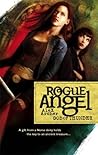
God of Thunder (Rogue Angel, #7)God of Thunder by Alex Archer
My rating: 4 of 5 stars

This is the 7th in a long-running pulp series written by multiple authors (Mel Odom for this one) and I liked it quite a bit. Entertaining. Annja Creed and the whole Rogue Angel series is like an updated version of men's adventure fiction, like Doc Savage or Mack Bolan or Remo Williams, and though there's still a lot of hand-to-hand fighting, globetrotting, and gun-wielding bad guys the protagonist has to face, the violence feels a bit toned down and secondary. She's interested in history and artifacts, and that focus leads to cool connections with hidden or little-known bits of history that are a pleasure to read about.

The history in this one leads her from the US to Venice, then finally to Latvia, where there is a legend about an ancient viking who once joined a Baltic tribe and protected them with a device that can only be described as Thor's hammer. The usual bad guys get involved and try to beat her to it, and the usual regular folk get in the middle and need protected. Despite the genuine supernatural elements (including a sword that Annja can summon at will) the story and series seems realistic in most ways, like urban fantasy that leans more toward urban than fantasy. It's a mix that works well.

The action plot serves the purpose here, and the writing is quite good, IMO; better than Doc Savage, anyway. The pacing leans toward quick, moving along like an action movie (which it resembles in almost every way) and it makes it a perfectly fun read. (Some people would call these books a guilty pleasure, but my position is that there is no guilt in reading entertaining books. They are produced by Harlequin, the long-time romance publishers, and they know how to make a fortune off books that people enjoy but feel like they shouldn't!)

Anyway, for those who enjoy action books or other pulp fiction, this is a fun series, and this is a good title. Recommended for those readers.

View all my reviews

Sunday, November 24, 2019

Hopeful, helpful, enlightening

Blink: The Power of Thinking Without ThinkingBlink: The Power of Thinking Without Thinking by Malcolm Gladwell
My rating: 4 of 5 stars

I enjoy reading Malcolm Gladwell's books, and I enjoyed this one. Truth is, though, it was losing my interest; much of this read like an interesting but overlong Buzzfeed article. (Not that there's much wrong with that.) However, the last two chapters were worth the price of reading the rest. If you're feeling TL;DR, just read the last two chapters.

The thesis of the book is that we often know things in an instant without knowing how we know. Secondarily, we do a bad job of interrogating these intuitions, and trying to explain or explicate them leads us farther from the truth, not nearer.

Pretty good. Useful.

But there's also a great deal in here that's more expected, like how our flashes of insight are often wrong and lead to problems. The key, it seems, is learning when we can trust ourselves to make snap judgments--a narrow range of things--and knowing all the other times when it will lead us into error.

That's what's great about chapters six and seven. It talks specifically about countering our intuitions, or unconscious reactions, when they're likely to be wrong.

Chapter six is about the kind of thinking error that leads cops to view POC with undue suspicion, subject suspects to unnecessary violence, and employ deadly force when it wasn't called for. What I found most interesting in this discussion of research and examples was the way human stereotyping can be accounted for using proper police technique, reducing or eliminating these kinds of errors. In other words, we don't have to just throw our hands up and say that policing is difficult and dangerous and shit happens; we can demand proper training and proper technique to help prevent tragedies.

And chapter seven is about the difficulty symphony orchestras have had removing gender bias in decisions like hiring and pay. I didn't realize how misogynistic orchestras were; I though women had been integral to them for decades. Nope. Turns out, until they started evaluating musicians from behind a curtain, it was nearly impossible for women to break through, especially if they played trombone or French horn or other "masculine" instruments. Once they started using blind auditions, things changed. Women who had been dismissed as average by directors and others who should have known better proved to be exceptional when gender bias was accounted for. (It took additional fighting and unionization, though, to keep up the momentum.)

Interesting, enlightening, helpful, hopeful, stimulating--that's how I saw the end of the book. Parts of it didn't impress me, but all of it was instructive, much of it was entertaining, and some of it was must-read good.

Worth taking a look.

View all my reviews

Thursday, August 29, 2019

Where the Story's Too Damn Real, but I Like It

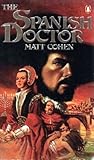
The Spanish DoctorThe Spanish Doctor by Matt Cohen
My rating: 5 of 5 stars

This is a hard book, a painful book, but a good one. Well written. Affecting. Not what I expected, frankly, but that's on me.

This is the story of a Jewish man in 14th Century Spain who becomes a successful doctor, much in demand, but finds that doesn't protect him from his enemies. As much as anything, it is a biography, following him across Europe and across the decades of his life. But in a broader sense, it is the story of the violence against Jews at that time in Spain and France and Italy and elsewhere in Europe, and the intolerable choice they were given--convert, giving up your identity, or face extermination at the hands of the mob, which was fully supported by the church. And, if you convert, be ready to be hated and attacked anyway.

There was one more choice: move away, losing everything, but still face the same violence in another country, sooner or later.

It is suffocating and horrifying to read about Avram Halevi and how he tried to navigate a world that hated him from birth. Before birth, really, as he was conceived when a Christian rioter raped his mother. This theme continued throughout. There were no right choices for him or for his people. There was no "Just leave us alone" option. There was no hiding. There was only murder and destruction, followed by the survivors rebuilding and moving on.

This novel is more literary than I expected; I took it for more of a genre novel, historical fiction with a triumphant hero sort of thing, but it's not that. As a result, the pacing is different than I looked for, the story and conflict broader. But I liked it, despite my scant appreciation, usually, for literary novels. The writing is spectacular, the canvas is wide, the history is engrossing, and I'm glad I gave it a chance.

Some of it is ugly. Some is brutal. Some is tragic. But some is beautiful and even hopeful. I'm gonna hold on to those bits.

Recommended, especially for those who lean toward literary fiction.

View all my reviews