Showing posts with label renaissance. Show all posts

Thursday, October 5, 2023

Where Only Brainworm Was Any Fun

Every Man in His HumourEvery Man in His Humour by Ben Jonson
My rating: 2 of 5 stars

This was the hardest slog I've ever had reading old plays. Wow.

I'll admit, I just didn't get it. Broadly, sure--different people represent different "humours," or personality types, like those prone to anger or jealousy, and we see how that works out for them. But scene by scene? I didn't know what anybody was on about. I googled it and could hardly believe everything that had gone whoosh past me... So much cultural subtext that I thought reading Shakespeare had prepared me for. It didn't.

It was like I was watching a Monty Python sketch where everybody is talking gibberish but then start fighting. With swords. Or sticks. What is happening? Is this Punch and Judy? What are they even talking about?

The very last scene with the justice sorting out what was going on with everybody, especially what Brainworm had been up to with a whole bunch of disguises, was sort of okay. A tiny little payoff for a deep slog of a play.

I would have said much worse about the play, a full-on rant, except I looked to find a version of the play on youtube and found a couple very nice old gentlemen discussing the play with such deep interest and pleasure--for like 90 minutes--that I couldn't bring myself to hate it as much as I had to that point. I guess it makes sense to some folks. Bless 'em.

Anyway, unless I find some highly annotated version of this play, I'm never gonna give it another look. I wish there was a "No Fear Ben Jonson" series like there is one for Shakespeare...

View all my reviews

Thursday, July 20, 2023

Where Tasso Reads Like Fantasy

Jerusalem Delivered: An English Prose VersionJerusalem Delivered: An English Prose Version by Torquato Tasso
My rating: 5 of 5 stars

I definitely liked this more than I expected to.

This English version of the 16th Century Italian epic is in rendered in prose, which I always prefer, and the translator has made it both wonderfully comprehensible (compared to say, The Faerie Queen in the original quaint English) and decently poetic. That makes it simple to enter into the narrative, and I found that really engaging.

Naturally, an account of the First Crusade from the perspective of a Christian author in the 1500s will be partial and prejudiced, inclined toward a double standard and committed to religious bigotry. Yep. It is all that. No avoiding it. In some ways, though, Tasso does a decent job of portraying the Muslim characters, the villains and enemies in the story, as humans just as capable of greatness and honor and sacrifice and love as the heroes. This is at least a little corrective for the inevitable chauvinism.

As far as plot and action, the poem is awesome and strangely modern. It unspools so much like speculative fiction that it's impossible to miss the through-line from epic poetry and romance to epic fantasy, and I found myself reading it much like I would JRR Tolkien or Tad Williams. In addition to castles and palaces, pitched battles and single combat, hidden vales and lonely beaches, fallible heroes and love at first sight, warrior women and soothsayers, it has sorcerers and demons and enchanted forests and magical islands. It's a fun story with a thousand creative touches.

Like Paradise Lost, some of the most exciting and compelling parts involve the spirits of hell who are called for a time to harry the crusaders. Satan, here referred to as Pluto, is described this way in canto 4:

A fearsome majesty in his fierce countenance increases the terror and makes him even more proud: his eyes burn red, and his gaze glowers infected with poison like an ill-omened comet; his huge beard envelops his chin and shaggy and thick comes down over his hairy chest, and like deep-yawning maelstrom his mouth stands open, filthy with black blood.


And here is the scene when he calls the spirits of hell:

The piercing sound of the Tartarean trumpet calls up the inhabitants of the eternal shades. The black capacious caverns tremble and the blind air echoes to that reverberation; nor ever so strident plummets the lightning from heaven's supernal regions nor ever so stricken trembles the earth when she locks up vapors in her pregnant womb.

Straightway the deities of the Abyss in various troops come running from all sides to the lofty portals. Oh how strange, oh how horrible the shapes! how much of terror and death is in their eyes! Some print the earth with beastly tracks, and on a human head have twining snakes for hair; and behind them writhes an immense tail that like a whip coils and uncoils itself.


There are many other exciting supernatural touches in the story, but there are also many human moments, quieter moments, when individuals are trying to decide what to do, whether to fight or to search out a lost love, whether to indulge in private disputes or put aside pride to commit to a greater cause. Despite the miraculous events and supernatural intervention, there is still a core of humanity in the epic, telling the story of men struggling with the competing demands of desire, conscience, faith, and frailty. Tancred and Godfrey and Armida and Erminia and Argante and Solyman and many others are quite human, filled with their own wishes and desires even while they're competing in a terrible war to control Jerusalem.

It is certainly a useful view into the minds of men 500 years ago, but it's also an entertaining bit of art that, despite its flaws, stands on its own as an absorbing work of imagination.

Historians and fantasy nerds can both find a lot to engage them here. Recommended.

View all my reviews

Monday, March 6, 2023

Where It Got Weird

Gargantua and PantagruelGargantua and Pantagruel by François Rabelais
My rating: 2 of 5 stars

Some people think (or thought, over the last several hundreds of years) that this is a very funny book. And entertaining in an over-the-top, no-holds-barred kind of way. And they're welcome to that opinion. I didn't warm up to it much.

I found some things to like in this, and certain goals and ideas of my own kept me reading it to the end, but I read it in an amateur anthropologist way, not as a genuine reader, and in that role I found it mildly entertaining. On its own, as a book to while away the hours, this is mostly really... no fun.

That's why 2 stars.

Also, the casual misogyny (though likely normal for the period) gets old. More than half of the book (books, technically) is about Panurge wanting to maybe get married, but because he's certain that whoever he chooses will sleep around on him he goes to all kind of lengths to get advice. Some of that is funny; some is entertaining in a Gulliver's Travels sort of way; but much of it is just "ha ha women are terrible let's eat and drink and fart." Except he usually uses phrases like rogering a wench with his enormous tool, which is funny for its rudeness while being disturbing for its tone, for its disregard for the humanity of the unnamed women he's talking about.

Sure, his crudeness is kinda funny. So much shitting. So much farting. So many sex jokes. It's crazy. A quick flip through the book will show you two or three examples, no problem. It's all through the book. It was plenty. And juxtaposing that crudeness with his undeniable erudition is comic, just on the face of it, but it's not enough to carry the book.

However, this book had a point, or many, and in the places where Rabelais's satire is at least somewhat comprehensible to a non-Catholic non-French non-16th-Century-reader, it's more fun and more meaningful. He goes after the corruption of many of the institutions of the time, telling absurd stories that make some category of people look foolish. When he's mocking the pope or lawyers or astrologers or city leaders, for example, it still make sense even in 2023, and the poop and fart jokes are extra explosive (a joke he would totally make). That kind of satire works for me, a casual reader. But he loses me when he's attacking jobs or groups of people or institutions that no longer exist in any form I recognize, and that's a big chunk of the book. It's not his fault the world changed, but it's not the readers' fault, either. Just bad luck.

More narrowly, I didn't enjoy his style of lampooning. He'd make a point by exaggerating the number of something, but in a really goofy way, beyond extreme, like saying millions where dozens would have been a lot and thousands ridiculous. Think absurd and multiply it by Babe the Blue Ox. Pantagruel the giant is sometimes small enough to sit at a table with everyone, but in one section he's huge enough that Panurge travels across his tongue into his mouth where there are whole cities between his teeth. It's like Paul Bunyan tall tales except filled with--filled. FILLED--with classical references. (If erudition got stars, he'd have 20/5 from me. It doesn't.) Sometimes he had characters spouting learned examples from mythology and the classics to show that they were annoying, but sometimes I feel like he just couldn't help himself and he had to name half a dozen figures from antiquity who experienced a similar thing.

Or so it seemed to me.

Anyway, I read this for my own reasons and I'm happy enough with what I discovered here. My curiosity is satisfied. Glad to put it away now.

View all my reviews

Tuesday, February 23, 2021

Where I Read a Book Everyone Else Read A While Ago

The Birth of VenusThe Birth of Venus by Sarah Dunant
My rating: 4 of 5 stars

I liked this novel. I enjoyed reading it, and I learned a lot about Florence from it.

I must admit, though, I don't like the end (which is presented in the prologue) and that marred my affection for the novel overall. The conclusion doesn't follow, IMO, from anything in the rest of the novel, and it's unnecessarily grotesque and bizarre. I wonder at the creative process which led to ending the story the way the author did... Nope, don't get it. (Maybe you'll make better sense of it.)

But leaving that aside--the novel is otherwise quite lovely. Yes, there are some tough things happening, horrible events in the city of Florence at the end of the Fifteenth Century, things which are ugly and distressing, but they happen mostly off-stage, to minor characters or unnamed characters. Nothing unusual for a story like this. The main characters mostly have rising and falling fortunes, good and bad times, just as you'd expect in a historical novel, and I found it a pleasant read from the distance of several thousand miles and 500+ years.

I haven't traveled much, but I have been to Florence. I found myself actually seeing the city as I read this, and I feel like the author has done an excellent job of bringing the place and the time back to life. The wealth, the wars, the religious disagreements--it makes so much more sense to me when I see it in a novel than when I read it in non-fiction sources. With well conceived characters and a satisfying story arc (*cof* leaving aside my disdain for the very end *cof*) it is a fine novel. As always, in my opinion.

Some family drama; some history; religion; romance; lots of art; good stuff.

Recommended.


View all my reviews

Monday, January 18, 2021

Where I Discover a Great Series I Missed

The Queen's Man (Justin de Quincy, #1)The Queen's Man by Sharon Kay Penman
My rating: 5 of 5 stars

A very entertaining novel. Sharon Penman has proven that she knows history and can tell a good story in a historical setting, but this is my favorite of hers. I enjoy action and mystery in addition to good characters in an interesting setting, and she offers all of that.

She still requires you to pay attention to characters and remember them from early chapters, but there's less of that thumbing back to see who Luke is (or whoever) compared to her big fat books about kings and queens, but that's manageable. The story is more focused and the plot more tightly wound than in those other books (which I like, btw), and I like this more for that reason.

I more often read fantasies, and this reads like many Medieval fantasies. In a good way. Throw in a dragon or a touch of magic or a prophecy or something and this could be in the fantasy section... :)

It was a pleasure to read. I'm going to look for the sequels. Recommended.

View all my reviews

Tuesday, August 11, 2020

Where I Didn't Totally Get It. But I Liked It.

The Order: Die Mensch MaschineThe Order: Die Mensch Maschine by Kek-w
My rating: 4 of 5 stars

I'm old.

I do not understand graphic novels sometimes. And comic books.

Sometimes.

I loved most of this graphic novel, but I swear I kept looking to see if I had skipped some pages or something. I understood what was happening, and then I didn't. Who are these people? Why do they seem to know each other? What is happening now? Is that the same guy as that... wait, no, they're both on the same page now... What's going on with time?

Anyway, I'm old. I guess that's the problem.

There's a really cool story here and some amazing art. Some great characters, too. I think I'd like to read it as a novel. Or have it expanded into many, many more pages of sequential art. A bit more exposition to help me understand how we went from here to there.

Here's what I'm gonna do. I'm gonna re-read it and see if I can get in the flow the second time. And I'm gonna do a better web search to see if there are prequels and sequels. (Couldn't find any the first time around.) Meantime, you should take a look if you like creepy medieval and renaissance fantasy with lots of action. It's cool.

View all my reviews

Thursday, August 29, 2019

Where the Story's Too Damn Real, but I Like It

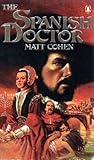
The Spanish DoctorThe Spanish Doctor by Matt Cohen
My rating: 5 of 5 stars

This is a hard book, a painful book, but a good one. Well written. Affecting. Not what I expected, frankly, but that's on me.

This is the story of a Jewish man in 14th Century Spain who becomes a successful doctor, much in demand, but finds that doesn't protect him from his enemies. As much as anything, it is a biography, following him across Europe and across the decades of his life. But in a broader sense, it is the story of the violence against Jews at that time in Spain and France and Italy and elsewhere in Europe, and the intolerable choice they were given--convert, giving up your identity, or face extermination at the hands of the mob, which was fully supported by the church. And, if you convert, be ready to be hated and attacked anyway.

There was one more choice: move away, losing everything, but still face the same violence in another country, sooner or later.

It is suffocating and horrifying to read about Avram Halevi and how he tried to navigate a world that hated him from birth. Before birth, really, as he was conceived when a Christian rioter raped his mother. This theme continued throughout. There were no right choices for him or for his people. There was no "Just leave us alone" option. There was no hiding. There was only murder and destruction, followed by the survivors rebuilding and moving on.

This novel is more literary than I expected; I took it for more of a genre novel, historical fiction with a triumphant hero sort of thing, but it's not that. As a result, the pacing is different than I looked for, the story and conflict broader. But I liked it, despite my scant appreciation, usually, for literary novels. The writing is spectacular, the canvas is wide, the history is engrossing, and I'm glad I gave it a chance.

Some of it is ugly. Some is brutal. Some is tragic. But some is beautiful and even hopeful. I'm gonna hold on to those bits.

Recommended, especially for those who lean toward literary fiction.

View all my reviews